 PublicSphere Live
World
Merz Turns to the CDU as AfD Surge Exposes Germany’s Conservative Fault Line
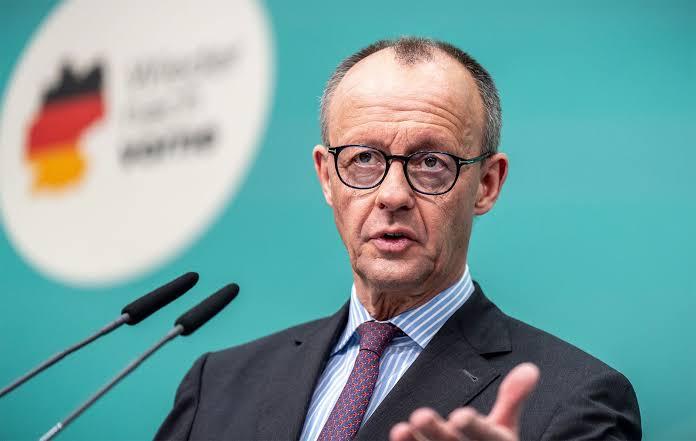
German Chancellor Friedrich Merz is confronting a political problem that goes beyond a single election defeat: the growing strength of the far-right Alternative for Germany (AfD) is putting pressure on his leadership, his governing agenda and the strategic direction of the Christian Democratic Union (CDU).
The immediate trigger was the September 6 election in Saxony-Anhalt, where the AfD finished first and came close to securing an outright majority. The CDU suffered a major setback in the same vote. The result intensified questions inside the conservative camp about whether Merz can halt the AfD's advance while maintaining the CDU's traditional position in German politics.
A leadership problem, not simply an AfD problem
Merz's difficulty is that the AfD's rise is occurring alongside dissatisfaction with the federal government itself. Recent polling by Infratest dimap found that only 15% of respondents viewed the work of the CDU/CSU-SPD coalition positively, while 84% were dissatisfied. The same survey put the AfD at 27% nationally, ahead of the CDU/CSU at 21%.
That creates a difficult political equation for Merz. He needs to persuade CDU members and voters that the party can address concerns that are benefiting the AfD—particularly the cost of living, immigration, economic insecurity and dissatisfaction with government performance—without allowing the CDU's political identity to be defined by the far right.
Merz has also faced criticism over his economic and social reform programme. Reuters reported that divisions within the governing coalition widened after the Saxony-Anhalt result, with Social Democratic coalition partners pressing for changes to planned reforms.
<span;>Why the CDU matters so much.
<span;>
The significance of Merz's appeal to the CDU is that removing a chancellor would not automatically resolve the political problems confronting Germany's conservatives.
Senior CDU figures have continued to support Merz in public, partly because replacing him would be constitutionally complicated and because a new leader would inherit many of the same economic and political difficulties.
This leaves the CDU facing a strategic choice in practical terms: whether to concentrate on strengthening Merz's leadership and policy programme, or increase pressure for changes in direction.
But the AfD's rise complicates either approach. A sharper shift toward issues associated with AfD voters could alter the CDU's political positioning, while maintaining its existing course risks leaving dissatisfied voters available to the AfD.
The eastern Germany challenge
The problem is particularly pronounced in eastern Germany.
The AfD's breakthrough in Saxony-Anhalt was not an isolated development. Ahead of Sunday's elections in Mecklenburg-Western Pomerania and Berlin, polling showed the party remaining highly competitive. In Mecklenburg-Western Pomerania, a Forschungsgruppe Wahlen poll cited by Reuters put the SPD at 37% and the AfD at 36%, while the CDU was at only 6%. In Berlin, the AfD was polling at 18%, behind the Left Party, CDU and Greens but ahead of the SPD.
The numbers illustrate the scale of the challenge: the CDU is not merely competing with the AfD for the same conservative electorate. In parts of eastern Germany, the AfD has established itself as a major political force across several policy areas.
In the September DeutschlandTREND survey, the AfD was the party receiving the highest level of perceived competence in eastern Germany on most of the policy areas tested, with climate and environmental policy being the exception.
The firewall question
One of the most consequential issues is the CDU's longstanding refusal to enter coalitions with the AfD.
The AfD's electoral gains are therefore creating a structural problem. Even where the party performs strongly, electoral success does not automatically translate into government power if other parties maintain the so-called "firewall" against cooperation with it.
<span;>The recent Saxony-Anhalt result has nevertheless reopened debate about whether that strategy can remain politically sustainable if the AfD continues to win large shares of the vote. Reuters described the question as one of the central challenges raised by the party's advances.
For Merz, preserving the firewall while preventing the AfD from continuing to expand its electorate requires the CDU to demonstrate that mainstream conservative politics can respond to voters' concerns without coalition cooperation with the AfD.
Foreign policy adds another layer
The dispute is not confined to domestic issues.
Merz has maintained Germany's support for Ukraine and rejected calls for a major reversal of Berlin's Russia policy. The AfD, by contrast, has advocated restoring closer relations with Moscow, regaining access to Russian energy resources and ending military support for Ukraine.
That makes the CDU's internal debate broader than an argument over electoral tactics. It also touches Germany's role in Europe, its security policy and its relationship with Russia.
Merz has explicitly argued that European security should take precedence over debates about his own political future.
What is at stake for Merz
The central issue for Merz now is whether he can convert the CDU's institutional strength into renewed political confidence.
His government came to power with promises of economic reform and a revival of growth. Yet rising living costs, concerns about pensions, housing and energy prices, and dissatisfaction with government performance have provided fertile ground for political challengers. Reuters reported that Merz's approval had fallen to around 14% in recent polling, while the CDU faced particularly difficult electoral prospects in Mecklenburg-Western Pomerania.
His decision to cancel a planned trip to the United Nations General Assembly and remain in Berlin underscored the seriousness with which his government is treating the domestic political situation.
<span;>
The immediate political test is therefore not simply whether Merz survives a difficult electoral cycle. It is whether he can keep the CDU cohesive while convincing its supporters that the party remains capable of addressing the grievances driving voters toward the AfD.
For Germany, the consequences extend beyond Merz personally. The stronger the AfD becomes, the greater the pressure on the country's established parties to define the limits of political cooperation, respond to economic and social discontent, and determine how Germany's political centre should position itself in an increasingly polarized environment.
The emerging contest is therefore less about one election than about the future shape of Germany's conservative politics. Merz is asking the CDU to rally behind him at precisely the moment when the AfD's advance is forcing the party to confront difficult questions about its identity, policies and electoral strategy.
<span;>