 PublicSphere Live
AI
AfDB, UNDP, Google Launch Free AI Training for African Public Officials
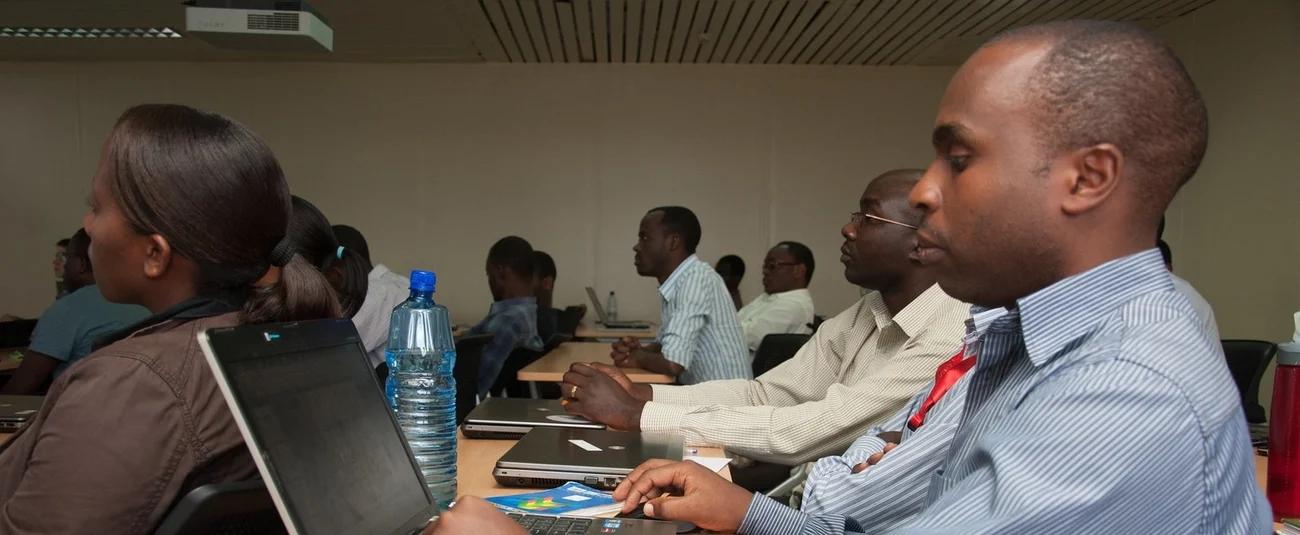
NEW YORK, September 25, 2026 — The African Development Bank Group, in partnership with the United Nations Development Programme (UNDP) AI Hub for Sustainable Development, Google and Apolitical, has launched a free artificial intelligence training programme designed to equip African public officials with the knowledge and skills needed to understand and apply AI in government.
The programme was launched on the sidelines of the 81st session of the United Nations General Assembly (UNGA81) in New York, as governments across Africa increasingly explore the use of artificial intelligence to improve public services, productivity, policymaking and administrative efficiency.
The initiative is being delivered through Apolitical’s Government AI Campus and is targeted at serving government officials and public servants in African Development Bank regional member countries whose responsibilities include artificial intelligence, public service delivery, digital infrastructure, public-private partnerships and innovation.
The training is self-paced and available free of charge to eligible participants.
Among the courses available to participants are AI Fundamentals for Public Servants: Opportunities, Risks and Strategies, AI Leadership in Government: Building Trust, Skills and an Innovative Culture, and Smarter Procurement with AI.
The courses were developed by Stanford University Online and SDA Bocconi School of Management, while Google and Apolitical are providing the learning platform and content.
The partnership reflects growing efforts by African institutions and international development organisations to ensure that governments are not left behind as artificial intelligence rapidly transforms economies and workplaces.
Speaking on the initiative, Ousmane Fall, Director for Industrial and Trade Development at the African Development Bank Group, said AI was already changing the way people work and could generate significant productivity gains if public officials understood how to deploy the technology effectively.
“AI is changing how we work. It promises major productivity gains if users fully understand its application,” Fall said.
He added that the development of AI understanding within government had received insufficient attention, describing the partnership as an effort to address that gap.
“Building that understanding in government has been neglected and this partnership helps us put that right,” he said.
The programme is also linked to the African Development Bank Group’s research on the potential economic impact of artificial intelligence on the continent.
According to the Bank Group report, Africa’s AI Productivity Gain: Pathways to Labour Efficiency, Economic Growth and Inclusive Transformation, inclusive deployment of AI could add as much as $1 trillion to Africa’s gross domestic product by 2035.
The report identified skills and trusted governance among five key enablers required for African countries to translate AI opportunities into productivity improvements, economic growth and inclusive development.
The new training programme is therefore intended to move some of those recommendations from research into practical application by strengthening the capacity of officials responsible for designing and implementing public-sector AI initiatives.
Keyzom Ngodup Massally, Director of the AI Hub for Sustainable Development and UNDP Head of Digital and AI Programmes, said African governments needed support as the technology continued to evolve.
“As the AI landscape continues to evolve, governments across Africa need timely support to strengthen the institutional and technical foundations required to participate meaningfully in the AI economy,” Massally said.
The AI Hub for Sustainable Development is a G7-endorsed initiative co-led by UNDP and Italy’s Ministry of Enterprises and Made in Italy. It is aligned with Italy’s Mattei Plan for Africa, which seeks to deepen cooperation between Italy and African countries across development and economic sectors.
The African Development Bank Group is a founding member of the AI Hub’s Executive Steering Group.
The collaboration brings together development finance, international development, technology and public-sector capacity-building institutions around the objective of strengthening Africa's readiness for the expanding AI economy.
For African governments, the initiative comes at a time when artificial intelligence is increasingly being considered for applications ranging from public-service delivery and digital infrastructure to procurement, administration, data analysis and innovation.
However, the wider adoption of AI also presents challenges involving governance, institutional capacity, skills, trust and the management of potential risks. The courses offered under the programme are consequently designed not only to explain the opportunities associated with AI but also to address risks, leadership, organisational culture and responsible implementation.
The African Development Bank has emphasised that skills development and trusted governance will be critical if African countries are to capture the economic benefits projected from wider AI adoption.
Rather than limiting AI knowledge to technology specialists, the training initiative seeks to expose public officials working across different areas of government to the practical implications of the technology.
The focus on public servants is significant because government institutions are major providers of essential services and are responsible for developing regulations, policies and procurement systems that can influence the wider adoption of emerging technologies.
The programme also places emphasis on leadership and institutional culture, reflecting the view that successful AI adoption in government will depend not only on access to technology but also on the ability of institutions to understand, govern and use it effectively.
Eligible public officials can enrol in the programme at no cost, with learning delivered online and at the participants' own pace.
The organisers said enrolment is now open to serving government officials and public servants in the African Development Bank's regional member countries who are working in areas including AI in public service delivery, digital infrastructure, public-private partnerships and innovation.
The launch at UNGA81 places the initiative within the broader international discussion on how developing countries can participate more fully in the emerging AI-driven global economy while ensuring that technological transformation contributes to inclusive development.
For Africa, the challenge extends beyond adopting AI tools. Governments must also develop the institutional knowledge, human capacity and governance frameworks needed to determine where and how the technology can be deployed effectively.
The African Development Bank and its partners are seeking to address part of that challenge by making specialised AI training available directly to the officials who will increasingly be responsible for shaping and implementing government responses to the technology.
The initiative is expected to provide participants with a foundation for understanding AI, leading AI-related initiatives, building trust around its use and applying the technology to areas such as public procurement and service delivery.