 PublicSphere Live
Business
CBN Withdraws N3.31tn From Banks as OMO Maturities Return N2.17tn
The October 6 operation consequently resulted in a net liquidity withdrawal of about N1.14 trillion, underscoring the apex bank’s continued effort to sterilise excess naira liquidity in the banking system after a similarly aggressive round of OMO operations in September.
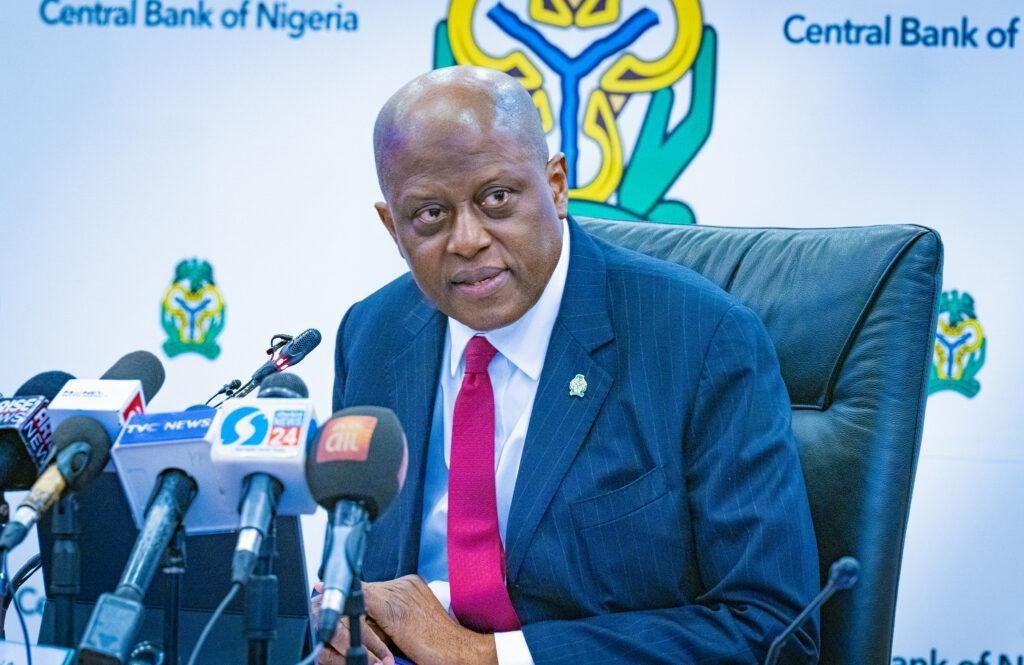
The Central Bank of Nigeria (CBN) has intensified its liquidity management operations, withdrawing about N3.31 trillion from the banking system through its latest Open Market Operations (OMO) auction, even as approximately N2.17 trillion from maturing OMO bills flowed back into the financial system.
The October 6 operation consequently resulted in a net liquidity withdrawal of about N1.14 trillion, underscoring the apex bank’s continued effort to sterilise excess naira liquidity in the banking system after a similarly aggressive round of OMO operations in September.
The latest development is significant because it comes barely two weeks after the Monetary Policy Committee (MPC) cut the Monetary Policy Rate (MPR) by 350 basis points to 23 per cent, its largest reduction in the current easing cycle. While the lower policy rate signals an attempt to reduce the cost of money and support economic activity, the continued deployment of OMO instruments shows that the CBN is simultaneously concerned about the quantity of liquidity circulating in the financial system.
According to market data reported by Nairametrics and Cordros Securities, investors submitted N3.511 trillion in bids at the October 6 auction, substantially above the N2 trillion initially offered by the CBN. The strong demand enabled the apex bank to allot N3.309 trillion, representing about 165.4 per cent of the amount initially put on offer.
The operation also pushed the overnight lending rate higher. Cordros Securities reported that the overnight lending rate rose by 25 basis points to 22.2 per cent, indicating that the liquidity withdrawal was beginning to exert some pressure on short-term funding conditions despite the substantial amount of maturing securities returned to investors.
182-Day Bill Attracts Bulk of Investor Demand
A striking feature of the latest auction was investors' strong preference for the longer-dated 182-day OMO bill.
The CBN had offered N2 trillion, divided equally between 147-day and 182-day instruments. However, the final allotment was heavily skewed towards the longer tenor, with the 182-day instrument accounting for approximately 80.7 per cent of total sales.
Investors submitted N2.693 trillion for the 182-day bill against the N1 trillion offered, producing a subscription level of approximately 2.69 times. The CBN subsequently allotted N2.671 trillion, equivalent to about 99.2 per cent of the bids received.
The 182-day bill cleared at 16.92 per cent and is scheduled to mature on April 6, 2027.
By contrast, the 147-day instrument attracted N817.95 billion in bids against the N1 trillion offered. It was therefore only about 81.8 per cent subscribed, with the CBN allotting N637.20 billion at a stop rate of 17.22 per cent.
The pattern is noteworthy because investors effectively chose to lock their funds away for a longer period despite receiving a lower yield than the shorter-dated instrument.
The difference suggests that investors may be placing considerable value on securing current yields for an extended period, particularly in an environment where monetary policy has begun moving towards lower interest rates.
Both stop rates also declined by two basis points from the September 29 auction, when the comparable 147-day and 182-day bills cleared at 17.24 per cent and 16.94 per cent respectively.
Liquidity Sterilisation Continues After September Surge
The October auction represents a continuation of the CBN's unusually heavy reliance on OMO operations to manage liquidity.
During September alone, the apex bank sold approximately N17.51 trillion in OMO bills through five auctions held on September 1, 8, 16, 24 and 29. At the same time, about N10.89 trillion worth of previously issued OMO securities matured and was repaid to investors.
The resulting net liquidity withdrawal was approximately N6.62 trillion.
The figures are important because the N17.51 trillion gross sales figure should not be interpreted as N17.51 trillion of additional liquidity removed permanently from the financial system. A substantial portion was effectively a replacement of maturing securities with fresh instruments.
Indeed, the N10.89 trillion in maturities represented about 62 per cent of September's gross OMO sales, leaving roughly 38 per cent as the net liquidity absorption.
The September operations demonstrated the CBN's increasingly active approach to managing the balance between surplus liquidity and monetary conditions.
On September 29 alone, the apex bank allotted about N4.686 trillion in OMO bills against N2.433 trillion in maturing securities, producing a net withdrawal of approximately N2.25 trillion.
The September auction also introduced a 266-day instrument, which attracted N4.543 trillion in subscriptions against N1 trillion offered and eventually received an allotment of N2.996 trillion. That instrument cleared at 16.23 per cent and pushed a significant portion of the CBN's repayment obligations into 2027.
CBN Manages Two Different Monetary Objectives
The latest OMO operation highlights an important feature of Nigeria's current monetary-policy environment: the CBN is attempting to ease the cost of money while simultaneously controlling excess liquidity.
The MPC's decision to cut the MPR to 23 per cent represented a significant shift in the policy rate direction. But monetary policy does not operate through the benchmark rate alone.
The quantity of liquidity available to banks also influences money-market rates, credit conditions, asset prices and inflationary pressures.
Consequently, the CBN can lower its benchmark policy rate while using OMO sales, Cash Reserve Requirement mechanisms and other liquidity-management tools to prevent an excessive expansion of naira liquidity.
The latest auction therefore does not necessarily represent a contradiction of the September rate cut. Rather, it indicates that the apex bank is attempting to calibrate the pace at which liquidity conditions ease.
This is particularly relevant in an economy where inflation, exchange-rate stability, credit growth and banking-system liquidity remain interconnected.
Overall Banking System Remains Liquid
Despite the aggressive sterilisation programme, available indicators suggest that the Nigerian banking system is not suffering from an outright shortage of liquidity.
Data cited by Nairametrics showed that more than N6.2 trillion had been placed at the CBN's Standing Deposit Facility as of September 29, while estimated system liquidity had reached about N8.57 trillion during that period. Another report showed that banks still had more than N4.6 trillion at the Standing Deposit Facility as of October 2.
The Financial Markets Dealers Association also reported that system liquidity averaged about N4.703 trillion in September, slightly above N4.65 trillion in August, although conditions remained volatile during the month.
According to the association, liquidity peaked at almost N8.84 trillion during the month, partly reflecting inflows associated with Federation Account Allocation Committee distributions, before subsequently moderating because of CRR debits, OMO sterilisation and government securities issuance.
This provides useful context for the latest N1.14 trillion withdrawal.
The CBN is not necessarily attempting to remove every naira of surplus cash from the banking system. Rather, its operations appear designed to keep excess liquidity at levels consistent with its broader monetary-policy objectives.
Overnight Rate Rise Signals Tighter Conditions
The movement in overnight funding costs provides an immediate indication of the impact of the latest operation.
The overnight lending rate increased by 25 basis points to 22.2 per cent following the auction, suggesting that the additional sterilisation had begun to tighten conditions at the margin.
The CBN's own Nigerian Overnight Financing Rate data also show that the overnight market has continued to operate within relatively elevated ranges, with recent daily minimum and maximum rates reflecting active short-term funding conditions. The central bank describes the NOFR as Nigeria's overnight risk-free reference rate, reflecting the cost of secured overnight naira funding among eligible financial institutions.
However, the increase in the overnight rate should be viewed against the wider liquidity picture.
The banking system still has substantial funds available, meaning that the CBN's challenge is one of calibration rather than simply creating or eliminating liquidity.
The apex bank therefore appears to be trying to prevent excess funds from generating undesirable pressure on inflation and other monetary variables while allowing its recent reduction in the MPR to gradually transmit through the financial system.
OMO Yields Continue To Moderate
Another important development is the gradual decline in OMO yields despite the scale of demand for the securities.
Cordros Securities reported that average OMO yields in the secondary market fell by six basis points to 18.7 per cent, while average Treasury bill yields declined by one basis point to 17.8 per cent.
The movement was different in the FGN bond market, where average yields increased by seven basis points to 15.7 per cent, with selling pressure reported on the February 2031, February 2034 and September 2036 bonds.
The declining OMO rates are consistent with the broader shift in monetary policy.
Investors, however, continue to demonstrate strong appetite for CBN instruments. This suggests that the combination of relatively attractive yields, high liquidity within the financial system and expectations of further monetary-policy adjustments is keeping demand for short- and medium-term government-backed securities strong.
The preference for the 182-day instrument at the October 6 auction is particularly revealing.
With the 182-day bill yielding 16.92 per cent compared with 17.22 per cent on the 147-day bill, investors accepted a lower return in exchange for a longer investment horizon. This could indicate expectations that yields may continue to decline as monetary easing progresses.
What The October Operation Means For Banks And Investors
For commercial banks and other institutional investors, the latest OMO auction reinforces the importance of liquidity management.
Banks have to balance the attractiveness of investing surplus funds in CBN securities against the need to maintain sufficient liquidity for withdrawals, lending and other obligations.
The strong subscription at the auction indicates that there was enough institutional demand to absorb substantially more securities than the CBN originally planned to issue.
For investors, the decline in stop rates presents a different consideration. If monetary easing continues, the returns available on newly issued short-term instruments could gradually fall further.
That possibility may partly explain the strong demand for longer-dated securities. By buying the 182-day instrument now, investors can lock in a yield for roughly six months rather than repeatedly reinvesting funds at potentially lower rates.
The same logic was evident during September, when demand increasingly gravitated towards longer OMO maturities even as stop rates declined.
Pressure On Liquidity Management To Continue
The CBN's October 6 operation suggests that OMO will remain an important component of monetary-policy implementation in the months ahead.
The challenge is likely to become even more delicate as maturing securities continue returning funds to investors.
The October 6 operation itself illustrates the problem: N2.17 trillion was due to flow back into the system through maturities, but the CBN sold N3.31 trillion in fresh securities, effectively replacing the returning liquidity and withdrawing an additional N1.14 trillion.
This approach enables the central bank to prevent a sudden surge in liquidity whenever large batches of OMO securities mature.
At the same time, the shift towards longer-dated instruments means that the CBN can push some future repayments further into 2027, potentially reducing the frequency with which very large amounts of liquidity return to the banking system.
A Delicate Balance Between Easing And Control
The latest OMO auction ultimately captures the delicate balancing act facing the CBN.
On one side is the need to lower borrowing costs, support investment and economic activity and improve monetary-policy transmission following the reduction of the MPR to 23 per cent.
On the other is the need to prevent excessive liquidity from undermining inflation management, destabilising money-market conditions or creating renewed pressure on the foreign-exchange market.
The N3.31 trillion OMO sale, against N2.17 trillion in maturities, shows that the apex bank remains firmly engaged in the second task even while pursuing the first.
The September experience reinforces the scale of that intervention. The CBN's N17.51 trillion in gross OMO sales and N10.89 trillion in repayments resulted in N6.62 trillion of net liquidity sterilisation during the month.
October has therefore begun with another substantial withdrawal.
Yet the continued presence of sizeable surplus funds in the banking system means that the CBN's policy is not simply about tightening financial conditions. It is increasingly about fine-tuning the quantity and distribution of liquidity so that the recent reduction in the policy rate does not translate into an uncontrolled expansion of money supply.
The strong investor demand for the 182-day bill, the decline in OMO yields, the rise in overnight funding costs and the continued recycling of maturing securities all point to a financial market adjusting to a new phase of monetary policy.
For the banking industry and investors, the immediate message is clear: the era of abundant liquidity is being managed more aggressively, even as the CBN gradually lowers its benchmark interest rate. The direction of OMO yields, system liquidity and overnight funding costs over the coming weeks will therefore be critical indicators of how successfully the apex bank can reconcile monetary easing with its continuing battle to maintain financial and price stability.