PublicSphere Live
Judiciary
SERAP, Deputy Director’s N101m Defamation Appeals Stalled at Court of Appeal
The appellate court, on Friday, fixed October 13 for the hearing of the two appeals after ruling that they should be heard together because they arose from the same judgment of the High Court of the Federal Capital Territory (FCT).
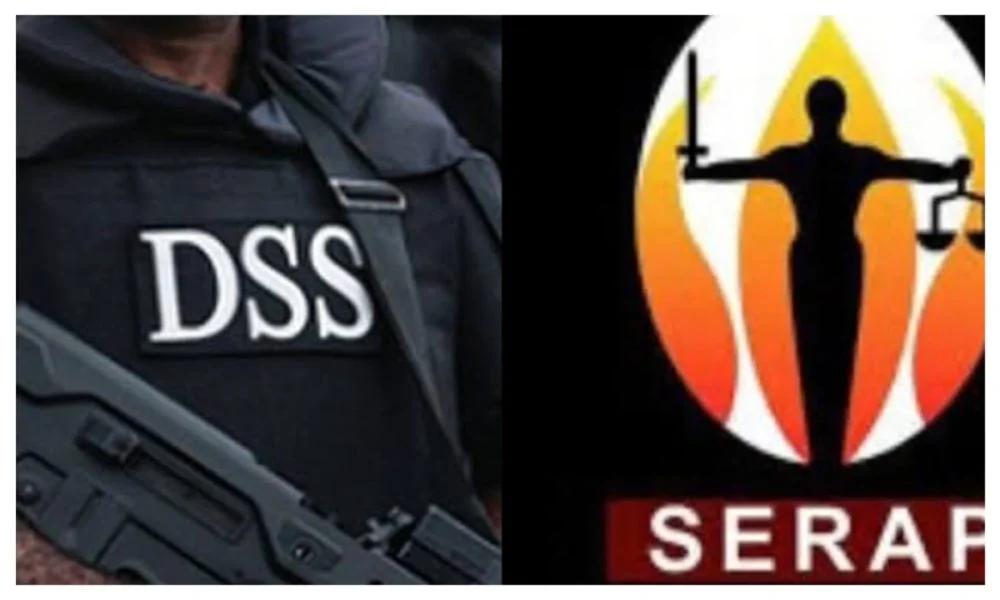
The Court of Appeal in Abuja has adjourned hearing in appeals filed by the Socio-Economic Rights and Accountability Project (SERAP) and its Deputy Director, Kolawole Oluwadare, challenging a N101 million defamation judgment against them, following delays in filing court documents.
The appellate court, on Friday, fixed October 13 for the hearing of the two appeals after ruling that they should be heard together because they arose from the same judgment of the High Court of the Federal Capital Territory (FCT).
The appeals challenge a May 5 judgment delivered by Justice Halilu Yusuf, who found SERAP and Oluwadare liable for defaming two officials of the Department of State Services (DSS), Sarah John and Gabriel Ogundele.
At Friday’s proceedings, a three-member panel of the Court of Appeal, presided over by Justice Danlami Senchi, commenced proceedings in SERAP’s appeal, marked CA/ABJ/CV/1114/2026.
However, when the second appeal, marked CA/ABJ/CV/1105/2026 and filed by Oluwadare, was called, his lawyer, Hannah Ayanwale, informed the court that the matter was not ready for hearing.
Ayanwale explained that her client’s brief was filed on Thursday and served on the respondents on Friday morning, shortly before the court commenced sitting.
The development reportedly displeased the justices, who expressed concern that the lawyer had not informed the court earlier that Oluwadare’s appeal, which arose from the same judgment as SERAP’s, was not ready for hearing.
The panel subsequently decided to set aside the proceedings already conducted in SERAP’s appeal, holding that both matters should be heard together because they emanated from the same judgment.
The court adjourned the appeals until October 13 and directed the respondents to file their briefs on October 12, while the appellants are to file their reply briefs before the next hearing.
Dispute Over Alleged DSS Invasion
The legal dispute arose from publications made by SERAP on its website and social media platforms on September 10, 2024, alleging that DSS officials had invaded its Abuja office the previous day and subjected its personnel to harassment.
The DSS officials subsequently instituted a defamation suit, marked CV/4547/2024, against SERAP and Oluwadare, arguing that the publications contained false claims that damaged their reputations.
In his May 5 judgment, Justice Yusuf held that the claimants had presented sufficient evidence to establish the essential elements of defamation.
The judge rejected the defendants’ defence of justification, ruling that they had failed to establish the truth of the allegations contained in the publications.
According to the court, the terms “invasion”, “forceful entry” and “harassment” were inaccurately used, particularly as the defendants had admitted during the trial that the DSS officials did not forcefully enter SERAP’s premises or brandish weapons.
Justice Yusuf held that the publications injured the claimants’ reputations in their professional capacities and standing in society.
He also observed that the publications had affected the claimants mentally and psychologically.
“Having been unable to establish invasion and harassment, the defence of justification fails,” the judge held.
Court Orders Damages, Public Apology
The judge stressed the need for SERAP and its officials to exercise due diligence before publishing information for public consumption, noting that the right to communicate through social media must be exercised with due regard for the rights of others, including officials of government agencies.
He further dismissed the defendants’ objection to the competence of the suit, holding that the claimants had the legal standing to institute the action and that the court had jurisdiction to hear it.
The judge also ruled that individuals seeking redress for defamation did not necessarily have to be expressly named in a publication for a claim to succeed.
Justice Yusuf noted that after the claimants complained about the alleged inaccuracies in the publications, SERAP and Oluwadare failed to take steps to remove the materials.
Consequently, the court awarded N100 million in damages against the defendants and an additional N1 million as costs of prosecuting the suit.
It also ordered them to publish a public apology on SERAP’s website and X handle, as well as in two national newspapers and on two television stations.
The judgment further stipulated that the awarded sum would attract 10 per cent annual interest from the date of the judgment until full payment.
SERAP and Oluwadare have challenged the decision at the Court of Appeal, seeking to overturn the judgment. The appellate court is expected to take up both appeals on October 13.