PublicSphere Live
Features
Zenith Bank's ‘Banking On Her Tomorrow’: A New Chapter In Girl-Child Empowerment
For Nigeria, where the development of human capital remains central to the country's economic and social transformation, investing in the girl-child is not simply an act of social responsibility but an important contribution to national development.
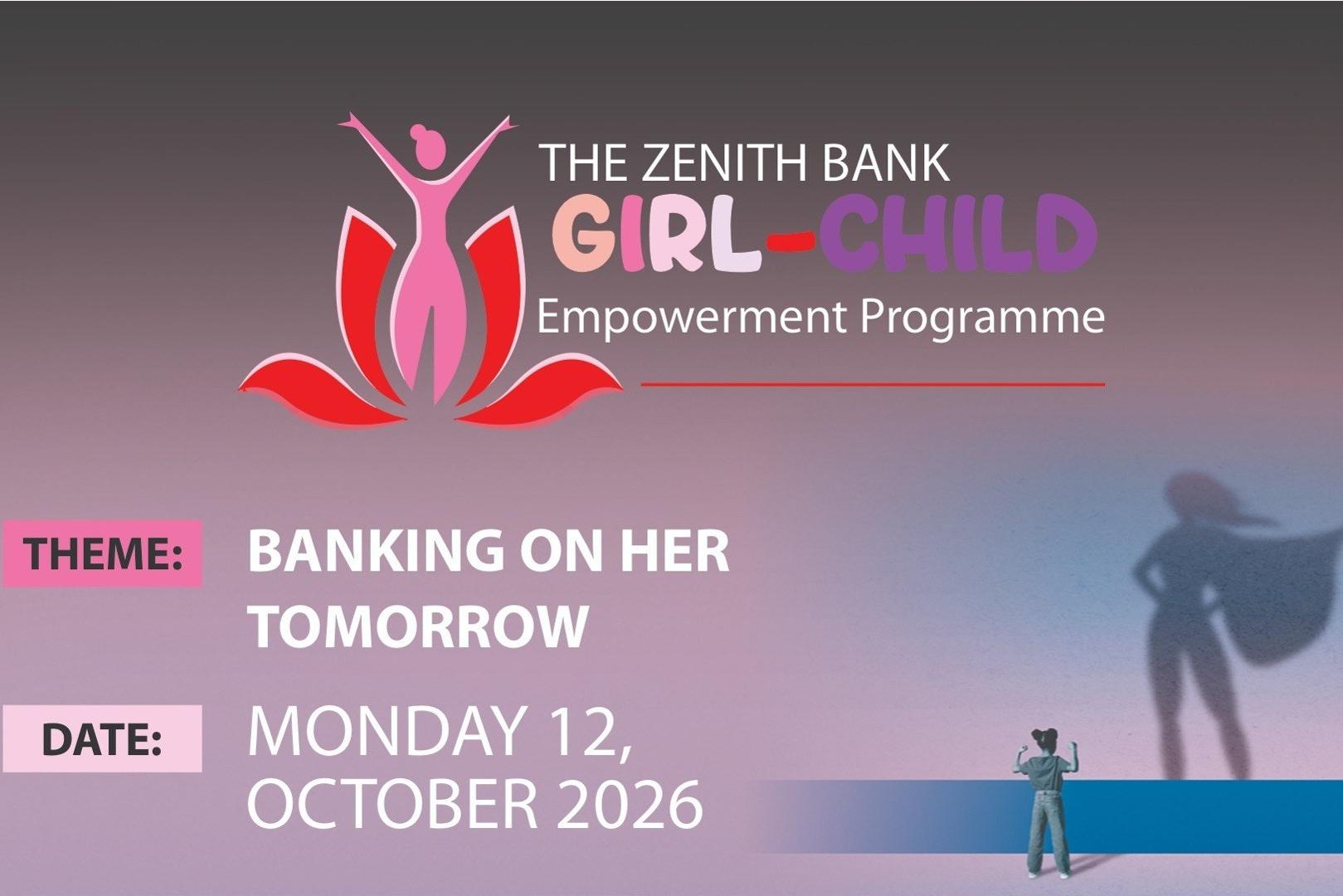
As the bank launches its maiden Girl-Child Empowerment Programme on Monday, October 12, the initiative seeks to strengthen girls' confidence, expand their ambitions and equip them with the knowledge and skills to navigate education, careers and leadership.
The future of any society is inseparable from the opportunities it creates for its children, and particularly for girls whose ambitions, talents and potential can be constrained by social expectations, unequal access to education and limited exposure to professional opportunities. For Nigeria, where the development of human capital remains central to the country's economic and social transformation, investing in the girl-child is not simply an act of social responsibility but an important contribution to national development.
It is against this background that Zenith Bank Plc is set to introduce its maiden Girl-Child Empowerment Programme on Monday, October 12, 2026, opening a new chapter in the financial institution's initiatives to promote the development and advancement of girls and women.
The programme, themed “Banking On Her Tomorrow,” will hold virtually at 11 a.m., a day after the global observance of the International Day of the Girl Child, which falls on October 11. Conceived by the bank's Group Managing Director and Chief Executive Officer, Dame Dr Adaora Umeoji, the initiative is designed to inspire girls to dream boldly, develop the confidence to pursue their aspirations and acquire the knowledge needed to make informed decisions about their education and future careers.

The event will feature experts from different professional fields, who are expected to share insights and practical perspectives on education, career development, skills acquisition, mentorship and leadership. The organisers intend the programme to become an annual platform through which girls can explore their abilities, broaden their aspirations and prepare themselves for meaningful opportunities.
The significance of the initiative extends beyond the virtual gathering scheduled for Monday. Its broader ambition is to encourage a generation of girls to approach their futures with greater confidence, recognise the range of opportunities available to them and understand that their gender should not determine the limits of their aspirations.
In a country where young people must increasingly prepare for a changing employment landscape, the ability to acquire relevant skills, make informed career choices and develop leadership capacity is becoming essential. For girls, access to such knowledge and guidance can help bridge the gap between potential and opportunity.
Investing In The Girl-Child As An Investment In Nigeria's Future
The girl-child occupies a critical position in the development of families, communities and the wider economy. Yet, in many societies, girls continue to encounter barriers that can affect their access to education, their confidence in pursuing particular professions and their ability to participate fully in economic and public life.
These barriers are not uniform. They may arise from household economic pressures, cultural expectations, inadequate access to educational resources, early marriage, limited career guidance or a lack of visible female role models in certain professional fields. Their effects can accumulate over time, narrowing the choices available to girls and making it more difficult for them to realise their potential.
Empowerment programmes can contribute to addressing these challenges by providing information, mentorship and exposure to possibilities that girls might otherwise find difficult to access. While a single event cannot eliminate structural inequalities, a sustained platform for learning and encouragement can help participants develop the confidence to pursue education, acquire practical skills and consider careers that match their interests and abilities.
This is the context in which Zenith Bank's new initiative should be understood. Rather than limiting its focus to a ceremonial celebration of the girl-child, the programme is intended to connect inspiration with practical preparation for the future.
The emphasis on skills development is particularly relevant at a time when educational qualifications alone may not be sufficient to guarantee employment or economic independence. Young people increasingly need digital competence, communication skills, adaptability, problem-solving abilities and the capacity to learn continuously as industries and occupations evolve.
For girls preparing to enter this environment, exposure to professionals who can explain career pathways, identify emerging opportunities and discuss the skills required to succeed may prove valuable in shaping their choices.
Equally important is the programme's focus on confidence. Girls who are encouraged to recognise their abilities and understand the opportunities available to them may be better positioned to ask questions, seek mentorship, pursue further education and challenge assumptions about what they can achieve.
The real value of empowerment lies in creating the conditions in which girls can make meaningful choices about their lives, rather than prescribing a single definition of success for all of them.
Adaora Umeoji's Vision And The Significance Of Leadership

The programme is the brainchild of Umeoji, the first woman to occupy the position of Group Managing Director and Chief Executive Officer in Zenith Bank's history and an advocate for girl-child education and empowerment.
Her leadership position gives the initiative a distinctive institutional context. As a woman heading a major Nigerian financial institution, she represents a visible example of female leadership in a sector where professional advancement requires a combination of technical competence, strategic judgment, experience and sustained performance.
For young girls considering careers in banking, finance, technology, entrepreneurship or other professional fields, exposure to women occupying senior leadership positions can help make such ambitions more tangible.
Representation alone, however, is not enough. The broader task is to ensure that girls have access to the education, skills, networks and opportunities needed to pursue leadership positions themselves. Mentorship becomes particularly important in this respect because it can help bridge the distance between seeing what is possible and understanding the steps required to achieve it.
By establishing a programme focused on the girl-child, Zenith Bank is seeking to extend its engagement beyond the immediate needs of women already participating in business and professional life to girls who are still developing their ambitions and preparing for adulthood.
The timing, immediately after the International Day of the Girl Child, also places the initiative within a wider international conversation about girls' rights, education, safety, equal opportunities and participation in decision-making.
The challenge for institutions that organise such programmes is to sustain the attention generated by an event and translate it into practical benefits for the intended beneficiaries. The most meaningful legacy would be an initiative that continues to provide relevant knowledge, opportunities for engagement and encouragement as girls progress through school and into working life.
Mentorship, Skills And The Power Of Exposure
One of the expected contributions of the maiden edition is the opportunity for participants to hear from experts across different fields and gain practical perspectives on their educational and professional choices.
Career guidance is often overlooked in discussions about education, even though the decisions young people make about subjects, qualifications, training and professional interests can influence their future opportunities. Many students have limited exposure to the range of careers available to them, particularly in fields that are not represented in their immediate families or communities.
A programme that introduces girls to different professional experiences can broaden their understanding of what is possible and encourage them to investigate opportunities beyond the occupations with which they are already familiar.
Mentorship can also provide a more realistic understanding of professional life. Beyond celebrating achievement, experienced professionals can explain the importance of discipline, continuous learning, resilience, ethical conduct and the willingness to adapt when circumstances change.
For girls interested in entrepreneurship, exposure to business professionals may help them appreciate the importance of financial literacy, planning, innovation and the ability to identify and solve problems. Those considering science, technology, engineering and other technical fields may benefit from hearing how education and practical experience combine to build professional competence.
Leadership, another central focus of the initiative, should be understood not merely as occupying a senior position but as developing the ability to take responsibility, work with others, communicate ideas and make considered decisions.
Such qualities are useful regardless of whether a girl eventually becomes a business executive, a public servant, a scientist, an educator, an entrepreneur or a professional in another field.
The organisers have indicated that the programme will become an annual platform. If sustained, it could create opportunities for recurring engagement with the girl-child and allow the bank to build a wider network around education, mentorship and personal development.
Its longer-term impact will depend on how effectively the knowledge and encouragement offered through the programme can be translated into action by participants, their families, schools and other institutions.
Building On Zenith Bank's Existing Women-Focused Initiatives
The new programme builds on a range of initiatives through which Zenith Bank has engaged with women's development, education, sports, entrepreneurship and social wellbeing.
These include the bank's annual International Women's Day Seminar, its sole sponsorship of the Zenith Women's Basketball League, the Women of Honour Awards organised in partnership with the Ford Foundation, and the Pad-A-Queen Initiative.
The bank also operates the Z-Woman initiative, which supports women-owned and women-led businesses through specialised funding, capacity building and networking opportunities. Taken together, these programmes reflect an approach that recognises the different stages at which women and girls may need support, from education and personal development to professional participation and business ownership.
The Pad-A-Queen Initiative, in particular, addresses an issue directly connected to girls' wellbeing and continued participation in education. According to Zenith Bank's 2025 annual report, the initiative reached 5,050 secondary school girls and 65 teachers across six schools in Lagos State during 2025, providing gender-health and hygiene education, sanitary supplies and branded materials while equipping female teachers and counsellors to serve as mentors.
That intervention demonstrates how support for girls can encompass both the practical conditions that enable them to remain in school and the broader knowledge and confidence required for their development.
The new Girl-Child Empowerment Programme widens this engagement by placing greater emphasis on aspiration, career choices, skills and leadership. While the two initiatives have different immediate focuses, both are directed towards improving the opportunities available to girls and helping them prepare for the future.
The distinction matters because girl-child empowerment cannot be reduced to a single intervention. Access to education, physical wellbeing, personal confidence, relevant skills, mentorship and economic opportunity are interconnected, and progress in one area can be undermined when other needs remain unaddressed.
For a corporate institution seeking to contribute to social development, the challenge is to ensure that its programmes complement one another and respond to the changing circumstances of their beneficiaries.
What The Programme Is Expected To Deliver
The immediate expectation is that the maiden edition will provide girls with inspiration, practical knowledge and a wider understanding of the educational and professional opportunities available to them.
Through contributions from experts, participants are expected to gain perspectives that can help them assess their interests, identify skills they need to develop and make more informed choices about their futures. The emphasis on mentorship and leadership should also encourage them to view themselves as potential contributors to their communities and the national economy.
For parents and educators, the programme offers an opportunity to engage with discussions about the preparation girls need to navigate a rapidly changing world. Families and schools play an important role in reinforcing the lessons of empowerment by encouraging girls to learn, ask questions, explore their interests and pursue opportunities consistent with their abilities.
The event may also help strengthen public awareness of the importance of preparing girls for economic participation. As Nigeria seeks to expand productivity and develop its human capital, excluding or limiting the potential of any segment of its population represents a loss of talent and opportunity.
However, the programme's long-term contribution will depend on more than attendance or the quality of presentations. The extent to which girls apply what they learn, seek additional guidance and translate their ambitions into educational or professional progress will be important measures of its effectiveness.
As an annual initiative, it could eventually provide a basis for examining such outcomes and identifying areas where additional support may be required. Follow-up engagement, access to mentors and opportunities to develop practical skills would strengthen the link between the inspiration offered at the event and the realities confronting girls in their daily lives.
These are possibilities the initiative can pursue over time, rather than outcomes that can be assumed from the launch alone.
Beyond Monday: The Responsibility To Keep The Promise
The launch of Zenith Bank's Girl-Child Empowerment Programme comes at a time when discussions about education, employment and social inclusion increasingly recognise the importance of preparing young people for a complex and competitive future.
For girls, that preparation must involve more than encouraging them to dream. It must also provide the knowledge, confidence, guidance and opportunities required to turn those dreams into achievable goals.
The theme, “Banking On Her Tomorrow,” captures this relationship between present investment and future possibility. The future being contemplated is not only that of individual girls who may become successful professionals or entrepreneurs, but also that of communities and a country that stand to benefit when more of their people can contribute their abilities.
For Zenith Bank, the Monday launch provides an opportunity to establish the programme's identity and demonstrate how it fits into the institution's wider engagement with women and girls. For the participants, it is an opportunity to hear new perspectives, consider unfamiliar possibilities and approach their educational and professional futures with renewed purpose.
The ultimate test will be whether the initiative can maintain its relevance beyond its maiden edition, deepen its engagement with girls and contribute to practical progress in their lives.
A society that invests in girls' education, wellbeing and leadership expands the possibilities available to the next generation. It strengthens families, broadens the pool of talent available to employers and entrepreneurs, and creates conditions in which more people can participate meaningfully in economic and social development.
Zenith Bank's new initiative offers a platform through which that objective can be advanced. Its promise will be fulfilled not simply when girls hear that they can achieve great things, but when they have the knowledge, support and opportunities to pursue those ambitions.
As the bank opens this new chapter on Monday, the central message is clear: the future of the girl-child deserves sustained investment, and the opportunities made available to girls today can help shape the society Nigeria becomes tomorrow.