PublicSphere Live
Analysis
Arewa House Book Cancellation: Why Democracy Must Make Room For Disagreement
Resolving the dispute requires transparency from the institutions involved, restraint by political actors and a willingness by the government and its critics to engage one another through evidence rather than confrontation.
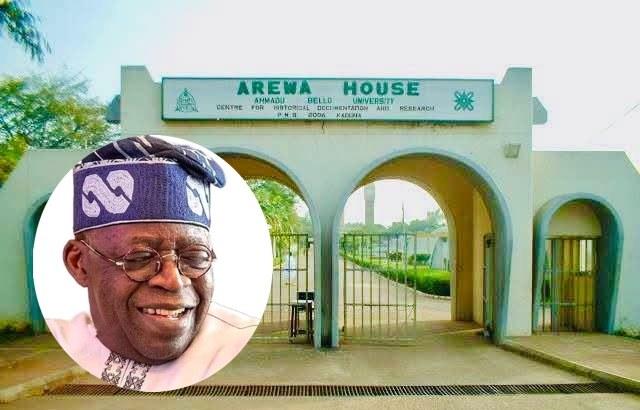
The controversy over the cancellation of a book presentation examining President Bola Tinubu’s administration raises important questions about academic freedom, political tolerance and the management of dissent in a democracy. Resolving the dispute requires transparency from the institutions involved, restraint by political actors and a willingness by the government and its critics to engage one another through evidence rather than confrontation.
When Criticism Becomes A Test of Democratic Maturity
The cancellation of the planned presentation of Tinubu: From Renewed Hope to Despair – A Critical Examination of President Bola Ahmed Tinubu’s Government at Arewa House, Kaduna, has introduced an important debate into Nigeria’s political discourse, one that extends beyond the circumstances surrounding a single literary event to touch on the relationship between political authority, intellectual freedom and the public’s right to scrutinise those who govern in its name.
Scheduled for Thursday, October 15, 2026, the presentation was intended to bring together scholars, public intellectuals, policymakers, political actors, journalists and members of the public to examine the policies, performance and socioeconomic consequences of President Bola Ahmed Tinubu’s administration since its inauguration in May 2023. Its cancellation, followed by the organisers’ announcement that they would relocate the event to Abuja, has transformed what might have been an ordinary academic gathering into a test of how Nigeria’s democratic institutions respond when political criticism becomes uncomfortable for those in authority.
The immediate controversy is not simply about whether the book’s assessment of the Tinubu administration is fair, persuasive or supported by sufficient evidence. Those are questions that ought to be resolved through reading, debate, verification and counterargument. The more fundamental question is whether a publication critical of a sitting president should be allowed to be presented in a public academic setting, subject to the same lawful requirements applicable to comparable events, without its organisers having to contend with unexplained restrictions or fears of political interference.
According to the account released by Abubakar Siddique Mohammed, executive director of the Centre for Democratic Development, Research and Training (CEDDERT), the organisers had encountered difficulties securing an alternative venue in Kaduna after the cancellation of the original arrangement at Arewa House. Mohammed alleged that hotels approached by the organisers had been warned against accommodating the event and expressed concern that further attempts might be made to frustrate the presentation, including through security agencies.
These are serious allegations, but they remain allegations contained in the organisers’ account. Establishing what actually happened requires clarification from the management of Arewa House, Ahmadu Bello University, the hotels reportedly approached and any public authority that may have been involved. The distinction matters because a democratic society must neither dismiss allegations of interference without investigation nor pronounce individuals and institutions guilty before the relevant facts have been established.
Nevertheless, the concerns raised deserve a transparent response. Where a venue booking is cancelled, the institution responsible should explain the reasons, particularly when the cancellation involves a public discussion of government policy. Silence creates room for suspicion, while an adequately documented explanation provides a basis for accountability and prevents a dispute from escalating into a larger confrontation between political camps.
The Political Cost of Restricting Critical Voices
Nigeria’s political environment has long been characterised by fierce competition over the interpretation of government performance. Administrations defend their policies as necessary responses to inherited economic and structural difficulties, while opposition parties, civil society organisations, professional groups and independent researchers assess those same policies through their consequences for households, businesses and public institutions.
The Tinubu administration’s economic reform programme provides an obvious example of this competing interpretation. Supporters can argue that difficult measures are intended to correct longstanding distortions, improve public finances, strengthen market incentives and create conditions for more sustainable growth. Critics, meanwhile, can question the pace, sequencing, social costs and distributional consequences of the reforms, particularly where the immediate burden falls heavily on households already struggling with food, transportation, housing and energy expenses.
Both perspectives belong in the public sphere. Government intentions and policy design are legitimate subjects of analysis, but so are implementation failures, unintended consequences and the gap between official promises and citizens’ lived experiences. Equally, criticism must not be treated as automatically correct merely because it is directed at those in power. It should be tested against verifiable evidence, credible economic indicators, administrative records and the experiences of the people affected.
The proposed book’s title, which contrasts “Renewed Hope” with “Despair”, signals a critical interpretation of the administration’s record. That framing is likely to attract disagreement from those who believe the government’s reforms require more time or who consider the book’s approach politically partisan. Such disagreement is not a reason to prevent discussion. Rather, it provides a reason to organise the discussion properly, invite competing perspectives and examine the arguments with intellectual seriousness.
There is also a political calculation that governments and their supporters must consider. When criticism is answered with evidence, the administration has an opportunity to explain its policies, correct misinformation and demonstrate confidence in its record. When allegations of suppression arise and remain unanswered, attention can shift away from the substance of the criticism towards the conduct of those accused of restricting it.
In such circumstances, even a government that believes a critical publication is unfair risks allowing the dispute over its presentation to overshadow the arguments contained in the book. The public may become more interested in why the authors were allegedly denied a platform than in whether their conclusions are justified.
This is why transparency and restraint are not merely abstract democratic virtues; they are practical instruments of political conflict management. An administration that wants its policies judged on their merits has a direct interest in ensuring that disagreements are addressed through public argument rather than controversies over access to venues.
Arewa House And the Responsibility of Academic Institutions
The reported involvement of Arewa House and the alleged pressure on Ahmadu Bello University raise a separate institutional question: how should an academic or research institution respond when a proposed event concerns a politically sensitive subject?
Universities and research centres operate within legal, administrative and security frameworks, and their facilities cannot be assumed to be available for every event without regard to booking conditions, institutional rules, safety requirements or legitimate operational constraints. A venue may have valid reasons to cancel an engagement, provided those reasons are genuine, consistently applied and communicated transparently.
However, an institution’s credibility can be damaged if its decisions appear to depend on whether a proposed speaker or publication favours the government of the day. An academic institution earns public confidence by applying clear standards across competing viewpoints, not by shielding political leaders from scrutiny or providing privileged access exclusively to their supporters.
If the cancellation was based on administrative, contractual or security considerations, the institution should state those reasons clearly enough to permit public understanding. If external pressure was exerted to prevent the event because of the book’s criticism of the president, the matter would require a different response, including an explanation of who applied the pressure and the authority under which it was exercised.
The distinction cannot be resolved through speculation or competing press statements alone. It requires a factual account from the relevant institutions and, where appropriate, an independent review of the booking process and communications surrounding the cancellation.
Ahmadu Bello University’s reputation and the broader standing of Nigerian academia make such clarification particularly important. The value of scholarship lies partly in its willingness to examine difficult questions, challenge prevailing assumptions and subject influential individuals and institutions to critical inquiry. This does not mean academic venues must become platforms for unrestricted partisan campaigning; it means that political sensitivity should be managed through neutral, published rules rather than informal restrictions directed at particular viewpoints.
The same principle should apply to public institutions, private venue operators and security agencies. Where an event is lawful, any restriction should have a legitimate basis, be proportionate to the concern involved and be applied without discrimination against a particular political opinion.