 PublicSphere Live
Politics
Wike Attacks Atiku–Amaechi Ticket, Defends Tinubu’s Policies Amid 2027 Political Contest
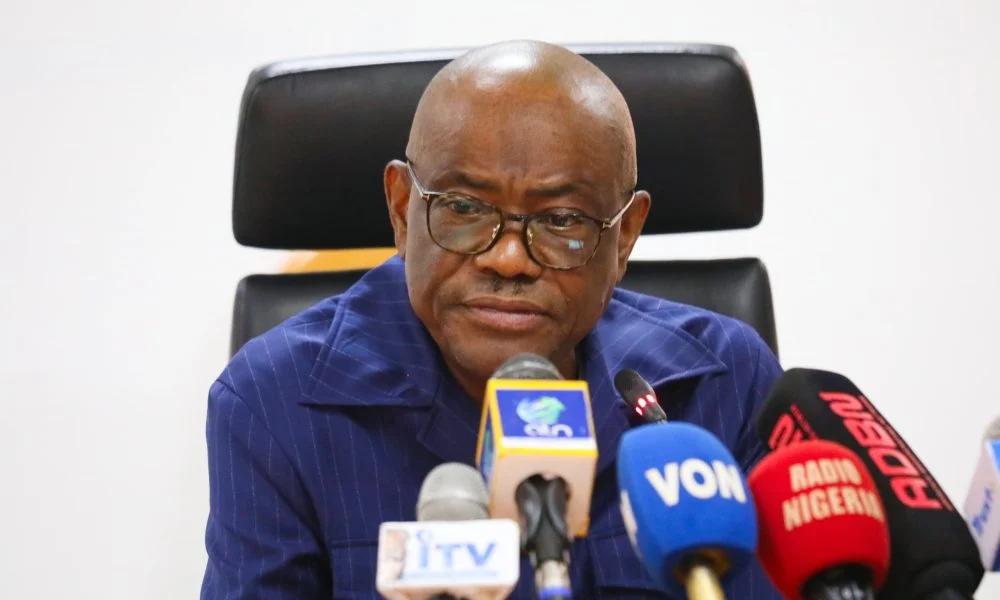
Wike made his position known during a media parley, where he challenged opposition politicians to demonstrate what they had achieved while holding public office rather than relying on campaign promises and criticisms of the Federal Government.
…Challenges opposition leaders to account for records in public office
…Says petrol subsidy removal has boosted allocations to states and local governments
…Promises to commission at least 10 FCT projects before December ends
ABUJA — The Minister of the Federal Capital Territory (FCT), Nyesom Wike, has criticised the opposition presidential ticket of former Vice President Atiku Abubakar and former Rivers State Governor Rotimi Amaechi, questioning their records in public office while defending the economic policies and performance of President Bola Tinubu’s administration.
Wike made his position known during a media parley, where he challenged opposition politicians to demonstrate what they had achieved while holding public office rather than relying on campaign promises and criticisms of the Federal Government.
The minister, a former governor of Rivers State and a prominent figure in the Peoples Democratic Party (PDP), argued that Nigerians should evaluate political leaders based on their performance, decisions and contributions to national development.
His comments come amid preparations for the 2027 general elections, as political parties and aspirants intensify efforts to establish their credentials, consolidate support and challenge the policies of the Tinubu administration.
Atiku and Amaechi have featured prominently in opposition politics and discussions around the African Democratic Congress (ADC), which has been positioning itself as a platform for challenging the ruling All Progressives Congress (APC). Wike’s intervention adds to the increasingly sharp exchanges over the opposition’s leadership, political record and capacity to offer an alternative to the current administration.
Wike Questions Atiku’s Record
Wike expressed his opposition to Atiku’s presidential ambition, invoking corruption allegations that he attributed to a former president who had worked with the former vice president.
“I will not go with such a person,” the minister said, adding that he regretted allowing Atiku to work with him in the past.
The remarks reflected Wike’s continuing political differences with Atiku, who has contested the presidency several times and served as vice president between 1999 and 2007 under former President Olusegun Obasanjo.
However, allegations of corruption must be distinguished from established findings of criminal liability. Wike’s comments represent his assessment of Atiku and should not, in themselves, be treated as proof that the former vice president has been convicted of an offence.
By questioning Atiku’s record, the FCT minister sought to shift attention from the opposition’s criticisms of Tinubu to the previous responsibilities of those seeking to replace him.
His argument is that politicians who aspire to the highest office in the country should be prepared to account for their decisions and achievements in earlier positions, particularly when they present themselves as alternatives to the incumbent government.
Atiku’s long political career provides a substantial record for public scrutiny, encompassing his tenure as vice president, his role in national economic debates and his repeated presidential campaigns. The relevant questions for voters include the policies he supported, the outcomes associated with his time in government and the proposals he now advances for addressing Nigeria’s economic and security challenges.
The same standard of accountability, however, applies to all political leaders, including Tinubu and members of his administration.
Amaechi’s Record Under Scrutiny
Wike also questioned Amaechi’s contribution to the development of the South-South region, challenging the former Rivers governor to identify projects and investments he attracted while serving as minister of transportation under the administration of former President Muhammadu Buhari.
Amaechi served as Rivers State governor from 2007 to 2015 before becoming minister of transportation, a position he held during much of Buhari’s presidency. He was also a leading contender for the APC presidential ticket ahead of the 2023 general election.
Wike’s criticism centres on whether Amaechi’s years in influential political positions produced sufficient benefits for Rivers State and the wider South-South region.
By demanding evidence of projects and investments, the minister placed the debate within the broader question of how public officeholders should be assessed: through the positions they occupied and promises they made, or through verifiable projects, measurable outcomes and improvements in the lives of citizens.
Amaechi’s record as transportation minister can be examined through the railway projects, transport infrastructure and other programmes undertaken during his tenure. Such an assessment would need to distinguish between projects initiated before he assumed office, those implemented during his ministry and those completed or operationalised after his departure.
It would also require consideration of the geographical distribution of investments and the extent to which the South-South benefited from federal transportation spending.
Wike, however, questioned whether Amaechi’s previous responsibilities had translated into the level of regional development that his political standing might suggest.
The exchange illustrates how the 2027 contest could increasingly revolve around competing interpretations of past administrations, with political actors seeking to establish that their opponents failed to deliver while presenting their own records as evidence of performance.
Dispute Over Opposition Support
The FCT minister also disputed suggestions that the Atiku–Amaechi combination was attracting significant support in northern Nigeria.
He cited Amaechi’s previous election performances and political engagements in challenging claims about the opposition ticket’s strength, arguing that voters should consider the candidates’ political histories when evaluating their present ambitions.
The argument raises questions about how opposition parties intend to build a national coalition capable of competing across Nigeria’s geopolitical zones.
For any presidential candidate, regional political networks, party organisation, candidate appeal and the ability to mobilise voters beyond traditional support bases are important components of a national campaign. Yet past election results alone cannot conclusively establish the level of support a candidate or political alliance will command in a future election.
Political alignments can change, particularly when parties merge interests, negotiate nominations or bring together figures who previously competed against one another.
The opposition’s challenge will therefore extend beyond presenting prominent politicians on a joint ticket. It will involve articulating a coherent policy programme, maintaining party cohesion, mobilising supporters and persuading voters that the proposed alternative can address the country’s pressing problems.
Wike’s comments suggest that he intends to make the previous records of opposition figures a central part of the political debate, rather than allow their criticism of the Tinubu administration to dominate public discussion.