 PublicSphere Live
Maritime and Transport
Customs Targets N209bn Revenue, Seeks Stronger Stakeholder Collaboration in Edo, Delta
Ortsen said achieving the ambitious revenue target would require collective commitment from the Customs Service and businesses operating within the command’s jurisdiction
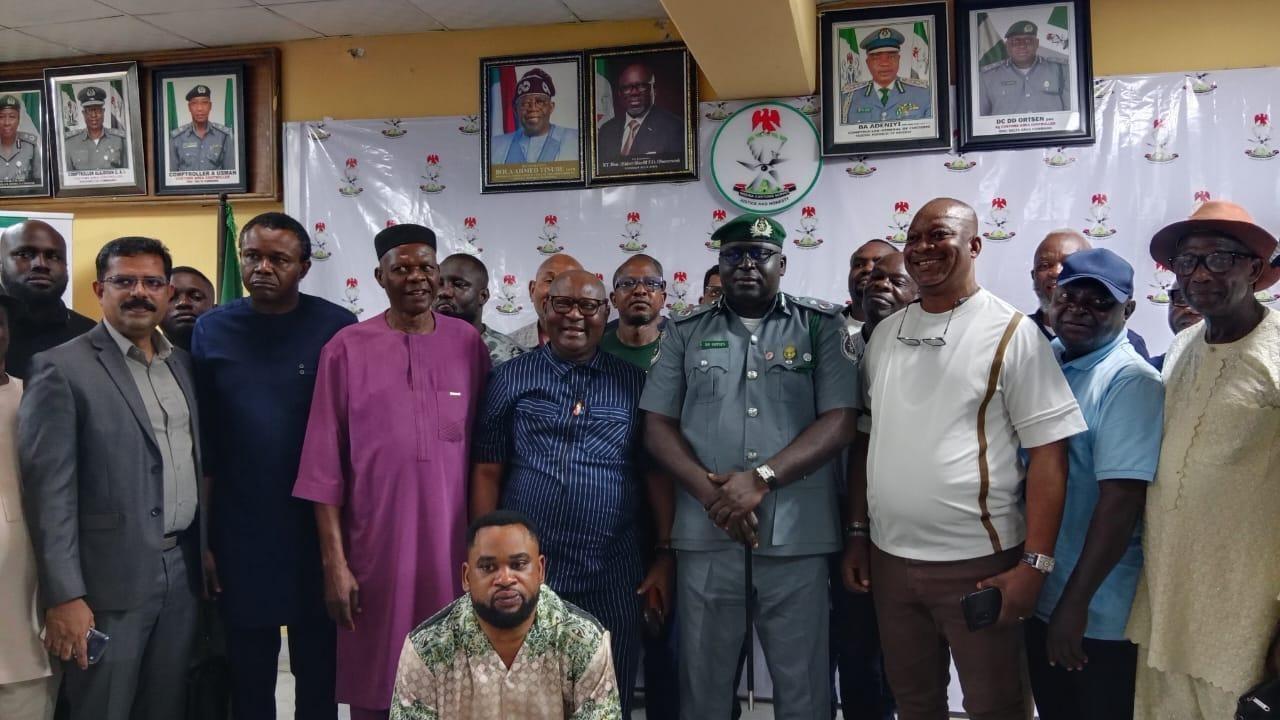
The Nigeria Customs Service (NCS), Edo/Delta Area Command, has called for stronger collaboration with stakeholders in the manufacturing and maritime sectors as it intensifies efforts to achieve its N209 billion revenue target for 2026.
The Acting Customs Area Controller, Comptroller Dooyum Ortsen, made the call on Tuesday during a stakeholders’ interactive engagement in Warri, Delta State, where he assured operators that the command would prioritise trade facilitation, operational efficiency and improved service delivery.
Ortsen said achieving the ambitious revenue target would require collective commitment from the Customs Service and businesses operating within the command’s jurisdiction.
“Our command has been handed an ambitious annual revenue target of approximately N209 billion.
“This is not a number we can achieve in isolation. The road ahead to achieving the target requires shared responsibility; it is a milestone we must reach together,” he said.
He pledged to maintain an open-door policy and establish practical partnerships with stakeholders to facilitate legitimate trade and make business operations more efficient.
The acting controller also assured stakeholders that his administration would build on the existing structures established by his predecessor, Comptroller Judith Kanu, rather than dismantle them.
According to him, the command’s strategy would be anchored on collaboration, consolidation and innovation to improve revenue generation while supporting economic activities across Edo and Delta states.
Ortsen acknowledged the contributions of terminal operators, shipping agents, manufacturers and traders, describing them as critical components of the maritime and economic ecosystem in the two states.
He noted that businesses were operating in a challenging economic environment characterised by rising costs and other pressures, stressing that Customs operations should not create additional difficulties for legitimate traders.
“We are operating in a challenging economic environment where rising costs are putting pressure on your businesses. Customs will not become an additional burden to legitimate trade,” he said.
He added that the command would work towards ensuring that cargo clearance was swift and predictable, while keeping its channels of communication open to address complaints and resolve issues affecting business operations.
Ortsen said stakeholders with legitimate grievances would be given the opportunity to have their concerns heard and addressed, adding that clarity and consistency in Customs procedures were essential to building confidence among operators.
He further assured participants that the command would prioritise the prompt clearance of cargoes supported by accurate documentation, while leveraging technology to improve operational efficiency.
According to him, the command is deploying data analytics, risk management systems and digital platforms to support faster and better-informed decisions.
He explained that the adoption of these tools was intended to improve the handling of transactions, reduce unnecessary delays and strengthen the command’s capacity to facilitate trade while meeting its revenue obligations.
The acting controller also disclosed that he had directed officers and men of the command to resolve operational challenges at the levels where they arise to prevent avoidable bottlenecks and delays.
“We are building a strong institution, run by efficient systems, not by individual bureaucracy,” he said.
Ortsen said the command was also reviewing its internal processes to ensure that interactions between Customs officers and stakeholders were characterised by mutual respect, transparency and predictability.
He identified the achievement of seamless business operations at Warri Port, Koko Port and other Customs exercise stations within the command as a major objective of his administration.
“Our common goal is to reach a point where doing business at Warri Port, Koko Port and across our exercise stations is seamless.
“I want a future where stakeholders approach Customs with complete confidence,” he said.
Responding to questions and concerns raised during the engagement, Ortsen emphasised that his commitment to partnership with the private sector went beyond rhetoric, insisting that the command was prepared to translate its assurances into practical measures.
He said sustained engagement would help the command understand the operational challenges facing businesses, improve communication and develop workable solutions that would benefit both the service and the trading community.
The interactive session brought together stakeholders drawn mainly from the manufacturing and maritime sectors, providing an avenue for participants to discuss issues affecting their operations and the relationship between Customs and businesses.
One of the participants, Mr Obioma Ochulor, a representative of Life Flour Mill Limited, Sapele, called for more regular stakeholder meetings to strengthen communication and ensure that Customs officials and businesses remained aligned on operational issues.
Ochulor said sustained engagement would enable both parties to address emerging concerns promptly and improve their working relationship.
Similarly, Engr. Osa Erhabor of Awaritse Shipyard Limited commended Ortsen for organising the engagement, describing the meeting as an opportunity for stakeholders to interact directly with the command’s leadership.
The engagement comes as the Edo/Delta Command seeks to balance its revenue collection responsibilities with the need to facilitate legitimate trade and support economic activities across its operational areas.
The success of the N209 billion target will depend not only on revenue enforcement but also on effective coordination with businesses, efficient cargo processing and the reduction of operational bottlenecks at the ports and other Customs stations under the command.