 PublicSphere Live
Energy
Dangote’s $17bn Kenya Refinery: Court Ruling Opens New Frontier for Africa’s Energy Independence And Intra-African Trade
The lifting of a court restriction on Aliko Dangote’s proposed refinery in Kenya offers a measure of relief to the ambitious project, but unresolved land ownership and environmental disputes underline the legal, social and political challenges confronting large-scale industrial investments in Africa.
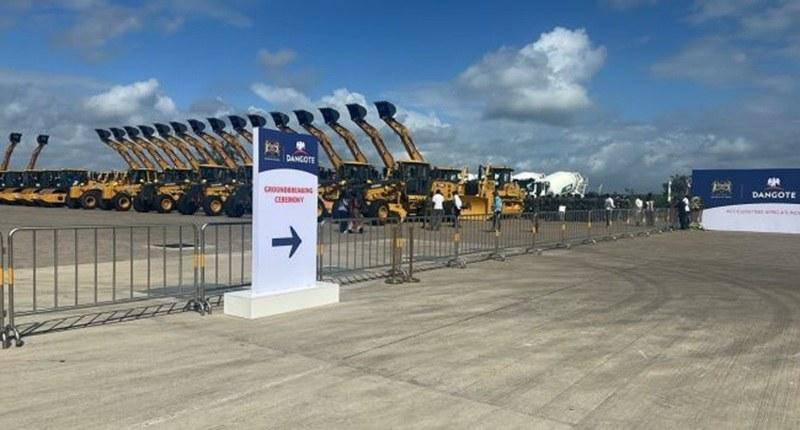
The lifting of a court restriction on Aliko Dangote’s proposed refinery in Kenya offers a measure of relief to the ambitious project, but unresolved land ownership and environmental disputes underline the legal, social and political challenges confronting large-scale industrial investments in Africa. Beyond Kenya, the project could reshape regional petroleum supply chains, strengthen the African Continental Free Trade Area and test whether African capital can drive a new era of industrial integration.
By Chris Uba
The prospects of a major transformation in East Africa’s petroleum industry received a significant boost on Wednesday, October 14, 2026, when a Kenyan court lifted an earlier restriction affecting the proposed $17 billion oil refinery being promoted by Nigerian industrialist Aliko Dangote in the Lamu archipelago.
The ruling by Justice Jane Onyango of the High Court, delivered during proceedings in Malindi, offers the project temporary procedural relief as it navigates a legal dispute over land ownership, property rights and environmental compliance. It does not, however, represent a final judicial endorsement of the refinery or eliminate the possibility of further delays.
The distinction is important. For Dangote, whose industrial investments have increasingly crossed national borders, the proposed 700,000-barrel-per-day refinery represents an opportunity to extend his petroleum and petrochemical ambitions beyond Nigeria into one of Africa’s strategically important economic regions. For Kenya, it could become a major instrument of energy security, industrialisation, employment creation and export development. For the continent, it raises a larger question: can African countries build an integrated energy market in which locally financed industrial capacity reduces dependence on imported petroleum products from outside the continent?
The answers will depend not only on the scale of the proposed investment but also on the ability of its promoters and the Kenyan authorities to reconcile economic ambitions with environmental safeguards, legitimate community interests and the requirements of the law.
Court Ruling Removes An Immediate Obstacle, Not The Entire Dispute
The court’s decision followed a petition by 133 residents who challenged the proposed refinery on grounds that included threats to their property rights and alleged failure by the developers to demonstrate compliance with environmental regulations.
The applicants maintained that a project of such magnitude could not proceed without appropriate environmental impact assessments and public consultations, particularly in an area as ecologically and culturally sensitive as Lamu.
Their concerns carry considerable weight because Lamu is not merely another location on Kenya’s investment map. The archipelago is internationally recognised for its historical and cultural heritage, including Lamu Old Town, a UNESCO World Heritage site. Its coastal environment, marine resources, traditional livelihoods and tourism potential make decisions about large-scale industrial development especially consequential.
Justice Onyango lifted the restriction after identifying an error in the land parcel cited in the petition. The applicants had referenced the wrong parcel, and the court permitted them to amend their filing to identify the correct property.
The case was adjourned until November 24, 2026, for the hearing of the amended petition, with the court also allowing additional interested parties to join the proceedings.
Lawyer George Wakahiu informed the court that approximately 700 other residents had indicated their intention to join the lawsuit. If that participation materialises, the dispute could expand significantly, increasing the pressure on the project’s promoters to demonstrate that land acquisition, environmental assessment and community engagement have been conducted in accordance with Kenyan law.
Consequently, the ruling should not be interpreted as the final removal of legal uncertainty. It clears an immediate procedural obstacle associated with the existing restriction, while leaving the substantive questions before the court unresolved.
For Dangote Group, the immediate benefit is the opportunity to continue advancing the project within the limits of applicable court orders and regulatory requirements. For Kenya, the next phase will test whether an investment of exceptional economic significance can proceed without undermining the rights of the communities most directly affected by it.
Why Kenya Needs A Major Refinery
Kenya occupies an important position in East Africa’s commercial and transport networks. Its ports, road infrastructure, regional distribution systems and access to neighbouring markets make it a natural gateway for trade involving Uganda, Rwanda, Burundi, South Sudan, eastern Democratic Republic of the Congo and other parts of the region.
Yet geographical advantage does not automatically translate into energy independence. Countries that depend heavily on imported refined petroleum products remain exposed to international oil price movements, shipping costs, foreign-exchange pressures, supply interruptions and geopolitical tensions.
A large refinery could change the structure of Kenya’s petroleum economy by creating domestic processing capacity and potentially reducing the volume of finished petroleum products that must be imported from distant markets.
The proposed 700,000-barrel-per-day capacity is particularly significant. If delivered as described, it would represent an industrial undertaking with the potential to supply markets considerably beyond Kenya’s domestic requirements. Its scale suggests that the project is being conceived not simply as a national fuel-supply facility but as a regional refining and petrochemical hub.
However, the distinction between proposed capacity and actual production must be maintained. The refinery cannot contribute to energy security, lower import dependence or export earnings until it has secured the necessary approvals, attracted the required financing, completed construction and demonstrated commercially viable operations.
Nor would the existence of refining capacity automatically guarantee cheaper fuel. Pump prices would continue to depend on crude acquisition costs, refining margins, transport and distribution expenses, taxes, regulatory charges, financing costs and the competitiveness of the domestic market.
Nevertheless, the strategic case is compelling. A refinery located in East Africa could shorten some supply chains, improve regional availability of petroleum products and give Kenya a greater role in determining how the region sources and distributes its energy requirements.
If supported by competitive pricing, reliable operations and transparent regulation, the facility could strengthen Kenya’s industrial base while generating opportunities for ancillary businesses in logistics, storage, engineering, maintenance and petrochemical manufacturing.
What The Project Means For Dangote
For Dangote, the Kenyan project would represent a major expansion of an industrial strategy built around large-scale manufacturing, import substitution and the creation of production capacity capable of serving markets across Africa.
The Nigerian billionaire’s refinery investment has already placed his group at the centre of debates about Africa’s ability to process its own crude oil rather than export raw petroleum and import finished products. Extending that model into East Africa would give the group a wider geographical footprint and expose its operating model to a different regulatory environment, commercial structure and regional market.
The proposed investment also carries an important reputational dimension. An industrial project of this scale would demonstrate whether an African-owned conglomerate can establish major energy infrastructure across national boundaries while meeting the legal and environmental expectations of the host country.
Success could strengthen Dangote Group’s standing as a continental industrial investor and provide a platform for additional investments in petrochemicals, storage, distribution and related manufacturing.
It could also generate commercial advantages through access to East African markets, closer relationships with regional distributors and opportunities to develop supply arrangements with businesses operating in neighbouring countries.
Yet the project introduces risks that cannot be dismissed because of its size or the prominence of its promoter.
First, the legal dispute could create uncertainty over the timing and cost of implementation. Construction schedules, contractor commitments, financing arrangements and expected returns are all vulnerable when land rights and regulatory approvals remain contested.
Second, environmental and community opposition could affect the project's social legitimacy. Even if the legal process ultimately favours the developers, a failure to establish public confidence could produce continuing disputes, reputational damage and practical obstacles to implementation.
Third, the investment must compete within an international petroleum market in which refining profitability depends on crude supply, product demand, operating efficiency, financing costs and the changing economics of the energy transition.
The Kenyan venture therefore requires more than capital and engineering expertise. It demands careful management of political relationships, community expectations, environmental obligations and regional commercial realities.
The IPO Question: Mobilising African Capital
The timing of the court ruling is noteworthy because it came only two days after Kenyan parliamentary leaders expressed support for the Dangote East Africa Petroleum Refinery and Petrochemicals project and pledged to support its proposed initial public offering, according to a Dangote Group statement issued on October 12.
The development points to a potentially important dimension of the investment: the possibility of widening ownership beyond the project's principal promoter and mobilising capital from a broader pool of investors.
An initial public offering could create an avenue for Kenyan and other African investors to participate in an industrial undertaking whose economic benefits may extend across several countries. Depending on the final structure, eligible investors could include pension funds, institutional investors, investment companies and individual shareholders.
For Dangote, public-market participation could help diversify the financing base and deepen the project's connection with the economy in which it is located. For Kenya, local participation could give the investment a broader constituency, although share ownership alone would not guarantee that communities affected by the project receive a fair share of its benefits.
The proposal also raises important questions. What proportion of the company would be offered to the public? Where would the shares be listed? What corporate governance arrangements would protect minority shareholders? How would the project’s financing requirements, construction risks and expected returns be disclosed?
Political expressions of support are valuable, but they are not substitutes for a credible prospectus, transparent financial reporting and compliance with securities regulation.
An IPO would be most beneficial if it created meaningful investment opportunities, strengthened accountability and allowed investors to assess the project’s risks on the basis of reliable information rather than political enthusiasm.
It could also contribute to the broader objective of mobilising African savings for African industrial development, reducing excessive dependence on external financing and deepening domestic capital markets.
Africa’s Energy Paradox and The Refining Imperative
The proposed refinery speaks directly to one of Africa’s most persistent economic contradictions: a continent endowed with substantial energy resources continues to rely on imports for significant quantities of refined petroleum products.
The problem is not simply a shortage of crude oil. It is also a shortage of adequate refining capacity, supporting infrastructure, reliable energy systems, financing and industrial coordination.
For decades, many African economies have exported crude oil and other raw materials while importing higher-value finished products. This arrangement transfers opportunities for manufacturing, employment, technical development and value addition to other regions.
A successful East African refinery could contribute to changing that pattern by bringing more processing activity closer to the markets that consume the products.
It could support industrial linkages involving petrochemicals, plastics, fertilisers and other petroleum-derived materials, subject to the project's eventual configuration and commercial strategy. These linkages could help create businesses that use refinery outputs as inputs, expanding the economic contribution beyond the sale of petrol, diesel and other fuels.
The broader objective should not be to replace all imports regardless of cost, but to establish competitive African production capacity where the economics are sustainable.
Refineries require substantial capital, technical competence, dependable feedstock and markets capable of absorbing their outputs. A plant can be enormous and still underperform if its products are uncompetitive or if it lacks reliable access to crude, transport infrastructure and customers.
The Kenyan project will therefore be judged not merely by its proposed size but by whether it can operate efficiently, meet environmental requirements and deliver commercially sustainable supplies to the region.
The AFCFTA Opportunity: From National Project To Continental Market
The African Continental Free Trade Area (AfCFTA) provides one of the most important frameworks through which the proposed refinery could generate benefits beyond Kenya.
The agreement seeks to create a more integrated African market by reducing barriers to trade, encouraging cross-border investment and expanding opportunities for African producers to sell goods and services across national boundaries.
A major refinery in Kenya could become an important test of whether this ambition can be translated into practical industrial cooperation.
If the project achieves commercial production, it could potentially supply petroleum products to neighbouring countries, subject to actual demand, competitive economics, transport capacity, national regulations and applicable trade rules. Such trade could help regional economies diversify their sources of supply and reduce their dependence on products shipped from outside Africa.
The refinery could also stimulate demand for African engineering, maintenance, transport, financial and professional services. Companies from Kenya, Nigeria and other African economies could participate in parts of the value chain where they possess the required capacity and can meet competitive standards.
However, the AfCFTA does not automatically make every product manufactured in Africa eligible for unrestricted preferential treatment. The applicable rules of origin, tariff schedules, customs procedures, product standards and other relevant requirements must be satisfied.
This matters because the commercial success of the refinery would depend partly on its ability to access regional markets under predictable conditions.
Governments must therefore do more than celebrate the investment. They need to improve cross-border infrastructure, harmonise relevant standards, simplify legitimate customs procedures and address non-tariff barriers that can make intra-African trade unnecessarily expensive.
For landlocked countries in East and Central Africa, reliable access to petroleum products can be affected by transport bottlenecks, border delays and distribution costs. A refinery serving the region could provide another source of supply, but its products would still have to move through an efficient logistics network before consumers could benefit.
There is also a competitive dimension. African refineries should be able to compete on price, quality and reliability rather than depend indefinitely on protection from foreign suppliers. A continental market that encourages efficiency and investment would be more sustainable than one that simply replaces external dependence with expensive domestic production.
The Kenyan project could thus demonstrate the AfCFTA's practical value: transforming African countries from isolated national markets into connected centres of production, processing and distribution.
Nigeria’s Interest: Competition Or Continental Complementarity?
The project also has implications for Nigeria, where Dangote’s industrial activities have become closely associated with the drive to expand domestic manufacturing and reduce dependence on imported refined petroleum products.
At first glance, a refinery in Kenya might appear to introduce a new competitor for petroleum products from Nigeria. A successful East African facility could supply markets that might otherwise purchase products from Nigerian refineries or international suppliers.
But that possibility should not obscure the wider opportunity for cooperation.
Africa's petroleum demand is geographically dispersed, and the cost of transporting refined products from one end of the continent to another can undermine commercial competitiveness. Regional refining capacity can help address this challenge by bringing production closer to major consumption centres.
A Kenyan refinery could serve East African markets while Nigerian refining capacity serves West African demand and other commercially attractive destinations. Depending on their respective costs, product mixes and market conditions, the two regions could develop complementary supply systems rather than compete in every market.
There may also be opportunities for Nigerian companies to provide engineering services, industrial equipment, technical expertise and financial or commercial support, where suitable arrangements exist.
The relationship between the two countries could become especially significant if African producers and distributors begin to view petroleum not merely as a national commodity but as part of a broader regional supply chain.
Nevertheless, cooperation will not happen automatically. Differences in regulation, trade policies, financing, infrastructure and commercial interests could limit the benefits. Governments and companies would have to identify areas where collaboration produces genuine economic value.
For Nigeria, the lesson is that its refining ambitions should be accompanied by a wider continental trade strategy. Domestic production is important, but the ability to sell competitively across Africa would increase the value of investments in industrial capacity.
Lamu’s Environmental and Community Challenge
The economic promise of the refinery cannot be separated from the concerns of the residents who have challenged the project.
Large-scale industrial investments can create jobs and expand public revenue, but they can also impose concentrated costs on communities living near the facilities. Land disputes, disruption of livelihoods, pollution risks, pressure on infrastructure and changes to traditional economic activities can produce grievances that persist long after construction begins.
Lamu's environmental and cultural significance makes these issues particularly sensitive. The project must be assessed against the applicable legal and environmental standards, with credible attention to its potential effects on coastal ecosystems, marine life, fishing activities, water resources, cultural heritage and tourism.
The residents' allegations have not, on the information available in the reported proceedings, been finally determined. It would therefore be premature either to treat their claims as established violations or to dismiss them as an attempt to frustrate investment.
The proper response is a transparent legal and regulatory process.
Environmental impact assessments should be technically credible, accessible to affected communities and accompanied by meaningful opportunities for public participation. Where the law requires mitigation measures, monitoring systems or compensation for demonstrable losses, those obligations must be met.
The developers should also establish clear channels through which residents can raise concerns, obtain information and seek remedies. Community engagement cannot be reduced to a public-relations exercise conducted after major decisions have already been made.
If the refinery is to become an enduring asset for Kenya, its promoters must demonstrate that economic progress and the protection of legitimate local interests are not mutually exclusive.
The Road Ahead
The next significant date in the legal proceedings is November 24, 2026, when the amended petition is scheduled to be heard. The prospect of hundreds of additional residents joining the action could make the proceedings more consequential, although the eventual number of participating petitioners and the issues ultimately considered by the court remain uncertain.
In the meantime, the developers, regulators and relevant authorities must distinguish between activities permitted under the existing legal position and steps that require further approvals or judicial clarification.
The lifting of the restriction is an opportunity to resolve outstanding issues through lawful procedures, not a reason to assume that all obstacles have disappeared.
For Dangote, the immediate challenge is to maintain the project's momentum without underestimating legal, environmental and social risks. For Kenya, it is to secure the potential economic benefits of a major industrial investment while upholding property rights, environmental standards and public accountability. For Africa, it is to determine whether such projects can become foundations for a more integrated industrial economy.
Conclusion: A Test of Africa’s Industrial Ambition
The proposed $17 billion refinery is potentially much more than an energy project in Kenya. It represents a test of whether African capital can cross borders, build large-scale productive infrastructure and connect national economies through manufacturing and trade.
Its implications for Kenya include the prospect of stronger petroleum supply security, new industrial activity, employment and regional export opportunities. For Dangote, it offers the possibility of extending his industrial model into East Africa while confronting the commercial, legal and social complexities of operating in another jurisdiction.
For Nigeria, it could provide a new dimension to the debate over how African industrialists should position themselves in a continental market. For the AfCFTA, it offers a practical illustration of how investments in productive capacity might support intra-African trade, provided that infrastructure, trade rules and market conditions permit the movement of goods across borders.
Yet the project's future will not be secured by its financial value, its promoter's reputation or political endorsements alone. The legal dispute must be resolved fairly, environmental obligations must be respected, financing must be sustainable and the refinery must ultimately prove its commercial viability.
The lifting of the court restriction is therefore an important development, but not the final victory that would place the project beyond uncertainty.
If the refinery proceeds successfully, it could help shift part of Africa's petroleum economy from dependence on imported finished products towards regional processing, industrial development and trade. If the project becomes entangled in unresolved disputes or fails to meet its commercial and regulatory obligations, its enormous proposed capacity will count for little.
The decisive question is whether Kenya, Dangote Group and the wider African economic community can convert the promise of a $17 billion investment into a durable industrial asset that serves investors, consumers and host communities alike.
That is the real measure of the project's significance—not simply whether a refinery is built, but whether it helps Africa produce more, trade more with itself and retain a greater share of the value generated by its own economic resources.