 PublicSphere Live
Editorial
EDITORIAL: Publishing Election Results Is a Right, but Accuracy Is Non-Negotiable
Agbakoba’s position reinforces press freedom and electoral transparency, but the media must not confuse the right to report results with the authority to determine electoral outcomes.
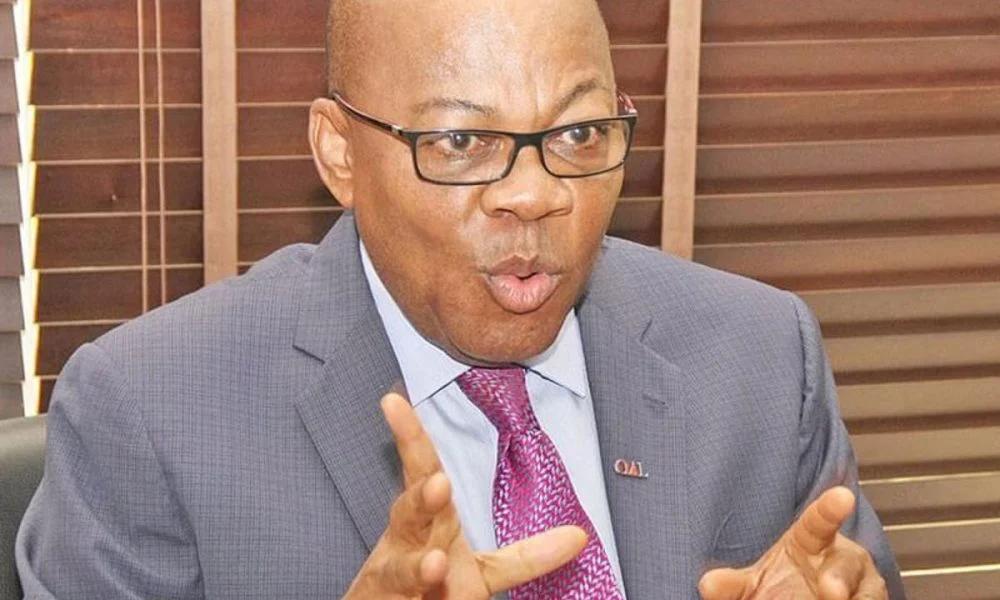
Nigeria’s preparations for the 2027 general election are already generating important questions about the relationship between press freedom, electoral transparency, technological innovation and the authority of the Independent National Electoral Commission (INEC). Among the issues demanding urgent clarification is whether journalists can publish election results announced at polling units before the commission completes the collation process and formally declares the winners. Former President of the Nigerian Bar Association, Olisa Agbakoba, has answered that question emphatically in the affirmative, citing a 1984 judgment involving the Nigeria Union of Journalists (NUJ) and the then Federal Electoral Commission (FEDECO), as well as provisions of the Electoral Act.
His argument deserves serious consideration because an election is not merely a process of voting; it is also a public exercise whose credibility depends on transparency, the free flow of information and the ability of citizens to scrutinise the conduct of those entrusted with managing their democratic choices. Nevertheless, while Agbakoba’s position offers a compelling defence of press freedom, it also raises questions about the dangers of premature reporting, the reliability of emerging artificial intelligence systems and the consequences of allowing unverified figures to influence public perception before the official electoral process is concluded.
The central issue is not whether journalists should be permitted to report election results. In a democracy, they should. The more important question is how that right can be exercised without compromising accuracy, undermining electoral institutions or creating confusion capable of threatening public peace.
The Merits: Press Freedom and The People’s Right To Know
The strongest merit of Agbakoba’s argument is its defence of the constitutional place of journalism in a democratic society. Journalists are not merely spectators waiting for INEC to complete its administrative responsibilities before informing citizens about what is happening in their communities. They are independent observers whose reporting helps the electorate assess whether votes are being counted transparently and whether electoral officials are following established procedures.
Where a presiding officer publicly counts votes and announces the figures at a polling unit, there is a legitimate public interest in those figures. Preventing journalists from reporting such information until the final declaration would unnecessarily restrict the flow of information and could create opportunities for secrecy, manipulation and the suppression of inconvenient facts.
Indeed, one of the most important safeguards against electoral malpractice is the presence of independent observers, party agents, civil society organisations and journalists throughout the voting and counting process. Their ability to document events as they unfold can make it more difficult for anyone to alter figures without attracting scrutiny.
Agbakoba’s distinction between publishing and declaring results is therefore fundamental. A journalist who reports that a presiding officer has announced a candidate to have received a particular number of votes is performing a reporting function. INEC, by contrast, must follow the legally prescribed collation, verification and declaration procedures before determining the official outcome of an election.
These functions are related, but they are not interchangeable. A report of figures announced at one polling unit does not establish the winner of a ward, local government, state or national election. Nor does the publication of results confer on a media organisation the authority to certify an electoral outcome.
This distinction should be welcomed because it protects both press freedom and the institutional responsibilities of INEC. The commission cannot reasonably claim exclusive ownership of information already announced publicly by its own officials. Its exclusive statutory responsibilities concerning collation and formal declaration do not automatically translate into a monopoly over independent reporting.
Agbakoba’s reference to the 1993 presidential election also highlights an important historical lesson. Publicly available results and independent reporting can contribute to citizens’ understanding of an election even when the formal process has not been completed. The experience of that election remains a reminder that transparency is indispensable to public confidence and that uncertainty surrounding electoral outcomes can have profound consequences for national stability.
The media should not have to remain silent while Nigerians wait for official announcements. Rather, journalists should be empowered to report verifiable developments while clearly distinguishing provisional figures from final results.
The Demerits: A Legal Right Does Not Guarantee Accurate Reporting
Despite the strength of Agbakoba’s argument, the danger lies in interpreting the right to publish too broadly. The fact that journalists may lawfully report figures announced at polling units does not mean that every figure circulating in the public domain is authentic, complete or accurate.
An election result passes through several stages of collation. Figures announced at individual polling units must be aggregated at ward, local government, state and, where applicable, national levels in accordance with the relevant electoral procedures. Errors may be identified, discrepancies may require examination, and the law may prescribe specific processes for resolving disputes.
Consequently, a collection of polling-unit results, even if extensive, is not necessarily a complete or authoritative picture of the election. A candidate who leads in the results available to a news organisation at a particular moment may eventually lose when outstanding polling units are included. Figures may also be duplicated, omitted or incorrectly transcribed.
The danger is especially acute when news organisations publish projections as though they were final outcomes. Headlines declaring a candidate the winner before the relevant collation process has been completed can mislead the electorate, encourage premature celebrations and provoke accusations of manipulation when subsequent figures change the picture.
The consequences may extend beyond reputational damage to a media organisation. In Nigeria, where electoral competition can be intensely polarised, false or premature claims of victory can inflame political tensions, undermine trust in INEC and provide material for those seeking to discredit an otherwise credible process.
The answer, therefore, is not to prohibit journalists from publishing polling-unit results. It is to insist on rigorous verification, transparent methodology and precise language. A media organisation must be able to explain where its figures came from, which polling units they cover, whether the figures have been independently corroborated and what limitations remain.
The distinction between reporting a result and declaring a winner must be visible not only in legal arguments but also in headlines, television graphics, online posts and breaking-news alerts.