 PublicSphere Live
Energy
NDC Gives INEC 72 Hours to Include Five Governorship Candidates in 2027 Election List
The demand was contained in a formal letter signed by the NDC National Chairman, Senator Cleopas Moses Zuwoghe, and the National Secretary, Barrister Ikenna Morgan Enekweizu.
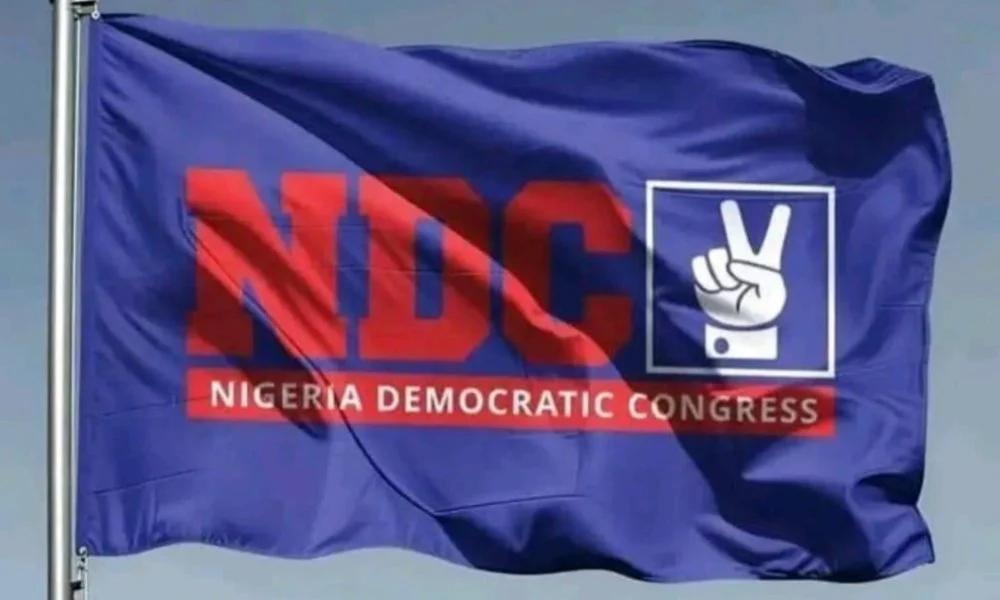
The Nigeria Democratic Congress (NDC) has given the Independent National Electoral Commission (INEC) 72 hours to include five of its governorship candidates and their running mates in the final list of candidates for the February 6, 2027 governorship elections, raising fresh questions over the compliance of political parties with electoral requirements and the handling of nominations by the electoral umpire.
The party, which accused INEC of omitting the names of candidates it claimed were validly nominated to contest the forthcoming elections, demanded an immediate correction of the published list, warning that the affected aspirants should not be denied the opportunity to participate in the electoral process.
The demand was contained in a formal letter signed by the NDC National Chairman, Senator Cleopas Moses Zuwoghe, and the National Secretary, Barrister Ikenna Morgan Enekweizu.
In the letter, titled “Omission of Names of Our Gubernatorial and Their Deputies,” the party expressed concern over the absence of its candidates and their running mates from the final list released by INEC on October 10, 2026.
The NDC maintained that the affected individuals had been duly nominated to represent the party in their respective states and urged the commission to review its records and rectify what it described as an omission.
The party also acknowledged INEC’s efforts towards conducting credible elections but insisted that such efforts must be reflected in the accurate publication of candidates who have satisfied the applicable requirements for participation.
The 72-hour ultimatum places the commission under pressure to clarify the circumstances surrounding the exclusions, particularly as political parties and their candidates prepare for the next stage of the electoral process.
Five Governorship Tickets Affected
The NDC identified candidates in Kano, Cross River, Kaduna, Kebbi and Ogun states as being affected by the omissions.
In Kano State, the party named Abdulsalam Aminu Gwarzo as its governorship candidate, with Rabiu Mustapha as his running mate.
In Cross River State, Odey John Upan was nominated for the governorship contest, alongside Archibong Stella Charles as the deputy governorship candidate.
The party’s Kaduna State ticket consists of Laah Danfuma Tella and Sani Bashir.
In Kebbi State, Muktar Faruk Alhaji and Ayuba Shamsudeen are the candidates named by the party for the governorship and deputy governorship positions, respectively.
The Ogun State ticket comprises Odusina Bolaji Marie and Adeyemni Yunus Adesina.
The party is demanding that the names of all the affected candidates and their running mates be reflected in INEC’s final list, arguing that their exclusion could undermine their participation in the forthcoming elections.
However, the NDC’s demand does not, by itself, establish that INEC acted unlawfully or that the affected nominations automatically satisfy all statutory conditions. The circumstances surrounding each omission would need to be examined against the relevant electoral provisions, the party’s submissions and the commission’s records.
The commission is yet to be quoted in the report as giving a specific response to the NDC’s demand or explaining the precise reason for the exclusion of each of the party’s candidates.
INEC Cites Electoral Requirements
The dispute comes against the background of INEC’s insistence that political parties must comply with statutory requirements governing membership registers and the conduct of primaries before their candidates can be recognised for an election.
Following the release of the final list on October 10, several politicians and political parties reportedly raised objections over the absence of their candidates, prompting demands for explanations from the electoral body.
INEC has attributed some of the exclusions to political parties’ failure to comply with legal requirements relating to the submission of membership registers and the conduct of primary elections.
The commission cited a Supreme Court judgment delivered on September 24, 2026, concerning provisions of the Electoral Act 2026.
According to the commission’s explanation, the relevant provisions require political parties to submit their membership registers within the prescribed period and limit participation in party primaries to members whose names appear on the registers submitted to the electoral body.
Under this framework, the submission of a membership register is not merely an administrative formality. It is connected to the question of who is eligible to participate in the process through which parties select their candidates.
INEC’s position is that parties that fail to fulfil the relevant requirements cannot expect the commission to accept candidates emerging from primaries conducted in violation of those provisions.
The distinction is important because a political party’s assertion that it validly nominated a candidate may not, on its own, resolve a dispute over compliance with the Electoral Act.
For the NDC, therefore, the central issue is whether it fulfilled the applicable requirements and whether the exclusion of its candidates resulted from an administrative error, a disagreement over compliance or another legal consideration.
A definitive resolution would require INEC to clarify the grounds for the omissions and, where necessary, identify the documents or statutory conditions on which its decision was based.
Dispute Extends Beyond The NDC
The controversy is not confined to the Nigeria Democratic Congress.
Reports indicate that the final list also excluded Peoples Democratic Party (PDP) governorship candidates in Gombe and Ogun states, suggesting that the disagreements surrounding the publication of candidates cut across party lines.
The involvement of candidates from different political parties makes the issue particularly significant for the credibility of preparations for the 2027 elections.
If the exclusions arise from failures by parties to meet statutory obligations, the dispute could serve as a warning to political organisations that internal nomination procedures must be conducted in accordance with the law.
However, if any names were omitted despite the candidates having met all applicable requirements, the commission would be expected to investigate and correct the error promptly.
The credibility of an electoral process depends not only on the eventual conduct of voting and the declaration of results but also on the fairness, transparency and consistency of the procedures through which candidates qualify to contest.
Political parties must comply with the law, while the electoral commission must demonstrate that its decisions are based on verifiable records and established legal standards rather than administrative inconsistencies.
These obligations are complementary, not mutually exclusive.
The existence of legal requirements does not remove the responsibility of the commission to explain its decisions, just as a party’s demand for inclusion does not exempt it from demonstrating compliance.
A Race Against Time
By issuing a 72-hour ultimatum, the NDC has signalled its determination to secure a resolution before the dispute further affects its preparations for the elections.
The deadline also raises questions about the next steps available to the party if INEC declines to amend the list or fails to provide a satisfactory explanation within the stipulated period.
Although the party has not specified what action it would take if the commission fails to comply, possible avenues for challenging an adverse decision would depend on the applicable electoral law, the nature of the dispute and the availability of judicial remedies.
The legal position may also differ depending on whether the disagreement concerns an administrative omission, the validity of a party primary, compliance with membership-register requirements or another issue governed by the Electoral Act.
Consequently, any further action by the NDC would need to be guided by the relevant statutory provisions and applicable judicial decisions.
The urgency of the party’s demand reflects the importance of resolving nomination disputes well before election day. Prolonged uncertainty over the identity of candidates can complicate campaign planning, confuse supporters and weaken public confidence in the electoral process.
For the affected politicians, the stakes are immediate: exclusion from the final list could jeopardise their participation in the governorship elections unless the issue is resolved through an appropriate administrative or legal process.
For INEC, the challenge is to establish clearly whether the exclusions were justified by the law or require correction.
Transparency Will Be Crucial
The latest dispute presents another test for INEC as it prepares for the 2027 general elections and seeks to demonstrate that the electoral process will be governed by law, transparency and impartiality.
The commission’s explanation of the omissions will be critical to determining whether the NDC’s demand has a valid basis and whether the affected candidates are entitled to inclusion.
A prompt and evidence-based response would help prevent speculation and allow the party to understand the grounds for the commission’s position.
Equally, if the party failed to meet a statutory requirement, INEC would need to communicate that position clearly, with sufficient explanation to distinguish the legal grounds for exclusion from an administrative oversight.
The broader lesson for political parties is that compliance with electoral procedures must begin long before the publication of final candidates’ lists. Parties must maintain accurate membership records, observe the prescribed nomination procedures and submit required documents within the statutory deadlines.
For the electoral commission, consistency in applying those requirements will be essential to ensuring that parties are treated fairly and that candidates who satisfy the law are not arbitrarily disadvantaged.
As the 72-hour deadline approaches, attention will turn to whether INEC responds to the NDC’s demand and whether the names of the five governorship candidates and their running mates are subsequently included in the final list.
The outcome could provide further clarity on the application of the Electoral Act 2026 and the procedures governing candidate nominations ahead of the February 6, 2027 elections.