 PublicSphere Live
Business
Dangote Cement Targets $1bn from November London Stock Exchange Listing
Company seeks to attract global investors as revenue rises to N4.31 trillion and profit more than doubles
Dangote Cement Plc, Africa’s largest cement producer, is targeting to raise about $1 billion through a proposed secondary listing on the London Stock Exchange (LSE) in November, in a move expected to broaden its international investor base and strengthen its access to global capital markets.
The proposed listing forms part of the wider ambition of the Dangote Group, owned by Nigerian industrialist Aliko Dangote, to achieve a valuation of $100 billion, reflecting its expansion drive and efforts to position its businesses among globally competitive industrial enterprises.
According to Bloomberg, the cement manufacturer has appointed Goldman Sachs Group Inc. and UBS Group AG as bookrunners for the proposed transaction, citing people familiar with the matter.
The transaction is expected to involve the sale of approximately 10 per cent of Dangote Cement by existing shareholders, rather than the issuance of new shares by the company. This means the proposed offering would provide a route for existing investors to sell part of their holdings to international investors, subject to the final terms of the transaction.
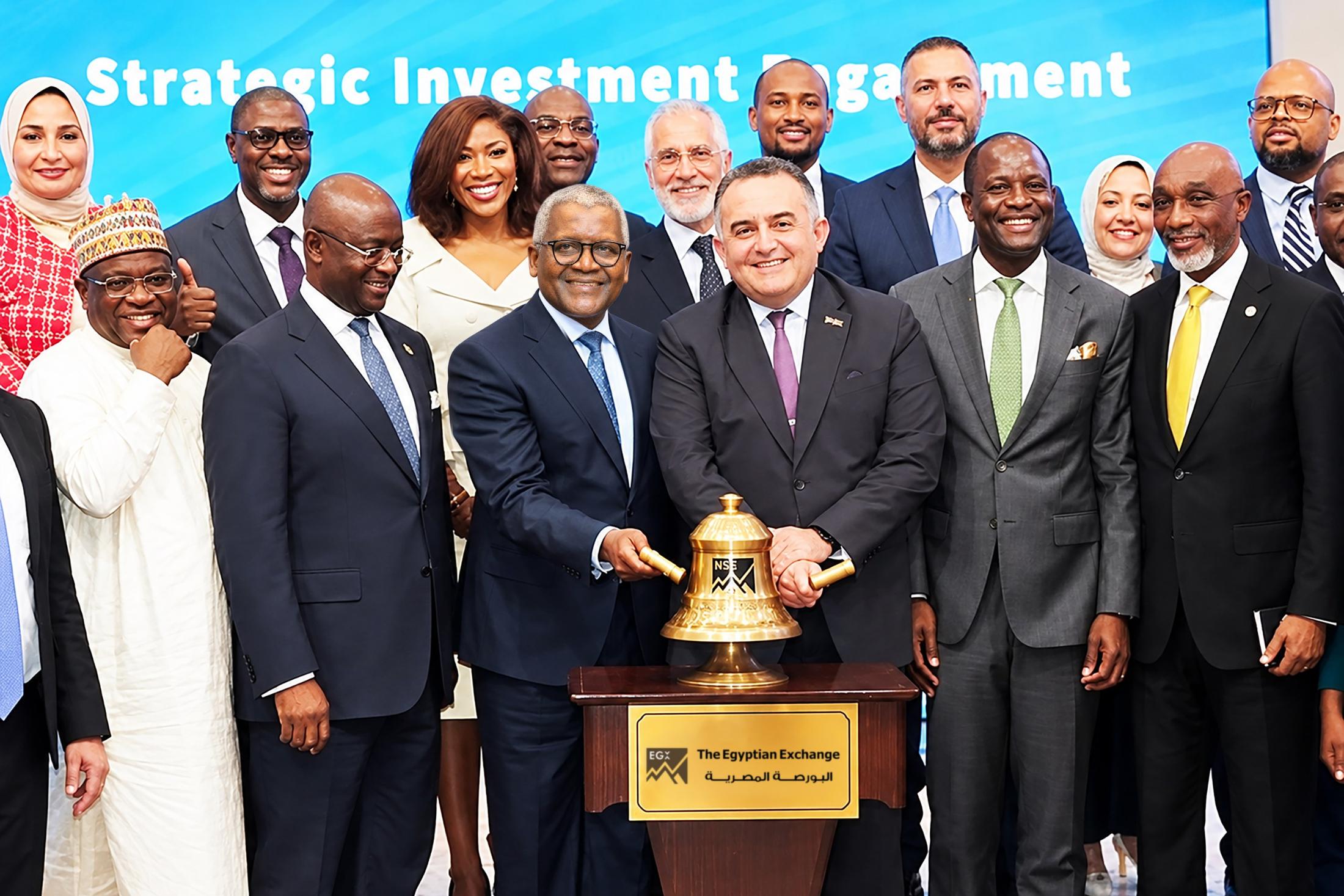
The planned London listing would give global investors an additional avenue to invest in the Nigerian cement producer, whose shares are already traded on the Nigerian Exchange (NGX) Limited. It could also increase the company’s visibility among international institutional investors and expose its shares to a broader pool of capital.
The move comes as Dangote Cement consolidates its position in Africa’s construction materials industry, supported by rising revenue, improved profitability and an extensive manufacturing network across the continent.
Revenue Rises to N4.31 Trillion
The company’s financial performance has provided an important backdrop to its international capital market ambitions.
Dangote Cement reported revenue of N4.31 trillion for the 2025 financial year, representing a 20.3 per cent increase over the previous year. Its profit after tax rose by 101.7 per cent to N1.015 trillion, indicating a substantial improvement in its bottom-line performance.
Earnings before interest, taxes, depreciation and amortisation (EBITDA), a key measure of operating profitability, increased by 43.4 per cent to N1.981 trillion during the period.
The performance reflected the company’s ability to grow revenue while strengthening operating earnings, although factors such as production costs, energy expenses, distribution expenditure, exchange-rate movements and financing costs remain important considerations for the cement industry.
The increase in profit is particularly significant for a business operating in a capital-intensive sector that requires substantial investments in manufacturing plants, power supply, logistics, maintenance and distribution networks.
Cement production also depends heavily on energy availability and transportation infrastructure, making operational efficiency a major determinant of profitability in markets where infrastructure gaps and high logistics costs can affect the movement of goods.
The company's reported results could therefore provide an important part of the investment case it intends to present to prospective international shareholders.
55 Million Tonnes Of Installed Capacity
Dangote Cement has continued to expand its manufacturing footprint beyond Nigeria, building a presence in several African markets and positioning itself to benefit from the continent’s demand for housing, roads, bridges, commercial buildings and other infrastructure.
The company recorded sales volumes of 27.5 million tonnes in 2025 and has installed production capacity of 55 million tonnes annually across its African operations.
It operates in 11 African countries, giving it a substantial presence in a market where infrastructure development, urbanisation and population growth are expected to sustain demand for construction materials over the longer term.
Its Nigerian operations remain central to the business, while its investments in other African countries provide geographical diversification and opportunities to serve markets outside its home base.
The company’s continental footprint also reflects a broader industrial strategy in which African economies seek to reduce their dependence on imported manufactured products by developing domestic production capacity.
For Nigeria, the growth of a large-scale cement producer has implications extending beyond the company's financial results. A domestic manufacturing base can support employment, local supply chains, transport services, equipment maintenance and other businesses connected to construction and infrastructure development.
However, the benefits of increased production capacity depend partly on sustained demand, affordable financing, reliable energy, efficient transportation and a policy environment that enables manufacturers to compete effectively.
The proposed London listing could help raise the company's international profile as it seeks to finance its ambitions and engage investors interested in African industrial development.
London Listing Gathers Momentum
Dangote Cement’s plans for a London listing gathered momentum following shareholder approval for the proposed secondary listing and a capital markets day held in London on September 21.
At the event, management engaged investors on the company’s strategy, operations and business priorities, providing an opportunity to communicate its investment proposition to participants in the international financial market.
The appointment of Goldman Sachs and UBS as bookrunners represents another step towards the proposed transaction. The two international financial institutions are expected to support the offering process, including engagement with prospective investors and the arrangements surrounding the sale of shares.
A listing on the LSE could increase the company’s exposure to international investment funds and other institutional investors whose investment mandates or market preferences may make it easier to access shares traded on a major international exchange.
It could also improve the visibility of Dangote Cement among analysts and investors who follow multinational industrial companies, particularly those with substantial operations in emerging and frontier markets.
Nevertheless, a secondary listing does not automatically guarantee a particular valuation, higher share prices or a permanent increase in liquidity. These outcomes would depend on investor demand, the final transaction structure, prevailing market conditions and the company's ability to sustain its operating performance.
The actual amount raised would also depend on the final price and number of shares sold, as well as the terms agreed by the participating shareholders and the relevant market authorities.
Because the proposed transaction involves existing shareholders selling part of their holdings, the proceeds would generally accrue to those selling shareholders rather than directly to Dangote Cement. The company could benefit indirectly through greater visibility and access to a wider investor community, but the transaction should not be confused with a fresh capital injection into its operations.
Reviving A Long-Standing Ambition
The planned offering represents a revival of a capital market initiative that has been under consideration for more than a decade.
Dangote Cement first explored a London listing in 2011, while an earlier attempt was abandoned in 2018.
The renewed effort suggests that the company is again seeking to connect its African industrial operations with international capital markets as it pursues its longer-term growth objectives.
The global investment environment has changed considerably since the initial plans were considered, with investors paying closer attention to corporate governance, capital allocation, sustainability, foreign-exchange risks and the capacity of businesses in emerging markets to generate consistent returns.
For Dangote Cement, the proposed listing provides an opportunity to present its operational scale, financial results and growth strategy to a broader audience while seeking to attract investors willing to take exposure to African manufacturing.
The transaction would also place renewed attention on the relationship between Nigerian capital markets and international exchanges.
Dangote Cement’s existing NGX listing provides a domestic platform through which Nigerian investors can participate in the company's performance. A London listing would add an international dimension, potentially expanding the range of investors able to access its shares.
For the Nigerian Exchange, the development could underscore the growing international reach of major Nigerian companies. At the same time, it raises questions about how domestic capital markets can deepen liquidity, attract institutional investment and remain competitive as leading companies seek access to multiple financial centres.
The extent of any impact on the NGX would depend on the final structure of the London transaction, investor participation and how the shares traded on the two exchanges interact.
Implications For The Dangote Group's $100 Billion Ambition
The proposed $1 billion transaction is also being viewed against the Dangote Group’s broader ambition to attain a valuation of $100 billion.
The group has interests across major industrial sectors, and Dangote Cement remains one of its most prominent businesses because of its production capacity, continental presence and contribution to the group’s earnings.
A successful London listing could provide a stronger international platform for the cement business and help establish a wider investor constituency familiar with its operations and financial performance.
It could also reinforce the group's profile as a major African industrial enterprise seeking to compete for capital alongside companies operating in established global markets.
However, a $1 billion share offering and a $100 billion group valuation are different financial measures. The amount raised from the proposed transaction would represent the value of shares sold, while a valuation would reflect the market's assessment of the underlying business or businesses. One does not automatically establish the other.
Achieving the group's broader valuation ambition would require sustained business performance, credible growth prospects, effective capital allocation and investor confidence across its various operations.
For Dangote Cement, maintaining profitability while expanding production and navigating the different economic conditions across its markets will remain central to its long-term investment appeal.
Investors To Watch Execution and Market Conditions
As the proposed November transaction approaches, prospective investors are likely to assess not only Dangote Cement’s reported earnings but also the terms of the offering, its valuation, corporate governance arrangements and the outlook for cement demand across Africa.
The company's installed capacity of 55 million tonnes annually provides a substantial production base, but capacity alone does not determine financial performance. Actual sales, capacity utilisation, selling prices, production costs and the availability of infrastructure to move cement to customers will continue to influence earnings.
Macroeconomic conditions in Nigeria and other African markets will also matter. Interest rates, inflation, exchange-rate movements and public and private infrastructure spending can influence construction activity and the affordability of building materials.
The company's ability to sustain revenue growth and convert operating earnings into cash will therefore remain important considerations for investors evaluating the proposed listing.
The final offering details, including pricing and the precise number of shares to be sold, will be crucial in determining the level of investor demand and the transaction's ultimate outcome.
If completed successfully, the London listing would mark another significant step in Dangote Cement’s efforts to extend its reach into international financial markets while maintaining its position as a major supplier to Africa’s construction industry.
For Nigeria, the development would offer a further example of a home-grown industrial company seeking to attract global investment on the strength of its scale, earnings and regional operations. Its longer-term significance, however, will depend on whether the international exposure translates into sustained investor confidence, stronger corporate performance and continued expansion across the African market.