PublicSphere Live
Metro News
NDDC Board Member Orok Duke to Unveil Five Books in Abuja
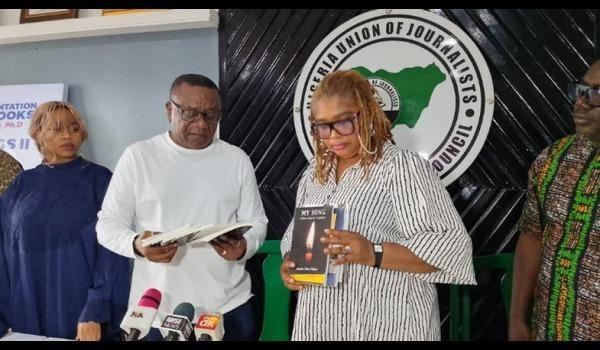
Duke, a former Deputy Speaker of the Cross River State House of Assembly, announced the forthcoming presentation, tagged Readings II, during the unveiling of the books at the Nigeria Union of Journalists (NUJ) Press Centre in Calabar.
By Aniekan Aniekan, Calabar
The Cross River State representative on the Board of the Niger Delta Development Commission (NDDC), Orok Duke, will on Thursday, November 5, present five of his latest books to the public in Abuja as part of efforts to promote literacy, encourage reading and preserve Nigeria’s cultural heritage.
Duke, a former Deputy Speaker of the Cross River State House of Assembly, announced the forthcoming presentation, tagged Readings II, during the unveiling of the books at the Nigeria Union of Journalists (NUJ) Press Centre in Calabar.
The event is scheduled to commence at 1 p.m. at the NAF Conference Centre and Suites, Abuja, and is expected to showcase the author's literary engagement with history, poetry, cultural traditions and the experiences of Nigerians during and after the Civil War.
The five books are Calabar Modern Stories; Welcome to Uyo (The Nigerian Civil War Through the Eyes of a Calabar Child, 1967–1970); Winnowing (Duke Town, So, the Sky Stayed and Other Poems); Treasures (Calabar Festivals, Idim Uyo, Forbidden Streets and Other Poems); and Oluchi's Journey (Three Generations of the Okerekes in Calabar, Before, During and After the Nigerian Civil War).
According to Duke, the publications are intended to contribute to the development of a reading culture, stimulate interest in Nigerian literature and ensure that the country's history and cultural experiences are documented for future generations.
He explained that writing about local experiences was particularly important because communities must take responsibility for telling their own stories rather than leaving their histories to be interpreted exclusively by outsiders.
Documenting The Civil War Through Personal Experiences
Providing insights into Welcome to Uyo, Duke said the book recounts his childhood experiences in Uyo during the Nigerian Civil War, which lasted from 1967 to 1970.
He recalled the deaths, humanitarian crises and severe shortages of relief materials that characterised the period, particularly for refugees who had sought safety in the area.
Duke explained that Uyo served as a major refugee centre in the region during the conflict, exposing residents, including children, to the devastating consequences of war.
He said his decision to document those experiences was motivated by the need to preserve the memories of people whose suffering might otherwise be forgotten or inadequately represented in historical accounts.
“Why did I document this? Strictly because Uyo was the headquarters of refugees in our region. Millions were dying every day. You see your classmate in the morning, and the next day the classmate is dead,” he said.
The author noted that the experience of growing up amid the conflict left lasting impressions on him, making it necessary to record the human consequences of the war from the perspective of those who lived through it.
Beyond the statistics and conventional accounts of the Nigerian Civil War, his recollections draw attention to the personal tragedies, disrupted childhoods and humanitarian challenges that shaped the lives of ordinary Nigerians during the conflict.
His account also underscores the importance of preserving memories of the war as a means of helping younger generations understand the human cost of armed conflict and the value of peace.
'Let Us Tell Our Own Stories'
Duke stressed that Nigerians should take a more active role in documenting their history, culture and collective experiences, whether those experiences were pleasant or painful.
He argued that the failure of a people to tell their own stories could allow others to shape historical narratives in ways that might not accurately reflect their experiences.
“I took time and documented our experiences because until and unless the lion writes its own story, every story about the hunter shall glorify the hunter,” he said.
He added: “Some stories they tell about us might not necessarily be true. Let us write about ourselves, whether happy or sad days. Let us tell our own stories.”
The remarks highlight the role of literature as a tool for preserving collective memory and giving voice to communities whose experiences may be overlooked in dominant historical narratives.
For Duke, documenting the past is not merely an exercise in recalling personal memories but also a contribution to a broader understanding of Nigeria's social and cultural development.
By recording events from the perspective of those who experienced them, writers can provide additional context to historical accounts and preserve details that may not always feature prominently in official records.
Exploring Calabar's Culture and Literary Heritage
The five publications cover different aspects of Nigerian life, with particular attention to Calabar's cultural identity, the experiences of communities in the South-South region and the enduring consequences of the Civil War.
Calabar Modern Stories explores storytelling through contemporary experiences associated with Calabar, while Welcome to Uyo centres on the author's recollections of the war years and the suffering of refugees.
The poetry collections, Winnowing and Treasures, draw attention to places, traditions and cultural experiences, including Duke Town, Calabar festivals, Idim Uyo and other subjects reflected in their titles.
Meanwhile, Oluchi's Journey examines the experiences of three generations of the Okereke family in Calabar before, during and after the Civil War, placing family history within the wider context of a defining period in Nigeria's national experience.
Taken together, the books reflect the author's interest in the relationship between personal memory, family experiences, community identity and national history.
They also provide an opportunity to preserve aspects of the cultural heritage of Cross River and neighbouring communities through literary expression.
The emphasis on Calabar's festivals, historical experiences and cultural traditions is particularly significant at a time when preserving indigenous knowledge and passing it on to younger generations remain important challenges.
Literary works that capture local traditions, social changes and historical experiences can help ensure that the cultural identities of communities remain part of the country's wider national story.
Promoting Reading and Historical Consciousness
Duke's planned presentation comes against the background of continuing calls for stronger reading habits and greater investment in literature, particularly works that document Nigeria's history and cultural diversity.
Books remain an important means of encouraging critical thinking, expanding knowledge and exposing readers to experiences beyond their immediate environment.
The documentation of the Civil War through personal recollections also offers a way of engaging younger Nigerians with a conflict that profoundly affected the country's political, social and humanitarian development.
By combining storytelling, poetry, cultural documentation and historical recollections, Duke's publications seek to reach readers interested in literature as well as those concerned with the preservation of Nigeria's heritage.
The November 5 presentation in Abuja is expected to provide a platform for introducing the five titles to a wider audience and drawing attention to the importance of recording Nigerian experiences from the perspectives of the people and communities involved.
Duke's intervention reinforces the argument that the preservation of history is a shared responsibility involving writers, historians, cultural institutions and members of the communities whose experiences form part of the national narrative.
Through Readings II, the author is bringing together five works that explore different dimensions of Nigerian life while advancing a central message: that a people who document their experiences are better positioned to preserve their identity, interpret their past and transmit their heritage to future generations.