 PublicSphere Live
News
Tinubu Inaugurates APC Presidential Campaign Council, Mobilises Leaders for 2027 Re-election
Soludo, Wike, Adeleke declare support as APC defends reforms; opposition questions government’s record
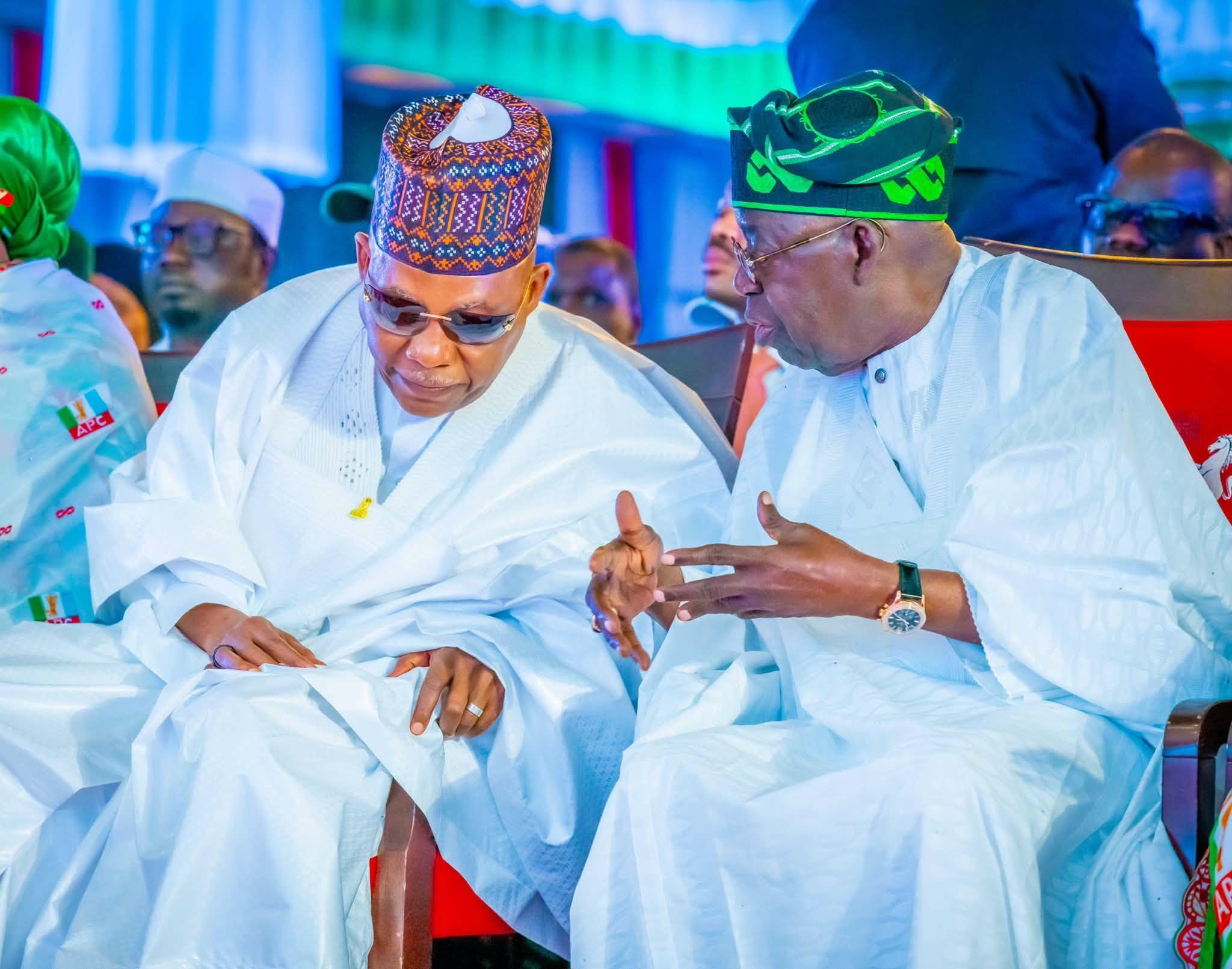
ABUJA — President Bola Tinubu on Wednesday inaugurated the All Progressives Congress (APC) Presidential Campaign Council for the 2027 general election, charging its members to intensify grassroots mobilisation and secure votes for his re-election while assuring Nigerians that governance would remain his priority.
The inauguration brought together APC governors, ministers, members of the National Assembly, party officials and prominent politicians from other political parties who declared support for the President’s second-term ambition.
Among those present were Vice-President Kashim Shettima, APC National Chairman, Prof. Nentawe Yilwatda, Imo State Governor Hope Uzodimma, Senate President Godswill Akpabio and Speaker of the House of Representatives, Tajudeen Abbas.
The participation of Anambra State Governor Chukwuma Charles Soludo of the All Progressives Grand Alliance (APGA), Osun State Governor Ademola Adeleke of the Accord Party and Minister of the Federal Capital Territory, Nyesom Wike, a prominent Peoples Democratic Party (PDP) figure, gave the gathering a broader political character.
The event marked a formal step in the APC’s preparations for the 2027 presidential election, with the ruling party seeking to defend its record on economic reforms, infrastructure and national development.
However, the campaign begins against a backdrop of continuing concerns over the cost of living, insecurity, unemployment and the impact of economic adjustments on households and businesses.
Tinubu Charges Campaigners To Deliver Votes
Addressing members of the council, Tinubu emphasised that political influence and previous electoral achievements would count for little without concrete results at the grassroots.
He urged campaign leaders to take responsibility for their assigned areas and ensure that the party’s message reached voters across the country.
“I thank all of you for the last election, but no one gets credit for an incomplete assignment until you deliver the next election, until you deliver your electoral wards, until you deliver the votes,” the President said.
His remarks highlighted the importance of ward-level mobilisation, voter engagement and coordination among the different campaign structures.
Tinubu also acknowledged advice from Uzodimma and other party leaders that he should not allow electioneering activities to distract him from his presidential responsibilities.
He said he agreed that governance required sustained attention, particularly at a time when the country was implementing economic reforms and seeking to attract investment.
The President maintained that the campaign council would coordinate political mobilisation while he continued to discharge his official duties.
He also reiterated his commitment to the Renewed Hope Agenda, which has guided his administration’s policies on petrol subsidy removal, foreign exchange management, taxation and other economic issues.
Tinubu’s challenge is to convince Nigerians that these policies, despite the immediate difficulties they have created for many households, are laying the foundation for sustainable growth and improved living standards.
APC Defends Economic Reforms
In his remarks, Uzodimma defended the administration’s economic policies, arguing that the removal of the petrol subsidy and changes to foreign exchange management were necessary to address longstanding structural problems.
He said previous governments had recognised these problems but had not taken comparable decisions because of the political consequences.
According to him, the reforms were intended to reduce economic distortions, improve public finances and create a more sustainable environment for investment.
Uzodimma also cited tax reforms, infrastructure development and economic growth as areas the campaign should highlight when explaining the government’s record to voters.
He acknowledged that the policies had caused hardship but argued that the country needed to look beyond their immediate effects.
“Nobody here pretends that these reforms did not bring some hardship or some inconveniences to our people,” he said, while maintaining that economic indicators pointed towards progress.
The argument reflects the APC’s anticipated campaign message that the administration should be given more time to consolidate its reforms and deliver their intended benefits.
Opposition parties, however, have questioned whether the gains claimed by the government have translated into sufficient relief for ordinary Nigerians.
For households confronting high food prices, transport costs and other essential expenses, the central question is whether economic improvements will produce tangible changes in purchasing power and living conditions.
The campaign will therefore need to connect macroeconomic indicators with measurable improvements in employment, household incomes, business activity and access to public services.
Shettima Challenges Opposition Proposals
Vice-President Shettima defended Tinubu’s leadership and urged Nigerians to consider the administration’s reform programme before deciding whether to support a change of direction.
He criticised opposition politicians, including former Vice-President Atiku Abubakar and Peter Obi, over their economic proposals and comparisons between Nigeria and other countries.
Shettima questioned the feasibility and fiscal implications of proposals to introduce production subsidies, arguing that candidates should explain how their promises would be funded and what competing expenditure priorities might be affected.
He also cautioned against adopting economic prescriptions from other countries without accounting for differences in population, institutions and economic structures.
His intervention suggested that the APC intends to make the opposition’s policy alternatives a central feature of the presidential campaign.
The ruling party is expected to defend its decisions as necessary adjustments to an economy burdened by fiscal pressures and structural inefficiencies.
The opposition, in turn, is likely to argue that reforms should be judged by their consequences for citizens and that alternative policies could provide relief without undermining fiscal stability.
The debate will require candidates to explain their proposals in practical terms, including how they intend to fund public spending, support vulnerable households and encourage productive investment.
Soludo, Adeleke Declare Support
One of the notable developments at the inauguration was Soludo’s declaration of support for Tinubu’s re-election.
The Anambra governor, who leads a state governed by APGA rather than the APC, linked his position to national unity, security and shared prosperity.
Soludo argued that the country needed to sustain economic reforms and move towards a phase in which their benefits would be more widely experienced.
He described the proposed next phase as “pragmatic progressivism”, suggesting that policy continuity should be accompanied by a stronger emphasis on inclusive development.
The governor’s participation was significant because it demonstrated that support for Tinubu’s second-term bid extends beyond the ruling party’s formal membership.
Nevertheless, his endorsement does not mean that APGA has ceased to operate as an independent political party or that all its members necessarily share his position.
Adeleke, who belongs to the Accord Party, also expressed support for the President, arguing that the administration needed more time to implement its economic agenda.
The two governors’ positions add a cross-party dimension to the campaign, although their practical impact will depend on how effectively political endorsements translate into voter support.
Their participation also raises questions about how presidential alliances will coexist with the separate interests of political parties in governorship, legislative and other elections.
Wike Pledges Support For Tinubu
Wike, the FCT minister and a prominent PDP figure, also reaffirmed his support for the President, arguing that Tinubu had demonstrated the willingness to confront problems previous administrations had left unresolved.
“Previous administrations identified our problems, but did not tackle them. You have not shied away from tackling such problems. You tackled them from Day One,” Wike said.
He pledged to work for Tinubu’s re-election in Rivers State and the Federal Capital Territory, while challenging other campaign coordinators to take responsibility for their respective areas.
Wike’s involvement is politically notable because he remains associated with the PDP even as he serves in Tinubu’s cabinet and campaigns for the APC presidential candidate.
His position illustrates the fluid nature of Nigerian political alliances, where individuals sometimes cooperate across party boundaries while their organisations retain separate identities.
However, his declaration of support does not automatically establish that all PDP members in Rivers or the FCT will follow his lead.
The campaign will have to demonstrate the extent to which such endorsements can translate into broader support among voters, particularly those who may assess candidates primarily through their records on the economy, security and public services.
APC Unveils Campaign Leadership
Former Zamfara State Governor Abdulaziz Yari was appointed director-general of the Presidential Campaign Council, with Uzodimma serving as secretary.
Shettima and Yilwatda were named first and second vice-chairmen, respectively, under the announced structure.
The council is expected to coordinate national mobilisation, campaign communications, state-level operations and engagement with voters ahead of the election.
Akpabio and Abbas urged campaigners to communicate the administration’s achievements and respond to criticism with policy arguments rather than personal attacks.
Yilwatda, in his welcome address, said the campaign must explain how government investments in roads, electricity, railways, ports, agriculture and digital connectivity could improve the daily lives of Nigerians.
He also identified the cost of living, security, employment, education, healthcare and agricultural productivity as issues that should feature prominently in the campaign.
His remarks suggested that the APC recognises the need to connect its claims about economic reforms and infrastructure with the everyday experiences of citizens.
The council’s effectiveness will depend not only on its size or the prominence of its members but also on its ability to communicate credible evidence of progress and address areas where public concerns remain unresolved.
Opposition Questions The Inauguration
The inauguration attracted criticism from opposition figures who questioned the government’s record and argued that political endorsements would not, by themselves, resolve Nigeria’s economic and security challenges.
Atiku’s camp criticised the expanded council, arguing that the administration should focus on the hardship facing Nigerians rather than the accumulation of political support.
The African Democratic Congress Presidential Campaign Council also condemned the inauguration, describing it as a threat to democratic competition and accusing the ruling party of seeking political dominance.
The opposition maintained that the government should be held accountable for its handling of the economy, insecurity and other national challenges.
The APC, however, has defended its reform programme and maintained that Tinubu deserves another term to consolidate the policies initiated by his administration.
The contrasting positions underline the competing narratives expected to shape the 2027 election: the ruling party’s argument for continuity and the opposition’s demand for accountability and alternative solutions.
The Test Ahead
Beyond the ceremony, the major task facing the APC Presidential Campaign Council is to translate political endorsements into a convincing national campaign.
The inclusion of politicians from APGA, Accord and the PDP provides the council with a wider network of political relationships, but the electoral value of those alliances cannot be determined by attendance or declarations alone.
For Tinubu, the challenge is to demonstrate that his administration’s policies can deliver more visible benefits to households and businesses while addressing insecurity, unemployment and the cost of living.
For the opposition, the challenge is to present credible alternatives, explain how proposed policies would be funded and demonstrate how they would improve the lives of Nigerians.
As the 2027 election approaches, the inauguration marks the beginning of a more organised phase of the APC’s re-election preparations. Tinubu has made clear that he expects campaign leaders to deliver votes, but the ultimate decision will rest with Nigerians at the ballot box.