 PublicSphere Live
Politics
Wike Urges Opposition to Acknowledge Tinubu’s Achievements, Backs State Police Reform
FCT Minister says political differences should not overshadow national interest as he challenges APC campaign council members to deliver measurable results

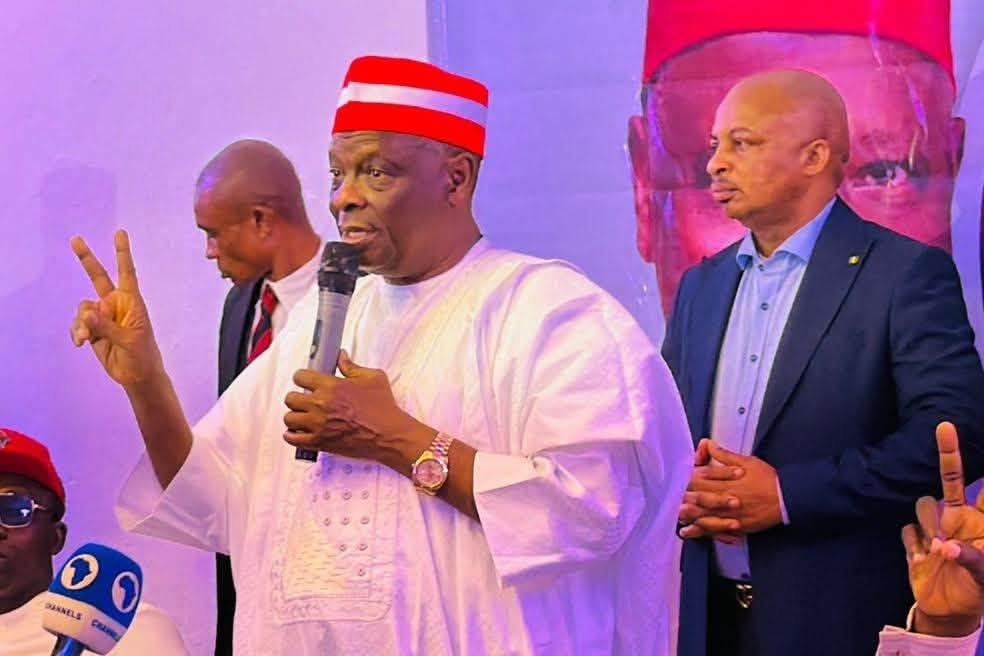
ABUJA, October 15, 2026 — The Minister of the Federal Capital Territory (FCT), Nyesom Wike, has challenged opposition politicians to look beyond partisan differences and acknowledge the achievements of President Bola Ahmed Tinubu’s administration, arguing that constructive engagement and objective assessment of government policies are essential to Nigeria’s democratic development.
Wike, a prominent member of the Peoples Democratic Party (PDP) who has consistently expressed support for Tinubu, made the appeal at the inauguration of the All Progressives Congress (APC) Presidential Campaign Council in Abuja on Wednesday, October 14.
His intervention brought a distinctive dimension to the political gathering, highlighting the possibility of cooperation across party lines when politicians believe that particular policies or decisions serve the national interest.
The FCT minister maintained that belonging to an opposition party should not automatically translate into the rejection of every policy or initiative introduced by the ruling party. In his view, political affiliation should not prevent public officials and political leaders from recognising developments they consider beneficial to the country.
His position reflects an argument that Nigeria’s political debate would be more productive if it moved beyond the automatic condemnation of government policies by opponents and the uncritical defence of every administration decision by supporters.
For a country grappling with economic pressures, insecurity, infrastructure deficits and demands for improved public services, the ability of political leaders to distinguish between legitimate criticism and partisan hostility remains important to the quality of public discourse.
Wike’s remarks also underscored the need for political leaders to assess government performance against policies, decisions and tangible outcomes rather than relying exclusively on party identity.
Wike Defends Tinubu’s Willingness To Confront Difficult Issues
The former Rivers State governor disagreed with opposition narratives suggesting that the Tinubu administration lacked direction, arguing that the President had demonstrated a willingness to confront difficult national problems that previous governments had recognised but had not adequately addressed.
The argument places the administration’s reform agenda within the broader challenge of governing a country whose economic and institutional difficulties have accumulated over several decades.
Nigeria’s economic restructuring, security challenges and public-sector reforms require decisions that can generate immediate controversy while seeking longer-term benefits. Consequently, the assessment of any administration involves not only examining the intentions behind its policies but also determining whether their implementation is producing improvements in the lives of citizens.
Wike’s defence of Tinubu therefore rests on the principle that difficult policy decisions should be evaluated on their objectives, execution and eventual results, rather than dismissed solely because they originate from a political opponent.
His intervention does not remove the responsibility of the government to explain its policies or address public concerns. Rather, it raises the question of whether the political environment allows adequate consideration of the merits of individual decisions, including those that may attract disagreement across party lines.
For the administration, such an approach could provide an opportunity to strengthen public confidence by demonstrating how its reforms are intended to address longstanding economic and institutional weaknesses.
For opposition parties, it presents a challenge to develop alternatives that go beyond denunciations and explain how competing policy proposals would deliver better outcomes for Nigerians.
A credible democratic contest requires both a government capable of defending its record and an opposition capable of subjecting that record to rigorous scrutiny while presenting workable alternatives.
State Police Emerges As A Key Security Reform
Security was another important issue highlighted by Wike, who expressed confidence in the administration’s capacity to confront insecurity and identified the proposed establishment of state police as a reform that could strengthen security management.
The question of state policing has remained central to Nigeria’s national security debate, particularly as communities across the country continue to demand more responsive and effective protection against criminal activities.
Under the existing policing structure, the Nigeria Police Force operates within a predominantly centralised national framework. Advocates of state police argue that state-level policing arrangements could improve intelligence gathering, shorten response times and enable security personnel to develop a better understanding of local threats.
They contend that state governments, working with communities and other security agencies, could be better positioned to identify emerging dangers and respond to the specific security needs of their territories.
Such an arrangement could also create opportunities for closer cooperation between local communities, traditional institutions and security personnel, provided appropriate safeguards are established.
However, the proposed reform requires careful consideration of constitutional, operational and financial questions. These include how state police would be funded, how officers would be recruited and trained, what mechanisms would prevent political interference, and how accountability would be maintained.
There are also concerns that state governors could attempt to deploy local police forces against political opponents or use them to suppress legitimate dissent. Such risks make institutional safeguards, independent oversight and clearly defined operational responsibilities indispensable.
For state policing to achieve its intended purpose, the reform would need to preserve professional standards, protect citizens’ rights and establish effective coordination between state and federal security institutions.
Wike’s support for the initiative places him among political leaders who believe that Nigeria’s security architecture requires further institutional adaptation to meet the demands of a large and diverse federation.
The success of the proposal, however, would ultimately depend on the quality of its implementation and the capacity of the resulting institutions to provide impartial and effective security.
If properly designed, state police could become an important component of a broader national strategy that combines intelligence-led operations, improved equipment, professional training, community engagement and stronger coordination among security agencies.
Campaign Council Members Challenged To Deliver Results
Beyond his defence of the administration, Wike challenged members of the APC Presidential Campaign Council to demonstrate their political influence through measurable results within their respective areas of responsibility.
He cautioned, in effect, against treating appointments and political positions as achievements in themselves, emphasising the importance of translating influence into tangible outcomes.
The challenge is particularly relevant to a campaign council whose members are expected to mobilise support, communicate the administration’s policies and explain its record to voters ahead of the 2027 general election.
The inauguration brought together political leaders and stakeholders tasked with coordinating the ruling party’s campaign efforts. Such a structure can provide the organisational framework for communicating government programmes, engaging communities and building political support.
However, the effectiveness of a campaign council cannot be determined solely by the prominence of its members or the size of its membership. Its credibility will also depend on whether its activities respond to the concerns of ordinary citizens and provide convincing explanations of the government’s performance.
Wike’s call for measurable results therefore introduces an important standard for assessing political leadership: responsibility should be demonstrated through performance rather than titles.
For council members, this could mean establishing effective channels for communicating government policies, listening to public concerns, explaining the objectives of reforms and ensuring that campaign activities are connected to the realities confronting communities.
It also places a responsibility on political appointees and campaign officials to avoid the assumption that access to powerful individuals automatically translates into public support.
Nigerians are increasingly concerned with issues that directly affect their daily lives, including the cost of living, employment opportunities, security, transport, electricity, healthcare and access to quality education. Political mobilisation that fails to address these concerns risks becoming disconnected from the electorate.
A campaign council that can explain policies clearly, acknowledge implementation challenges and demonstrate evidence of progress would be better positioned to engage voters meaningfully.
Cross-Party Participation Highlights The Complexity Of Nigerian Politics
The inauguration also brought together political figures from different parties, including Anambra State Governor Chukwuma Charles Soludo and Osun State Governor Ademola Adeleke.
Their presence illustrated the complex relationships that often characterise Nigerian politics, where party affiliations, policy interests, personal political calculations and questions of national development can intersect in different ways.
Wike’s position is particularly notable because he continues to identify with the PDP while openly supporting Tinubu. His stance challenges the assumption that political identity must always determine a politician’s position on every national issue.
It also demonstrates how political alliances and expressions of support can extend beyond formal party boundaries, although such relationships may generate disagreements within the parties concerned.
In a competitive democracy, politicians remain entitled to express support for policies or leaders outside their parties, subject to the applicable laws and the rules governing their political organisations.
At the same time, cross-party support does not eliminate the importance of opposition parties or weaken the need for independent scrutiny of government decisions.
Indeed, a healthy democracy benefits when political leaders can cooperate on issues of common interest while retaining the freedom to disagree on matters of policy, governance and political direction.
The presence of figures from different political backgrounds at the inauguration consequently offered a reminder that national development is not necessarily served by treating every political disagreement as an insurmountable barrier to dialogue.
Where consensus is possible, political leaders can work together. Where disagreements remain, those differences should be resolved through democratic debate, constitutional procedures and the presentation of evidence.
Government Performance Must Remain Open To Public Scrutiny
Wike’s appeal for recognition of Tinubu’s achievements also raises a wider question about how government performance should be evaluated in a democracy.
An objective assessment requires more than political declarations or campaign rhetoric. It demands credible evidence of progress, transparent reporting of public expenditure, measurable improvements in public services and an honest appraisal of the costs and benefits of policy decisions.
While the administration and its supporters have the right to present their achievements, Nigerians must also be able to judge those claims against their personal experiences and independently verifiable information.
Similarly, opposition parties should be able to criticise government policies without being accused automatically of hostility to national development. Constructive criticism is an essential democratic function, particularly when it exposes implementation failures, identifies unintended consequences or proposes more effective alternatives.
The most productive political environment would therefore allow recognition of genuine achievements and acknowledgement of shortcomings to coexist.
Such an approach could help shift public debate from political accusations to the practical questions that matter most: whether reforms are improving living standards, whether security is becoming more effective, whether public institutions are delivering better services and whether economic opportunities are expanding.
For Tinubu’s administration, the challenge is to ensure that its stated reform objectives translate into visible and sustainable benefits for citizens. For the opposition, the responsibility is to examine the government’s record critically while offering credible alternatives where it disagrees.
For the APC Presidential Campaign Council, Wike’s intervention provides a reminder that political communication will be most persuasive when supported by verifiable evidence and a clear understanding of the electorate’s concerns.
FORCEPA Emphasises Evidence-Based Public Discussion
In a review of the inauguration, the Media and Publicity Team of the Forum of Chief Executives of Federal Parastatals (FORCEPA) identified Wike’s intervention as one of the significant moments of the event.
The team said the gathering provided an opportunity to document the positions articulated by political stakeholders on governance, public accountability, security reform and the relationship between political competition and national development.
FORCEPA maintained that public discussion of government performance should be informed by verifiable policies, measurable outcomes and the experiences of Nigerians across different sectors.
The position reinforces the importance of evaluating political claims through evidence rather than relying exclusively on partisan interpretations.
As Nigeria approaches another general election cycle, the ability of political parties and public officials to communicate their records clearly will be central to the contest for public confidence.
The electorate will have to weigh the arguments presented by the ruling party against the criticisms and alternatives offered by opposition parties. Ultimately, the credibility of those arguments will depend on their consistency with observable outcomes and the priorities of citizens.
Wike’s message at the APC Presidential Campaign Council inauguration was therefore not simply a defence of Tinubu’s administration. It was also a call for political leaders to rise above automatic partisan reactions, recognise policies they consider beneficial and demonstrate their own effectiveness through measurable performance.
The broader implication is that democratic competition need not prevent cooperation on issues of national importance. Political parties may disagree over leadership, ideology and policy priorities, but the shared objective should remain the improvement of citizens’ welfare and the strengthening of public institutions.
For the Tinubu administration, recognition of its achievements will ultimately be strengthened by demonstrable results. For the opposition, credibility will rest on the quality of its scrutiny and the practicality of its alternatives.
And for Nigerians, the enduring value of such political engagement will lie in whether it produces a more accountable government, more effective security arrangements and a political culture in which national interest is measured not by the fortunes of individual parties but by tangible improvements in the lives of citizens.