 PublicSphere Live
Agriculture
Nigerian Food Culture: Why the Media Must Lead the Campaign for UNESCO Heritage Recognition
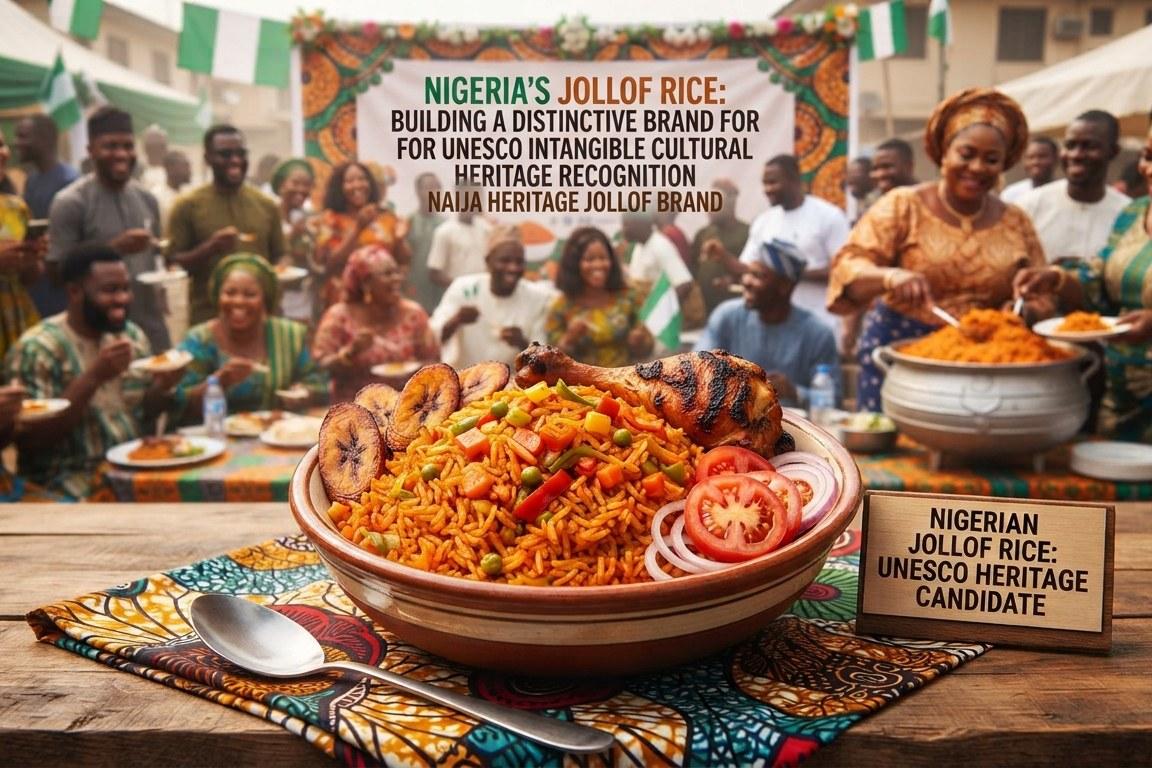
Yet, despite the country’s extraordinary ethnic diversity and the abundance of indigenous dishes, ingredients, cooking methods and food-related customs passed down through generations, much of this heritage remains inadequately documented, insufficiently promoted...
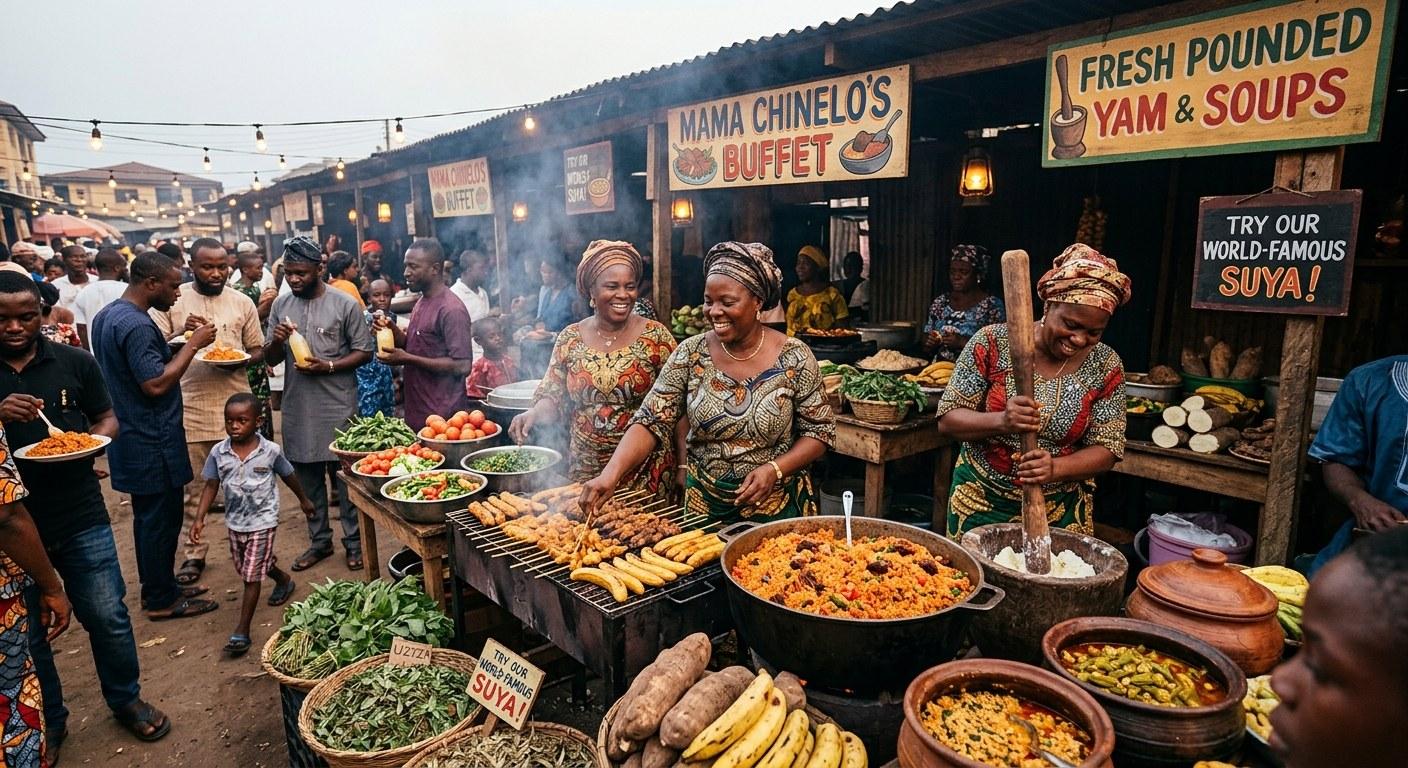
Nigeria’s rich culinary traditions have enormous potential to become instruments of cultural diplomacy, tourism development, economic empowerment and national identity. Yet, despite the country’s extraordinary ethnic diversity and the abundance of indigenous dishes, ingredients, cooking methods and food-related customs passed down through generations, much of this heritage remains inadequately documented, insufficiently promoted and largely underrepresented on the international cultural stage.
This concern took centre stage on Friday in Lagos when stakeholders gathered to commemorate World Food Day at an event organised by GourmetGuide234 under the theme, “Nigerian Food Culture as Soft Power: Celebrating Our Heritage for UNESCO ICH Recognition.”
Held at MakerSpace, University of Lagos, the event brought together stakeholders to examine how Nigeria’s culinary traditions could be documented, promoted and preserved as integral components of national heritage and cultural identity.
The Coordinator, Lydia Enyidiya Eke, said the gathering was designed to explore practical approaches to safeguarding the country’s rich food culture and advancing efforts towards recognition under UNESCO’s Intangible Cultural Heritage framework.
Participants expressed concern that Nigeria, with well over 250 ethnic groups and a vast array of cultural traditions, had yet to secure UNESCO inscription for its indigenous culinary heritage. They argued that this apparent gap deserved urgent attention, particularly at a time when food has become an increasingly important instrument of international cultural influence, tourism promotion and commercial opportunity.
The concern raises several important questions. Why has Nigeria struggled to document and promote its indigenous food traditions? What obstacles stand in the way of securing international recognition? What should the government and private sector do to address these challenges? More importantly, what specific responsibilities should the media assume, especially through its agenda-setting power, to transform Nigerian food culture from an underappreciated national asset into a recognised component of the country’s global identity?
These questions deserve more than occasional discussion at food festivals. They require a coordinated national response in which the media plays a central role.
Food Is More Than What People Eat
Food is one of the most enduring expressions of culture. It tells stories about a people’s history, environment, migration, agricultural practices, religious beliefs, social organisation and relationship with neighbouring communities.
In Nigeria, food traditions are closely woven into everyday life. Meals served at weddings, naming ceremonies, funerals, festivals, harvest celebrations and other communal gatherings often carry meanings that go far beyond nutrition. The ingredients selected, the methods of preparation, the people responsible for cooking and the manner in which meals are shared can reflect social values and cultural identity.
Consider the variety of Nigerian cuisine. The South-West has its distinctive amala, ewedu, gbegiri, ofada rice and other traditional dishes. The South-East is associated with a wide range of yam-based foods, soups and traditional preparations involving indigenous vegetables. Northern Nigeria has its tuwo and miyan varieties, while the Niger Delta is renowned for seafood-based dishes and numerous locally distinctive soups. Across the Middle Belt, communities have equally rich culinary practices shaped by agricultural production, local ingredients and historical interactions.
These examples represent only a fraction of the country’s culinary diversity. There are also traditional fermentation techniques, methods of processing cassava, millet and sorghum, the preparation of indigenous beverages, the preservation of fish and meat, and the use of locally sourced herbs and spices.
Much of this knowledge is transmitted orally, particularly within families and communities. When an elderly custodian dies without passing on a recipe or a specialised processing technique, a part of that community’s cultural memory may disappear.
The task, therefore, is not simply to promote Nigerian dishes as attractive meals. It is to preserve the knowledge, skills, stories, rituals and social relationships that make them expressions of living heritage.
UNESCO’s Intangible Cultural Heritage framework provides an avenue for safeguarding such traditions. However, inscription requires more than identifying a popular dish. Communities must recognise the practice as part of their heritage, participate in the nomination process, consent to the process and be involved in credible measures for safeguarding it.
Nigeria must consequently approach international recognition as a serious cultural preservation project rather than a publicity exercise.
Why Nigerian Food Culture Remains Underrecognised
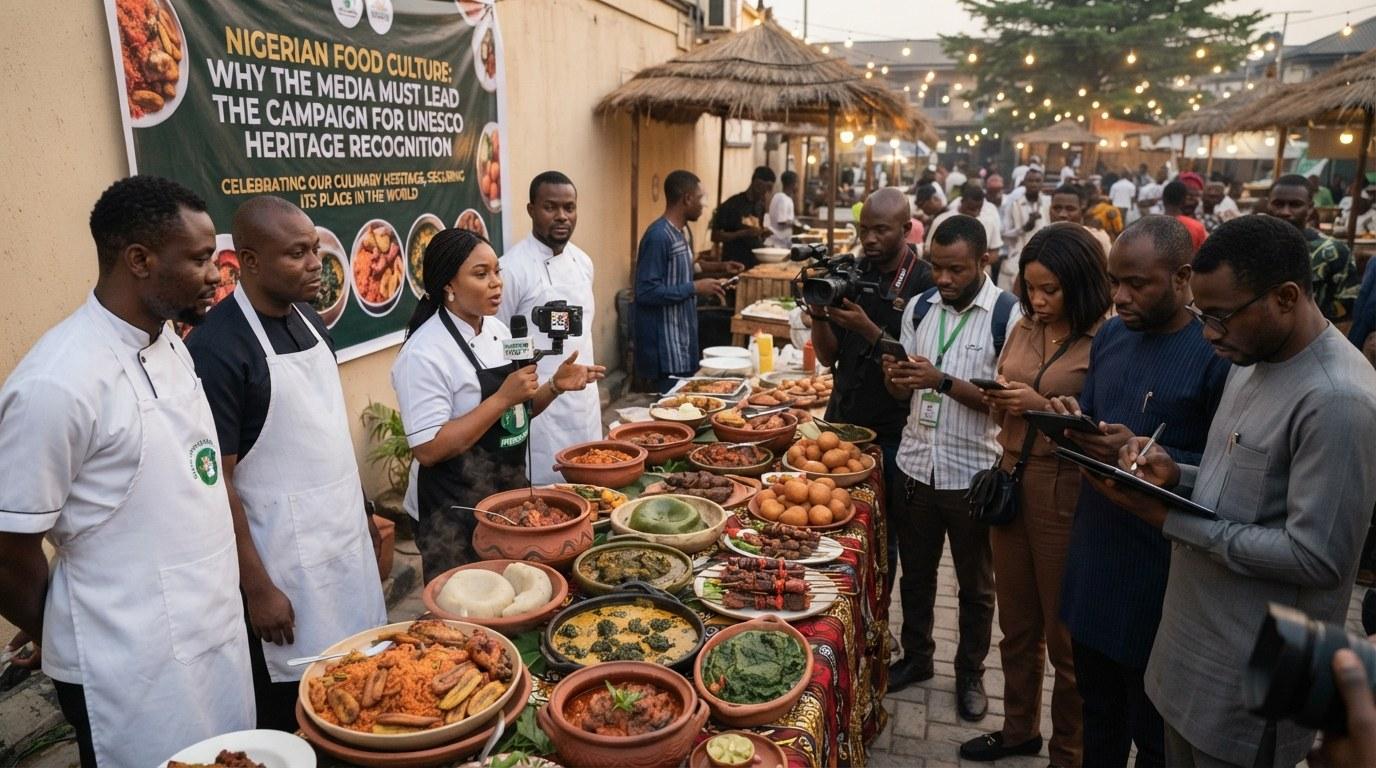
One major obstacle is the absence of a sufficiently coordinated national programme for identifying, documenting and preserving indigenous culinary traditions. Valuable knowledge exists among traditional cooks, farmers, food processors, historians, researchers and community elders, but it is not always systematically recorded or made accessible to the public.
Government agencies, universities, cultural organisations and private businesses frequently pursue separate initiatives without an effective mechanism for bringing their findings together. The result is a fragmented body of knowledge that may be difficult to use in preparing comprehensive heritage inventories and international nomination dossiers.
Inadequate funding is another challenge. Researching a culinary tradition requires fieldwork, interviews, photography, video documentation, historical investigation and consultation with the people who maintain it. These activities require trained personnel and sustained financial support.
The problem is compounded by the absence of sufficient incentives for younger generations to acquire traditional culinary skills. Urbanisation, changing lifestyles, the attraction of convenience foods and the pressures of modern employment have reduced the time some families devote to traditional cooking.
Economic pressures also discourage preservation. Farmers growing indigenous crops, women processing traditional ingredients and small businesses producing local foods may lack adequate credit, storage facilities, processing equipment and access to profitable markets. When traditional food production becomes economically unattractive, the knowledge supporting it is endangered.
There are also challenges relating to standardisation, food safety, packaging and commercial distribution. Some indigenous products require improved processing and quality control to reach larger markets. Such improvements must be undertaken carefully so that commercialisation does not erase the distinctive characteristics that give the products their cultural value.
Another obstacle is the limited international visibility of Nigerian cuisine. Although Nigerian restaurants and food businesses serve communities across the world, the country has yet to exploit fully the opportunities available through sustained culinary diplomacy, food tourism and international cultural promotion.
Finally, the question of ownership can become contentious. Different communities may share similar ingredients, dishes or cooking methods, while some traditions have evolved through centuries of cultural exchange. These relationships should be researched honestly rather than converted into disputes over which ethnic group can claim exclusive ownership.
The solution lies in building an inclusive national system that documents traditions accurately, respects community rights and makes preservation an enduring public priority.
What Government Must Do
The Federal Government should lead the process by establishing a coordinated national programme for culinary heritage preservation, involving the Federal Ministry of Art, Culture, Tourism and the Creative Economy, the National Commission for Museums and Monuments, relevant research institutions, universities, state cultural agencies and other appropriate bodies.
The first task should be the creation of a national inventory of indigenous food traditions. This should cover not only well-known dishes but also endangered recipes, food processing methods, traditional preservation techniques, indigenous ingredients, ceremonial meals and the cultural practices surrounding food production and consumption.
The inventory should be developed with the participation of communities and traditional knowledge holders. Their consent, contributions and rights must be respected, while their names and roles should be properly acknowledged.
Government should then identify suitable traditions for potential UNESCO nomination and provide the resources needed to prepare credible submissions. This would include historical documentation, community consultations, audiovisual records, evidence of existing safeguarding measures and practical plans for sustaining the traditions into the future.
Nigeria already has experience with UNESCO’s intangible cultural heritage framework through inscriptions involving traditions such as the Ifa divination system, Ijele masquerade, Sango Festival and the Durbar tradition in Kano. The country can draw useful lessons from these experiences, although each culinary nomination would have to satisfy UNESCO’s specific requirements.
The government should also support culinary research centres, food heritage museums, digital archives, traditional food festivals and educational programmes that connect younger Nigerians with indigenous knowledge.
State governments have a special responsibility to identify and protect traditions within their jurisdictions, while local governments can help document community practices and support local food producers.
Above all, government commitments must be backed by identifiable budgets, professional coordination and measurable results. Public statements celebrating Nigerian food culture will have limited value if the practitioners who sustain that culture remain unsupported.
The Private Sector Must See Culture As An Investment
The private sector should not regard indigenous food solely as a commercial product. It is also a cultural resource capable of creating businesses, generating employment and strengthening Nigeria’s international reputation.
Hotels, restaurants, supermarkets, food manufacturers, agricultural enterprises, hospitality businesses and tourism operators can finance documentation projects, sponsor festivals and develop markets for indigenous ingredients.
Nigerian chefs can help introduce traditional dishes to international audiences while maintaining their cultural identity. Restaurants can include the histories of their dishes on menus, explain the significance of traditional ingredients and identify the communities whose culinary knowledge informs their offerings.
Food processing companies can work with traditional producers to improve packaging, storage and distribution. Banks and other financial institutions can develop suitable financing arrangements for small-scale processors, farmers and indigenous food entrepreneurs.
Corporate sponsorship could support university research, documentary production, culinary competitions and heritage festivals. Companies could also fund apprenticeships through which experienced traditional cooks and processors teach younger people their skills.
However, commercialisation must not become exploitation. Traditional knowledge holders should receive recognition and, where appropriate, fair economic benefits. The preservation of a culinary tradition should strengthen the community that sustains it rather than allow outsiders to appropriate its commercial value.
A coordinated public-private partnership could help Nigeria build a sustainable culinary heritage programme that combines cultural preservation with enterprise development.
The Media's Role: From Reporting Food To Preserving Heritage
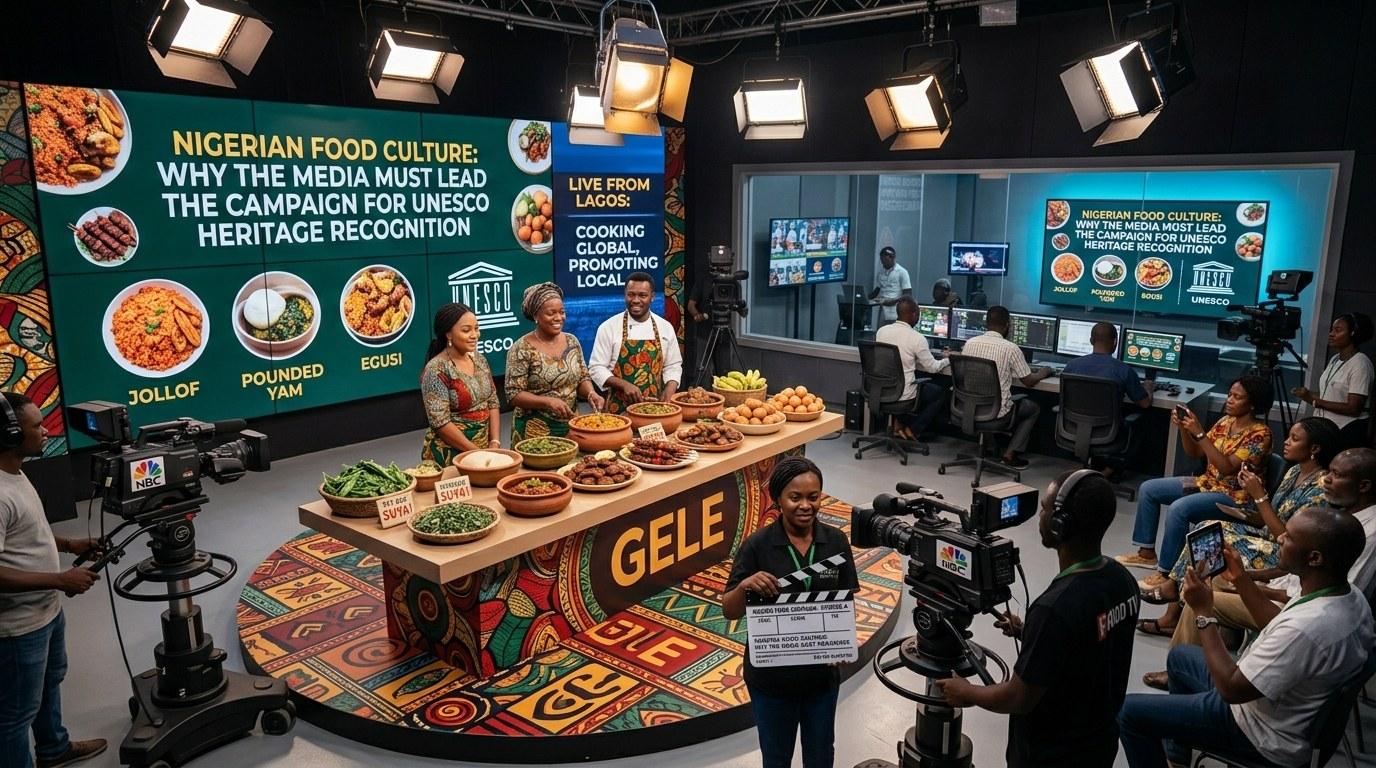
The media's responsibility is much broader than reporting food exhibitions, restaurant openings, cooking competitions and annual cultural celebrations. It must help Nigerians understand why their food traditions matter, what is threatening them and what should be done to protect them.
Newspapers, magazines, radio, television, online news platforms, documentary producers and digital content creators possess the capacity to make Nigerian culinary heritage a continuing subject of public interest.
The first responsibility is documentation through journalism. Reporters should travel to communities, interview elderly cooks, farmers, traditional food processors and cultural historians, and record the origins, preparation methods and social significance of indigenous foods. Such reports can preserve knowledge that might otherwise disappear and make it available to researchers, students, policymakers and future generations.
This requires deliberate editorial planning. Media organisations should assign reporters to cover food heritage regularly rather than wait for World Food Day, a tourism exhibition or an invitation from an event organiser. A newspaper could run a weekly feature on an indigenous dish, while a television station could produce a documentary series exploring the culinary traditions of Nigeria's different regions.
The stories should go beyond recipes. They should explain why particular foods are eaten at certain ceremonies, how ingredients are cultivated, how processing methods evolved and what cultural knowledge is transmitted through preparation. Journalists should also investigate traditions that are disappearing because of environmental changes, declining agricultural production, urbanisation or the loss of older practitioners.
The second responsibility is public education. Many Nigerians recognise familiar dishes but know little about the history and cultural meaning behind them. The media can bridge this gap by explaining the connection between food, identity, agriculture, community values and national heritage.
Radio programmes in indigenous languages could invite listeners to share local recipes and memories. Television programmes could demonstrate traditional cooking techniques, while online publications could host searchable collections of food histories, interviews, photographs and short videos. Schools and educational institutions could use such material to encourage research into local heritage.
The third responsibility is investigative reporting. The media should examine why traditional food producers struggle, whether cultural preservation funds are being used effectively, what government agencies have done to document culinary heritage and whether existing policies adequately protect indigenous knowledge.
Investigative journalists could report on the loss of traditional ingredients, the difficulties faced by small-scale processors, the disappearance of local markets and the challenges confronting farmers who cultivate indigenous crops. Such reporting would give visibility to problems that are often overlooked in mainstream economic discussions.
The fourth responsibility is public accountability and advocacy. Once government agencies announce plans to preserve food culture or pursue UNESCO recognition, the media should follow up. What institutions have been assigned responsibility? What funding has been approved? Which communities have been consulted? How many traditions have been documented? What progress has been made towards preparing nominations?
By asking these questions consistently, journalists can prevent cultural preservation from becoming a ceremonial promise without implementation.
The fifth responsibility is international promotion. Nigerian media organisations can produce high-quality documentaries and feature stories for international audiences, highlighting the sophistication and diversity of Nigerian cuisine. Partnerships with diaspora media, travel publications and international broadcasters could help introduce Nigerian culinary traditions to new audiences.
The media should also promote the economic possibilities of culinary tourism, indigenous food exports and Nigerian restaurants abroad. In doing so, it can help demonstrate that preserving cultural heritage is compatible with innovation, entrepreneurship and national development.
A sixth responsibility is responsible representation. Journalists must avoid reducing complex culinary histories to unverified claims or ethnic rivalries. Where traditions are shared, their relationships should be explained fairly. Cultural custodians should be consulted, and historical assertions should be checked against reliable evidence.
The media must also resist the tendency to portray foreign food as inherently more sophisticated than indigenous cuisine. Promoting Nigerian food does not require disparaging other cultures. It requires presenting Nigerian culinary heritage confidently, accurately and professionally.
The Agenda-Setting Role Of The Media: Why It Is Central
Of all the media's responsibilities, its agenda-setting function may be the most consequential in moving Nigerian food culture from the margins of public discussion to the centre of national policy.
Agenda-setting is the ability of the media, through the selection, frequency, prominence and framing of issues, to influence what the public considers important. The media may not determine precisely what every citizen thinks, but it can significantly influence which issues citizens, institutions and policymakers devote attention to.
When newspapers repeatedly place insecurity, politics, elections, inflation and economic hardship on their front pages, those subjects become prominent in national conversation. Cultural heritage can receive similar sustained attention if editors and media proprietors decide that its preservation deserves a place among Nigeria's development priorities.
The problem is that Nigerian food culture often receives episodic coverage. It attracts attention during festivals, special anniversaries, cooking competitions and tourism events, but the discussion frequently subsides once the occasion has passed.
This pattern does not create sufficient public pressure for action. Government officials may acknowledge the importance of food heritage without feeling compelled to develop a comprehensive programme, while businesses may overlook opportunities that do not receive sustained public attention.
The media can change this situation by making Nigerian culinary heritage a permanent item on the national agenda.
First, editors should adopt a long-term editorial policy that treats food heritage as a cultural, economic, educational and diplomatic issue. This would mean publishing regular reports, editorials, interviews and investigative features rather than limiting coverage to lifestyle pages.
Second, media organisations should establish clear editorial targets. A newspaper, for example, could publish a series documenting culinary traditions across Nigeria's geopolitical zones, with each report examining a particular dish, its cultural history, the people who sustain it and the threats to its survival.
Third, the media should connect cultural reporting to government policy. If the Federal Government announces a national food heritage inventory, journalists should track its implementation. If a state government promises to support traditional food producers, reporters should investigate whether the promised support reaches them. If a university begins documenting indigenous cuisine, the media should report the findings and examine how they can be preserved for public use.
Fourth, the media should help shape public debate by asking questions that require practical answers. Why has Nigeria not yet secured UNESCO inscription for its culinary traditions? Which traditions are most endangered? What resources are required to document them? Who should coordinate the process? How can communities benefit economically without losing control over their heritage?
These questions would help transform the issue from a general expression of cultural pride into a programme with specific responsibilities and deadlines.
Fifth, the media should use its agenda-setting power to bring together stakeholders. Interviews, televised discussions, public forums and newspaper roundtables can create opportunities for government officials, researchers, chefs, traditional leaders, investors and community representatives to exchange ideas and agree on priorities.
Sixth, media organisations should maintain a public record of progress. They could publish periodic assessments showing what has been documented, which communities have participated, what funding has been provided and how preparations for UNESCO nominations are advancing. This would create a basis for public evaluation rather than allowing the issue to disappear after initial announcements.
Seventh, the media should broaden the definition of food heritage beyond famous dishes. The public conversation must include indigenous seeds, agricultural knowledge, fermentation, food preservation, ceremonial practices, traditional utensils and the people who maintain these traditions. Otherwise, the national agenda could favour commercially popular foods while neglecting less visible but equally important cultural practices.
Finally, media proprietors must recognise that cultural journalism deserves professional investment. Reporters need time, transport, research support and training to produce accurate, compelling accounts of food heritage. Without such investment, the agenda-setting campaign may remain superficial.
The ultimate objective is to make the preservation of Nigerian food culture an issue that citizens expect government and the private sector to address, just as they expect attention to education, healthcare, infrastructure and economic development.
Government And Media: A Strategic Partnership Without Compromising Independence
A successful campaign will require collaboration between government and the media, but collaboration must not mean surrendering editorial independence.
Government agencies can provide access to cultural archives, researchers, community contacts and official documentation. They can also support public education campaigns, cultural festivals and documentary projects through transparent arrangements.
Media organisations, in turn, can explain government initiatives, publicise opportunities for community participation and scrutinise implementation. They should remain free to investigate delays, expose waste and question policies that fail to deliver.
The government should make reliable information accessible and avoid treating critical reporting as hostility. The media should distinguish between constructive public-interest advocacy and uncritical publicity.
Universities and research institutions can strengthen this relationship by supplying verified historical information, conducting fieldwork and training journalists in cultural reporting. Traditional communities should remain central to the process, ensuring that documentation reflects their knowledge and that their consent is respected.
Such a partnership would combine the government's institutional authority, the private sector's investment capacity, the research community's expertise and the media's ability to mobilise public attention.
Turning UNESCO Recognition Into A National Project
Nigeria should establish a clear, inclusive and professionally managed pathway towards UNESCO recognition of suitable culinary traditions.
The first step is to create a comprehensive inventory of living food heritage. The second is to identify traditions requiring urgent safeguarding. The third is to consult the communities concerned and obtain their informed consent. The fourth is to develop preservation plans and prepare nominations that satisfy UNESCO's requirements.
The process should be open to culinary traditions from every region, without political interference or the assumption that one ethnic group deserves automatic priority. Selection should be based on cultural significance, community support, safeguarding needs and the strength of the documentation.
Recognition, however, should not become the sole measure of success. UNESCO inscription can raise international visibility, but it does not automatically preserve a tradition or guarantee economic prosperity. Those outcomes require continuing investment, education, community participation and responsible tourism development.
Nigeria must therefore measure success not only by the number of inscriptions secured but also by the survival of endangered practices, the transmission of knowledge to younger generations, the prosperity of traditional food producers and the growing appreciation of indigenous cuisine at home and abroad.
Conclusion: The Media Must Keep The Conversation Alive
The concerns raised at the GourmetGuide234 World Food Day gathering in Lagos point to a national opportunity that Nigeria can no longer afford to neglect. The country possesses an extraordinary range of culinary traditions, but their continued survival cannot be taken for granted.
Government must provide policy direction, institutional coordination and funding. The private sector must invest in research, preservation, food enterprises and international promotion. Universities and cultural institutions must document traditions accurately, while communities must remain the principal custodians and beneficiaries of their heritage.
The media, however, occupies a particularly strategic position because it can connect these different actors, educate the public, expose neglect, promote solutions and sustain pressure for implementation.
Its agenda-setting responsibility is especially important. By repeatedly placing Nigerian food heritage in public conversation, the media can influence government priorities, encourage private investment, stimulate research and persuade younger Nigerians that indigenous culinary knowledge is worth preserving.
The task must not end with reports of a successful event or declarations of national pride. It should lead to a continuing campaign that documents one tradition after another, investigates the obstacles to preservation, monitors public commitments and explains the practical steps required for international recognition.
Nigeria's food culture is more than a collection of recipes. It is a living record of the country's history, creativity, agricultural knowledge and communal experience. Preserving it is both a cultural responsibility and an investment in the future.
If government, the private sector, communities and the media work together with determination, Nigeria can strengthen the protection of its culinary heritage, expand its cultural influence and build a credible pathway towards UNESCO recognition. The media must ensure that this objective remains firmly on the national agenda until expressions of concern give way to measurable action.