 PublicSphere Live
Politics
2027: ADC Faction Rejects Atiku’s Presidential Claim, Rules Out G-100 Alliance
However, the ADC’s internal leadership dispute has introduced another layer of uncertainty into efforts to build a common opposition front, with rival groups claiming authority over the party’s affairs.
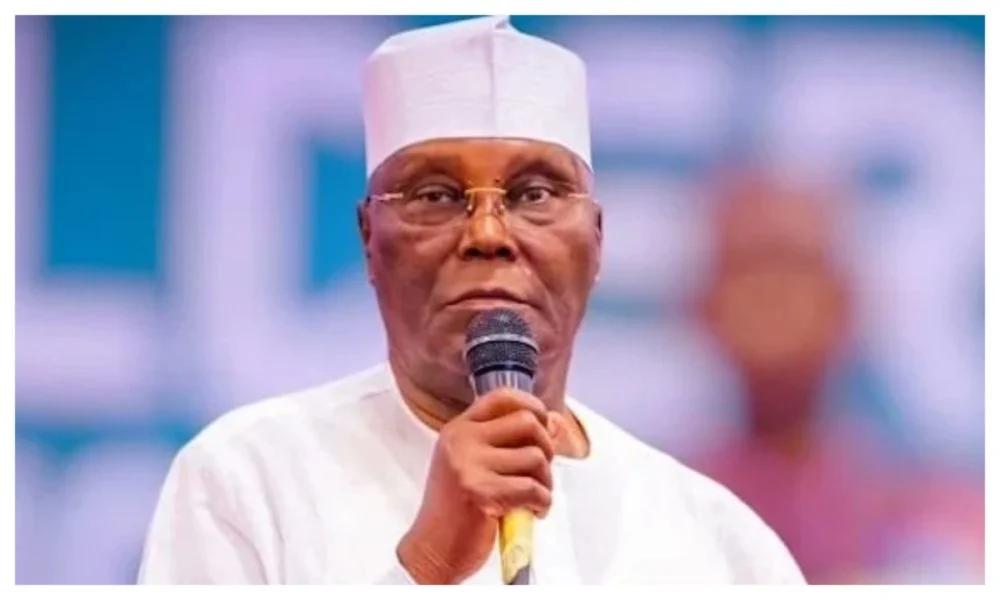
A faction of the African Democratic Congress (ADC), led by Nafiu Bala Gombe, has warned former Vice-President Atiku Abubakar against presenting himself as the party’s presidential candidate for the 2027 general election, insisting that no individual can determine the party’s political direction without the consent of its leadership.
The faction also categorically denied entering into any agreement with the G-100 Coalition to form an alliance, merger or political coalition ahead of the elections, accusing Atiku and some members of the group of attempting to pressure the party into an arrangement that could compromise its independence.
Gombe, who describes himself as the national chairman of the ADC, declared in a statement issued on Saturday that the party would participate in the 2027 elections independently and would not allow its political future to be dictated by the personal ambitions of individual politicians.
The declaration comes amid growing political manoeuvring among opposition figures seeking to develop an alternative platform capable of challenging President Bola Tinubu and the ruling All Progressives Congress (APC) in 2027.
However, the ADC’s internal leadership dispute has introduced another layer of uncertainty into efforts to build a common opposition front, with rival groups claiming authority over the party’s affairs.
ADC Faction Accuses Atiku, G-100 Members of Pressure
In the statement, Gombe accused Atiku and certain elements within the G-100 Coalition of engaging in behind-the-scenes negotiations and political manoeuvres intended to compel the ADC to enter into an alliance or merger before the next general election.
He described the alleged moves as attempts to railroad the party into an arrangement that its leadership had neither approved nor agreed to pursue.
According to him, the party is aware of what he characterised as sustained political pressure and manipulation aimed at influencing its decisions and determining the direction it should take in the emerging opposition realignment.
Gombe maintained that the ADC would not surrender its independence to accommodate the ambitions of politicians or groups seeking a platform for their electoral calculations.
“The leadership of the ADC is fully cognizant of the sustained pressure, political manipulation, and backchannel negotiations being orchestrated by certain elements within the so-called G100 Coalition and Alhaji Atiku Abubakar in a deliberate attempt to railroad the ADC into a forced merger or alliance,” he said.
He added that the party had no intention of entering into a political arrangement with another party ahead of the 2027 elections.
“For the avoidance of doubt, let it be placed on record; The African Democratic Congress is NOT, and will NOT be, in any alliance, merger, or coalition with any political party ahead of the 2027 general elections,” Gombe stated.
The faction’s position amounts to a rejection of any suggestion that an alliance involving Atiku and the G-100 Coalition has been agreed upon by the leadership it represents.
It also signals that the question of which political platform opposition figures should use to pursue their 2027 ambitions remains contentious, even as discussions about cooperation among opposition politicians continue.
Gombe Warns Against Claims To ADC Presidential Ticket
Beyond the proposed alliance, Gombe specifically cautioned Atiku against parading himself as the ADC’s presidential candidate for the 2027 election.
Although Atiku has remained a prominent figure in national opposition politics, the faction insisted that no claim to the ADC presidential ticket should be treated as settled without the party’s own recognised processes and decisions.
The warning underscores the distinction between an individual politician’s presidential ambition and the authority to determine a party’s candidate.
Under Nigeria’s electoral framework, political parties are required to select their candidates through the applicable nomination procedures. Consequently, the declaration of interest by a prominent politician does not, in itself, confer a party’s presidential ticket.
Gombe’s statement suggests that his faction is determined to resist any arrangement in which the ADC is treated merely as a vehicle for an individual’s presidential aspiration.
The dispute could complicate attempts by opposition figures to settle on a common platform well before the formal nomination process for the 2027 election.
Atiku, a former vice-president and former presidential candidate of the Peoples Democratic Party (PDP), remains one of the country's most prominent opposition politicians. His political calculations are therefore likely to attract attention as opposition parties and coalitions consider strategies for challenging the incumbent administration.
Nevertheless, Gombe’s declaration does not, on its own, establish the position of every group within the ADC, given the ongoing dispute over the party’s leadership.
ADC Leadership Crisis Deepens
The latest development comes against the background of a protracted leadership tussle within the ADC, with two rival camps claiming control of the party.
One faction is led by former Senate President David Mark, whose leadership is currently recognised by the Independent National Electoral Commission (INEC), according to the report.
Gombe’s group, however, is challenging the leadership transition in court and continues to assert its own authority over the party.
The competing claims have created uncertainty over who has the legitimate authority to speak for the ADC, make binding decisions on its behalf and determine its position on alliances ahead of the next general election.
This distinction is particularly important because decisions concerning coalitions, presidential nominations and agreements with other political organisations can have far-reaching consequences for a party's membership, structures and electoral prospects.
While Gombe has insisted that the ADC will not enter into an alliance with another party, the extent to which his declaration binds the party as a whole remains tied to the unresolved leadership dispute.
The existence of competing leadership claims also raises questions about the capacity of the party to present a united position during negotiations involving opposition politicians.
Until the dispute is resolved through the relevant legal and party processes, statements from rival camps may continue to reflect conflicting positions on the ADC’s political future.
Opposition Coalition Efforts Face Fresh Uncertainty
The rejection of the G-100 arrangement comes at a time when discussions about opposition cooperation ahead of 2027 are attracting renewed attention.
With the next presidential election approaching, opposition politicians face the strategic question of whether to contest independently, negotiate electoral alliances or rally around a common candidate and platform.
Supporters of opposition cooperation generally argue that greater coordination could improve the chances of challenging the ruling party, particularly in a presidential contest where the distribution of votes among competing candidates can influence the final outcome.
However, bringing together politicians from different parties and political traditions presents substantial challenges, including disagreements over leadership, candidate selection, policy priorities, party structures and the distribution of political influence.
The ADC’s internal crisis illustrates how such disagreements can complicate coalition-building even before the substantive details of an alliance are settled.
Gombe’s faction has made clear that it does not want the party’s identity and political direction subsumed under an arrangement negotiated by individuals outside what it considers its authorised decision-making structure.
Its rejection of the proposed alliance also raises the question of whether opposition groups can establish a mutually acceptable framework for cooperation without triggering disputes over the ownership and control of political platforms.
For politicians seeking to challenge Tinubu in 2027, the ability to negotiate an acceptable arrangement could be as important as the decision to form a coalition in the first place.
At the same time, the decision by a party to contest independently is not necessarily evidence that it intends to support the ruling party. It may instead reflect a preference for maintaining its organisational identity, selecting its own candidates and pursuing its electoral objectives without entering into a formal alliance.
Gombe’s statement presents the position of his faction along these lines, although the practical implications will depend on developments within the party and the outcome of the leadership dispute.
Questions Over Who Speaks For The ADC
The most immediate implication of the declaration is the renewed uncertainty surrounding the ADC’s position on the 2027 election.
Gombe has spoken firmly against an alliance with the G-100 Coalition and against Atiku presenting himself as the party’s presidential candidate. However, the rival leadership claim means that his position should not automatically be interpreted as a definitive statement binding every faction within the party.
The dispute also highlights the importance of distinguishing between political declarations, informal negotiations and formally authorised party decisions.
A politician may participate in discussions about opposition cooperation without securing the approval of every organisation that could be involved. Similarly, an individual or faction may reject a proposed arrangement without necessarily settling the position of the entire party.
For the ADC, resolving the question of legitimate leadership is therefore central to establishing who can negotiate on its behalf and how decisions about its presidential candidate and electoral strategy will be made.
The party’s ability to clarify its internal authority could determine whether it emerges as an independent contender in the 2027 elections or becomes part of broader negotiations among opposition figures.
For now, Gombe’s faction has drawn a clear line: it rejects what it describes as attempts to force the ADC into a political arrangement with the G-100 Coalition and insists that Atiku cannot simply assume the party’s presidential ticket.
Whether that position ultimately becomes the settled policy of the ADC as a whole remains uncertain, with the leadership dispute continuing to cast a shadow over the party’s preparations for the next general election.