 PublicSphere Live
Politics
Makinde Accuses Tinubu Government of Spending NLNG Dividends Meant for States
Oyo governor alleges each state is owed over N250bn, says funds were reconciled but spent by Federal Government
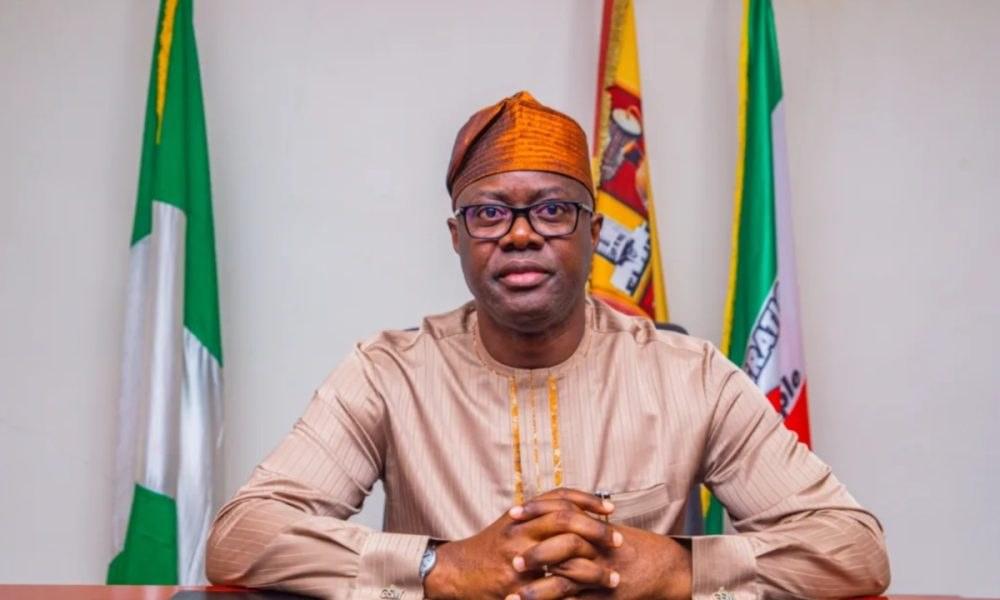
Oyo State Governor, Seyi Makinde, has accused the administration of President Bola Tinubu of spending dividends from the Nigeria Liquefied Natural Gas (NLNG) meant for distribution to state governments, alleging that each state of the federation was expected to receive more than N250 billion from the payments.
Makinde said the funds had been paid into the Federation Account and the figures reconciled, but the Federal Government allegedly spent the money without distributing the states' respective shares.
The governor made the allegation on Friday at a stakeholders' meeting on the 2027 budget held at the International Conference Centre in Ibadan, the Oyo State capital.
He expressed disappointment over the alleged non-disbursement of the funds, saying his administration had already identified projects that would have benefited from the money and contributed to expanding the state's economy.
According to him, the anticipated allocation represented a significant financial opportunity for states seeking to accelerate infrastructure development, strengthen public services and stimulate economic activities without relying entirely on their regular monthly allocations.
Makinde also criticised suggestions that the payment could be delayed until after the 2027 general elections, insisting that the welfare of Nigerians should take precedence over political considerations.
The governor's allegation raises questions about the management and distribution of revenues accruing to the Federation Account, as well as the financial expectations of state governments that had reportedly factored the anticipated funds into their development plans.
Speaking at the meeting, Makinde said the NLNG dividends had been paid to the Federal Government and subsequently entered the Federation Account, from where the funds should have been shared among the appropriate tiers of government.
“They fooled us. The Nigeria LNG paid dividends to the Federal Government, which went straight into the Federation Account, but they spent it.
“So, what do we do? They did the consultancy, reconciled the figures, and each state of the federation was supposed to be paid, but they spent the money alone. The Federal Government spent it alone.
“Each state should receive more than N250 billion but Tinubu cornered it. We were planning towards this, identified projects that we can invest the money in to further expand the economy of Oyo State,” the governor said.
The governor did not provide further details at the meeting on the total amount allegedly involved, the precise period covered by the dividend payments or the specific basis for calculating the amount expected by each state.
However, his claim that every state was entitled to more than N250 billion suggests that the disputed payments could represent a substantial pool of revenue with significant implications for public finance across the country.
If the amount cited by Makinde applies to all 36 states, the combined allocations would exceed N9 trillion. The figure is based on the governor's estimate and should not be interpreted as an independently verified total of the disputed NLNG dividends.
OYO HAD PROJECTS LINED UP
Makinde said his administration had begun planning how to deploy Oyo State's anticipated share of the funds to support economic expansion.
The governor's position reflects the importance of additional revenue to state governments, many of which face competing demands for investment in roads, healthcare, education, security, water supply and other essential services.
For Oyo State, the expected allocation could have provided an opportunity to finance major projects, complement existing budgetary provisions and reduce pressure on other sources of revenue.
The governor did not identify the specific projects his administration had earmarked for the anticipated funds. Nevertheless, his comments indicate that the expected payment had featured in the state's financial planning.
The alleged non-disbursement could therefore create a funding gap if projects were designed around the anticipated allocation or if the government expected the money to provide additional resources for its development programme.
Beyond the immediate implications for Oyo, the allegation raises the broader question of how governments at the federal and state levels coordinate the management of revenue belonging to the federation.
The Federation Account is the central mechanism through which revenues constitutionally distributable among the federal, state and local governments are shared, subject to the applicable legal and fiscal arrangements.
Consequently, disagreements over whether particular receipts have been properly accounted for and distributed can have implications for intergovernmental relations, budget implementation and confidence in the country's revenue-sharing framework.
DISPUTE OVER REVENUE SHARING
Makinde's allegation centres on his claim that the NLNG dividend payments entered the Federation Account, that a reconciliation exercise was completed and that the states were subsequently expected to receive their respective allocations.
His account suggests that the dispute is not merely about the calculation of the amounts due but also about what happened to the money after the reconciliation process.
However, the governor's remarks alone do not establish the precise legal character of the payments, the applicable distribution formula or whether the Federal Government has offered an explanation for the alleged non-disbursement.
Those details would be important in determining the circumstances surrounding the disputed funds, including whether the payments were due for immediate distribution, whether any outstanding obligations or deductions applied, and what administrative or legal steps were taken after the reconciliation.
The Federal Government's response would also be necessary to establish its position on the allegation that the funds were spent without being distributed to the states.
As of the account of Makinde's remarks provided, no response from the Presidency or the Federal Ministry of Finance was included.
The issue is particularly significant because the Federation Account Allocation Committee (FAAC) provides the framework through which distributable federation revenues are shared among the three tiers of government.
State governments depend on these allocations, alongside internally generated revenue and other lawful sources of funding, to meet their financial obligations and implement their budgets.
Any dispute over a substantial revenue stream could therefore affect fiscal planning and intensify demands for transparency in the management of public funds.
MAKINDE WARNS AGAINST POLITICISING THE PAYMENT
The Oyo governor also objected to the reported possibility that payment could be postponed until after the 2027 general elections.
He argued that the welfare of Nigerians should not be subordinated to electoral calculations, suggesting that the alleged delay would deprive state governments of resources they could deploy to address the needs of their residents.
The timing of the payment has become an important part of his criticism because state governments must plan expenditure within budgetary cycles, while infrastructure and social programmes often require predictable funding.
A delay in the release of expected revenue can complicate project execution, particularly where governments have already made commitments or scheduled investments on the assumption that additional funds will become available.
At the same time, establishing whether the payment has formally been deferred until after the elections would require clarification from the relevant federal authorities. Makinde's criticism of the reported possibility should not, on its own, be taken as confirmation that an official decision to postpone the distribution has been made.
His comments nevertheless place the matter within the wider debate over the management of public resources in the run-up to the 2027 elections.
The question is whether revenue distribution will be guided by established fiscal and legal procedures, with sufficient transparency to reassure the states, or become entangled in political disagreements between the federal and subnational governments.
IMPLICATIONS FOR STATE DEVELOPMENT
The controversy highlights the financial pressures facing state governments as they seek to expand infrastructure, attract investment and improve the living conditions of their populations.
Additional revenue can help states undertake capital-intensive projects that might otherwise be delayed or implemented in phases because of limited resources.
Such investments can have wider economic benefits when directed towards productive infrastructure, including transportation networks, electricity-related projects, agricultural value chains, industrial facilities and public services that support businesses and employment.
Makinde's statement that Oyo had identified projects for the anticipated funds suggests that the state intended to use the money as a development resource rather than merely as an addition to routine expenditure.
However, the ultimate economic impact would depend on the nature of the projects, their implementation, procurement processes and the ability of the state government to translate the funds into measurable public benefits.
The controversy also reinforces the importance of fiscal transparency. State governments need reliable information about the revenues due to them to prepare realistic budgets, while citizens need assurances that public money is properly accounted for and deployed in the public interest.
For the Federal Government, providing a clear explanation of the status of the NLNG dividends, the reconciliation process and the applicable distribution arrangements would help address the concerns raised by the Oyo governor.
For the states, the immediate priority is to establish the amounts due, the basis of the calculations and the timetable for any outstanding payments.
Until those details are clarified, the dispute is likely to remain a source of tension between the federal and state governments.
Makinde's allegation has thus opened a fresh debate over the accountability of public revenue, the rights and expectations of the constituent governments of the federation, and the need to keep fiscal decisions separate from partisan considerations.
The central issue remains whether the NLNG dividends identified by the governor were due for distribution to the states, what happened to the funds after the reported reconciliation, and when the affected governments can expect a definitive explanation from the Federal Government.