 PublicSphere Live
Features
Awka Anglican Crisis Deepens As Diocesan Board Rejects Ibezim’s Suspension, Threatens Exit
Church leadership faces constitutional showdown as rival authority claims, pending court cases and threats of separation expose deepening divisions in the Diocese of Awka
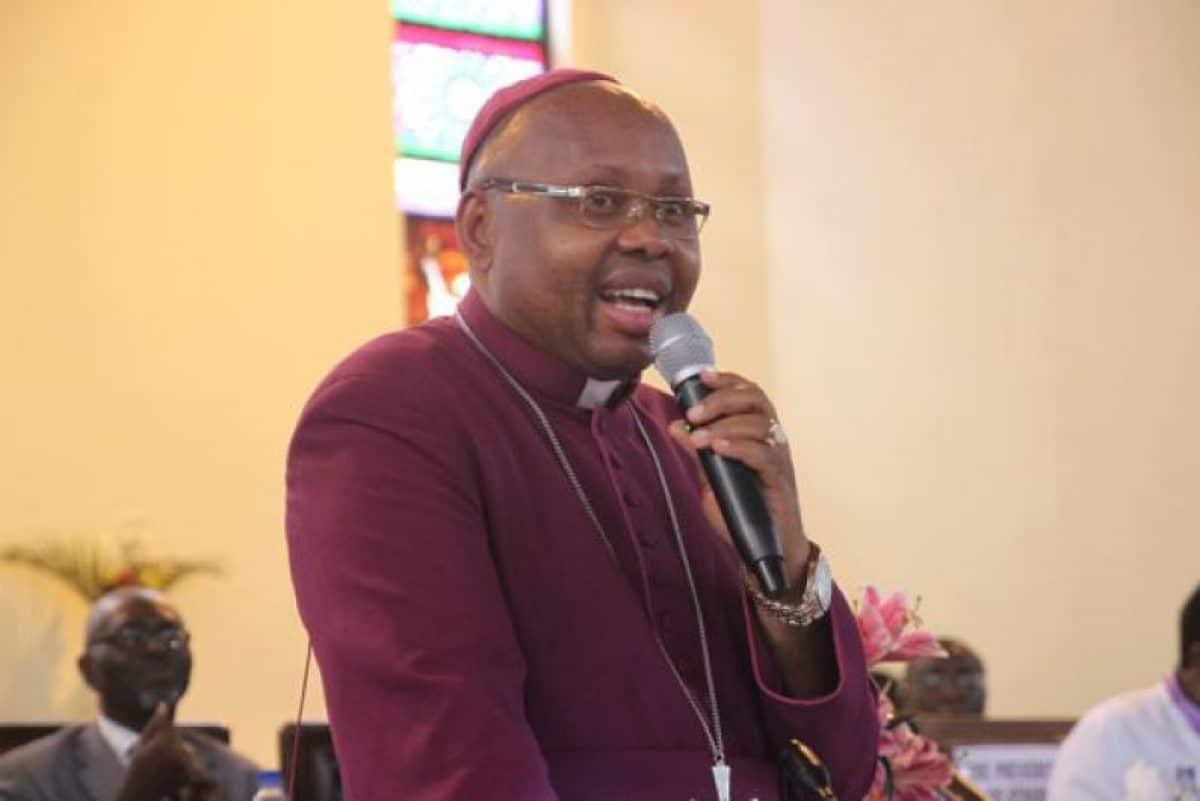
The crisis rocking the Diocese of Awka, Church of Nigeria (Anglican Communion), has escalated into a potentially historic confrontation between the diocese and the national church leadership following the rejection of the six-month suspension of Archbishop Alexander Chibuzo Ibezim by the diocesan board, which has threatened to withdraw from the Church of Nigeria if the Primate, Most Rev. Henry Ndukuba, proceeds with the disciplinary action.
The board’s position has transformed what began as a disciplinary dispute involving the archbishop into a broader institutional crisis over episcopal authority, constitutional interpretation, the limits of the Primate’s powers and the autonomy of a diocese within the Anglican Communion.
At the centre of the controversy is the decision by Ndukuba to direct Ibezim to proceed on six months’ compulsory leave following allegations contained in a petition by a church member, a matter which, according to the diocesan board, is already before the courts.
The Primate also appointed the Bishop of Aguata, Rt. Rev. Samuel C. Ezeofor, as supervising Bishop of Awka Diocese and Coordinating Bishop of the Province of the Niger during Ibezim’s absence.
But rather than accept the directive, the Awka Diocesan Board has rejected both the suspension and Ezeofor’s appointment, insisting that neither the Church of Nigeria’s Constitution and Canons nor the diocese’s governing regulations empowers the Primate to impose such a compulsory leave on a serving archbishop and bishop.
The board has consequently directed all organs of the diocese to remain loyal to Ibezim, continue their lawful activities and disregard directives from Ezeofor concerning the affairs of the diocese.
It has also warned that it would resort to legal action and involve law enforcement agencies if the disputed directive is enforced, while declaring that the diocese could withdraw from the Church of Nigeria and continue its relationship with the Church of England if the situation deteriorates further.
The implications are considerable. What is unfolding in Awka is no longer simply a disagreement over the administration of a diocese or the handling of a petition against a senior church leader. It is becoming a test of how the Anglican Church resolves disputes involving its highest-ranking officers without allowing internal disagreements to undermine institutional unity.
A Suspension That Has Opened A New Front
The suspension of Ibezim, announced in a letter dated October 13, 2026, by the Primate, has become the immediate trigger for the confrontation.
The allegations against the archbishop originated from a petition by a church member and remain the subject of litigation, according to the account provided by the diocese. The specific allegations, their evidential basis and the archbishop’s detailed response have not been established in the material accompanying the board’s communique.
Consequently, the controversy must be considered against two distinct questions: whether the allegations warrant disciplinary proceedings and whether the Primate possesses the constitutional authority to impose the particular sanctions and administrative arrangements he has announced.
These questions are related but not identical.
A complaint against a church leader may require investigation, and an ecclesiastical authority may have legitimate reasons to consider measures intended to protect the institution or preserve orderly administration while a matter is being examined. However, the legitimacy of such action depends on the applicable rules, the procedures followed and the powers assigned to the office taking the decision.
The Awka Diocesan Board has chosen to challenge the suspension primarily on constitutional grounds rather than accept the Primate’s directive as binding.
By rejecting the compulsory leave and the appointment of a supervising bishop in the same breath, the board has questioned the legal and ecclesiastical foundation of the entire arrangement.
Its position also signals that the dispute will not be resolved simply by issuing further administrative instructions. Unless the parties reach an agreement or a competent court determines the relevant legal questions, the possibility of competing claims to authority over the diocese remains.
The situation is particularly sensitive because Ibezim has already challenged the suspension in court. The board says the pending cases impose an obligation on the Primate, Ezeofor and other church members to avoid actions that could interfere with the subject matter of the proceedings.
That assertion, however, is the board’s interpretation of the legal implications of the litigation. Whether the existence of the suits legally prevents the church from taking interim administrative measures would depend on the precise claims before the court, any orders already made and the applicable law.
The distinction is important because neither the filing of a lawsuit nor a party’s interpretation of its implications automatically settles the dispute.
The Constitutional Battle Over The Primate’s Powers
The most consequential element of the board’s response is its claim that the Primate lacks the constitutional authority to compel Ibezim to proceed on leave for six months or to appoint another bishop to exercise the responsibilities of the Awka Diocese and the Province of the Niger during that period.
In the communique issued after an emergency meeting, the board declared that there was no provision in the Constitution and Canons of the Church of Nigeria (Anglican Communion) 2020 or the Constitution and Regulations of the Diocese of Awka 2023 empowering Ndukuba to take the actions contained in his letter.
The board specifically challenged the Primate’s reliance on Section 29(1) of the Church of Nigeria’s Constitution and Canons.
According to the board, the provision cited by Ndukuba does not confer the power to force a fellow bishop and archbishop to proceed on compulsory leave, transfer his duties to another bishop or prevent him from participating in the activities of the Church of Nigeria, the Province of the Niger and the Diocese of Awka.
The board’s argument raises a fundamental question about the distribution of authority within the Anglican Church: where does the authority of the Primate end, and where do the constitutional rights and responsibilities of a diocesan bishop begin?
The office of the Primate carries considerable spiritual, institutional and administrative significance within the Church of Nigeria. Nevertheless, the extent of its powers must ultimately be determined by the church’s governing instruments, including the provisions governing discipline, episcopal oversight, vacancies, incapacity and the appointment of acting or supervising authorities.
The fact that the Primate occupies the highest national ecclesiastical office does not, by itself, establish that every administrative action he takes is constitutionally authorised. Conversely, the board’s assertion that no such authority exists cannot be treated as a final determination without examining the relevant constitutional provisions in their full context.
A proper resolution would therefore require a careful interpretation of Section 29(1), alongside any other provisions that might govern discipline, temporary removal from office, pastoral oversight and the maintenance of diocesan administration.
It would also require consideration of whether the applicable rules distinguish between removing a bishop from office, suspending particular functions, directing a temporary leave of absence and appointing another bishop to provide interim oversight.
These are not necessarily interchangeable actions. Each may carry different procedural requirements and legal consequences.
The board’s objection is that the Primate has exercised a power that the governing instruments do not grant him. The Primate’s full legal reasoning, beyond the provision identified by the board, would be necessary to establish the complete basis of his decision.
Until the relevant documents and arguments are examined, the dispute remains a contested question of constitutional authority rather than a settled finding that either side has violated the church’s rules.
A Vote Of Confidence And A Direct Challenge To Church Authority
The board’s decision to pass a vote of confidence in Ibezim is another important dimension of the crisis.
Rather than distance itself from the archbishop while the allegations and legal proceedings unfold, the diocese’s governing board has publicly affirmed its support for him and rejected the disciplinary action.
The decision is significant because it gives the dispute an institutional character. The resistance is not presented merely as the personal objection of an archbishop challenging an adverse decision. It is a collective position adopted by the board responsible for deliberating on the affairs of the diocese.
The communique was signed by the Lord Chancellor of the Diocese of Awka, Sir B.E.I. Nwofor; the Synod Secretary, Ven. K.E.N. Chukwukamma, PhD; and the Lay Synod Secretary, Mr Eugene Chukwudi Okonkwo.
Nwofor, who chaired the emergency meeting, maintained that the governing documents of the church and the diocese did not authorise the action taken by the Primate.
The board’s vote of confidence, however, should not be confused with a judicial determination of the allegations against Ibezim. Support from a diocesan governing body cannot, by itself, establish whether a complaint is true or false, just as the existence of a petition cannot establish guilt.
The two issues must remain separate if the church is to preserve confidence in both its disciplinary processes and its institutional leadership.
A credible process would need to establish the facts, give the parties a fair opportunity to present their positions and apply the relevant rules without allowing the dispute to be determined solely by competing displays of institutional loyalty.
The danger is that the dispute could become a contest in which supporters of the archbishop and supporters of the Primate concentrate on defending their respective authorities at the expense of the substantive issues requiring resolution.
If that happens, the church could find itself confronting a prolonged internal struggle even before the courts or the appropriate ecclesiastical authorities have settled the questions before them.
Ezeofor’s Appointment And The Question Of Parallel Authority
The appointment of Ezeofor as supervising Bishop of Awka Diocese and Coordinating Bishop of the Province of the Niger has created another potential flashpoint.
The appointment was intended, according to the Primate’s directive as described in the communique, to provide episcopal oversight during Ibezim’s six-month compulsory leave.
The diocesan board has rejected the arrangement and directed church organs within its jurisdiction to disregard Ezeofor’s instructions concerning diocesan affairs.
It has further warned that disobedience to the board’s directive would attract appropriate sanctions.
This creates the possibility of competing administrative claims within the same ecclesiastical structure. If Ezeofor proceeds on the assumption that the Primate’s appointment authorises him to exercise oversight, while diocesan organs act on the board’s instruction to remain loyal to Ibezim, ordinary church administration could become complicated.
Questions could arise over who has authority to preside over diocesan meetings, direct administrative officers, supervise church programmes, exercise financial oversight and make decisions affecting the diocese during the disputed period.
Such questions are not merely ceremonial. Diocesan administration involves the coordination of clergy, congregations, institutions and resources, all of which depend on a reasonably clear understanding of who is authorised to make decisions.
The dispute also places Ezeofor in a difficult position. The board has expressly rejected his appointment, but the full terms and constitutional basis of the Primate’s directive have not been independently established in the information available.
His position, therefore, cannot be assessed solely through the board’s characterisation of the appointment. Equally, the appointment itself does not automatically resolve the board’s objections.
The central question remains whether the appointment was made under a valid constitutional power and whether the procedures required for such an intervention were followed.
The church’s leadership would need to clarify these issues urgently to prevent an administrative disagreement from escalating into a confrontation involving clergy and other diocesan organs.
The Courtroom Dimension
The pending litigation could become a decisive part of the effort to resolve the crisis.
Ibezim has challenged the suspension in court, while the board has invoked the existence of the cases as a reason why the Primate and Ezeofor should refrain from actions that might interfere with the subject matter of the suits.
The communique warns that the church leaders are aware of the pending cases and are duty-bound to respect the judicial process until the matters are determined.
The position reflects the broader importance of allowing disputes with legal implications to be resolved through established procedures rather than through escalating institutional pressure.
However, the precise legal effect of the litigation will depend on the reliefs sought, the issues submitted for determination and any interim orders the court may have issued. The board’s communique does not establish whether the court has granted an injunction or otherwise restrained the Primate from implementing his directive.
That distinction matters. The existence of a case does not necessarily mean that every action connected with the dispute is automatically prohibited. Equally, parties who know that a court is considering a matter must be careful not to frustrate any applicable orders or undermine the court’s ability to determine the issues before it.
The prudent course would be for the parties to obtain clarity on the legal position and avoid unilateral actions that could deepen the conflict.
The court may be called upon to examine the interpretation of the church’s governing documents and the legal consequences of the disputed decisions. Depending on the claims before it, the proceedings may also clarify the extent to which ecclesiastical administrative decisions are subject to judicial scrutiny.
Nevertheless, the judicial process should not become an excuse for the church to abandon every effort at internal reconciliation. Legal proceedings can settle questions of authority, but restoring confidence among church leaders and members may require additional dialogue and institutional reform.
The Threat To Leave The Church Of Nigeria
Perhaps the most dramatic aspect of the board’s communique is its threat to withdraw the Diocese of Awka from the Church of Nigeria and continue with the Church of England if the Primate and Ezeofor persist in what it describes as unlawful interference.
The warning takes the dispute beyond a disagreement over the tenure or temporary absence of one bishop. It raises the possibility of a rupture between the diocese and the wider national church.
The Church of Nigeria is part of the worldwide Anglican tradition, which has historically combined shared religious identity with structures of provincial, diocesan and parish administration. However, the precise constitutional mechanisms governing a diocese’s relationship with the national church cannot be inferred merely from the historical relationship between the Church of Nigeria and the Church of England.
The board’s declaration that the diocese could continue with the Church of England should therefore be understood as a stated intention, not proof that a withdrawal would be automatic or legally straightforward.
Any attempt to alter the diocese’s institutional affiliation would raise further questions about the governing rules, the authority of the relevant church bodies, the status of clergy and congregations, and the administration of diocesan property and other assets.
It could also generate uncertainty among worshippers who may have little involvement in the dispute but depend on the church for spiritual guidance, pastoral care and community activities.
The threat nevertheless demonstrates how seriously the board views the Primate’s intervention. It also indicates that the dispute has reached a point where the possibility of institutional separation is being openly contemplated.
Whether the threat is intended primarily to pressure the national leadership into reconsidering its decision or represents a settled willingness to pursue separation remains unclear.
What is clear is that the consequences of a breakdown would extend far beyond the principal actors.
What Is At Stake For The Anglican Communion?
Beyond the immediate personalities and allegations, the Awka crisis presents the Church of Nigeria with an important test of institutional governance.
Churches, like other organisations with written constitutions, need workable procedures for dealing with complaints against senior officers. Such procedures must be capable of protecting the institution, ensuring accountability and preserving fairness to the individuals concerned.
Where the powers of a senior officeholder are disputed, a transparent explanation of the relevant constitutional provisions can help prevent suspicion from becoming entrenched opposition.
Likewise, where a church leader faces allegations, support from colleagues should not replace an impartial examination of the complaint. The integrity of the process depends on the ability to distinguish allegations from proven facts and to ensure that disciplinary decisions are reached under established rules.
The Primate’s authority and the autonomy of a diocese need not be treated as mutually exclusive principles. A church can maintain national standards and common discipline while respecting the limits imposed by its constitution.
The difficulty arises when the relevant rules are interpreted differently by the authorities involved and no accepted mechanism quickly resolves the disagreement.
The present crisis also underscores the importance of communication. A clearly explained decision, accompanied by the constitutional provisions relied upon and an account of the applicable procedures, could help members understand the reasoning behind a disciplinary measure.
Similarly, a board challenging such a decision should be prepared to demonstrate its interpretation of the governing documents through the appropriate institutional or judicial channels.
The objective should be a resolution that commands respect because it is procedurally sound, not simply because one faction has the power to impose its position.
For church members, the most immediate concern is that a leadership dispute should not disrupt worship, pastoral services or the ordinary administration of their congregations. Clergy and congregants should not be forced into unnecessary confrontations over competing instructions while the substantive questions remain unresolved.
The Road To Resolution
The crisis in Awka now presents the Primate, the diocesan leadership and the wider Church of Nigeria with difficult choices.
The first is to establish the precise constitutional basis of the suspension and the appointment of the supervising bishop. The relevant provisions of the 2020 Constitution and Canons, together with the Diocese of Awka’s 2023 regulations, need to be considered in their entirety rather than through competing extracts or assertions.
The second is to ensure that the allegations against Ibezim are addressed through a fair process that distinguishes the merits of the complaint from the dispute over the Primate’s powers. Neither institutional support for the archbishop nor the decision to suspend him should be treated as a substitute for determining the facts.
The third is to prevent the disputed appointment from producing a prolonged breakdown in diocesan administration. Clear guidance on the status of the appointment, subject to the applicable rules and any court orders, would reduce the risk of competing instructions and sanctions.
Finally, the parties need a credible channel for reconciliation. Such a process would not require either side to abandon legitimate constitutional arguments. Rather, it would offer a means of pursuing those arguments without making separation the inevitable outcome.
The Church of Nigeria must also guard against allowing the dispute to be reduced to a personal contest between Ibezim and Ndukuba. The institutional questions are larger than either individual, and whatever resolution emerges will establish expectations for how similar disputes may be handled in the future.
For now, the Awka Diocesan Board has drawn a clear line: it rejects the suspension, supports Ibezim, refuses to recognise Ezeofor’s appointment and is prepared to consider withdrawal from the national church if the disputed intervention continues.
The Primate’s full response to the board’s objections, the detailed legal arguments in the pending cases and any subsequent judicial or ecclesiastical decisions will be critical to determining the next phase of the confrontation.
Until those issues are resolved, the Diocese of Awka faces the prospect of a prolonged struggle over authority at a time when unity and confidence in church leadership are especially important.
The ultimate test will not simply be whether the Primate can enforce his directive or whether the diocesan board can sustain its resistance. It will be whether the Church of Nigeria can resolve a serious internal dispute through its constitution, fair disciplinary procedures and constructive dialogue without allowing a disagreement over episcopal authority to develop into a lasting institutional rupture.