 PublicSphere Live
Editorial
EDITORIAL: Ebola Is Back on Nigeria’s Radar; Act Swiftly, Protect Every Life
The Federal Government deserves commendation for confirming the Ebola case in Abuja and commencing contact tracing, but the country must now move decisively to prevent a single imported infection from becoming a wider public health emergency.
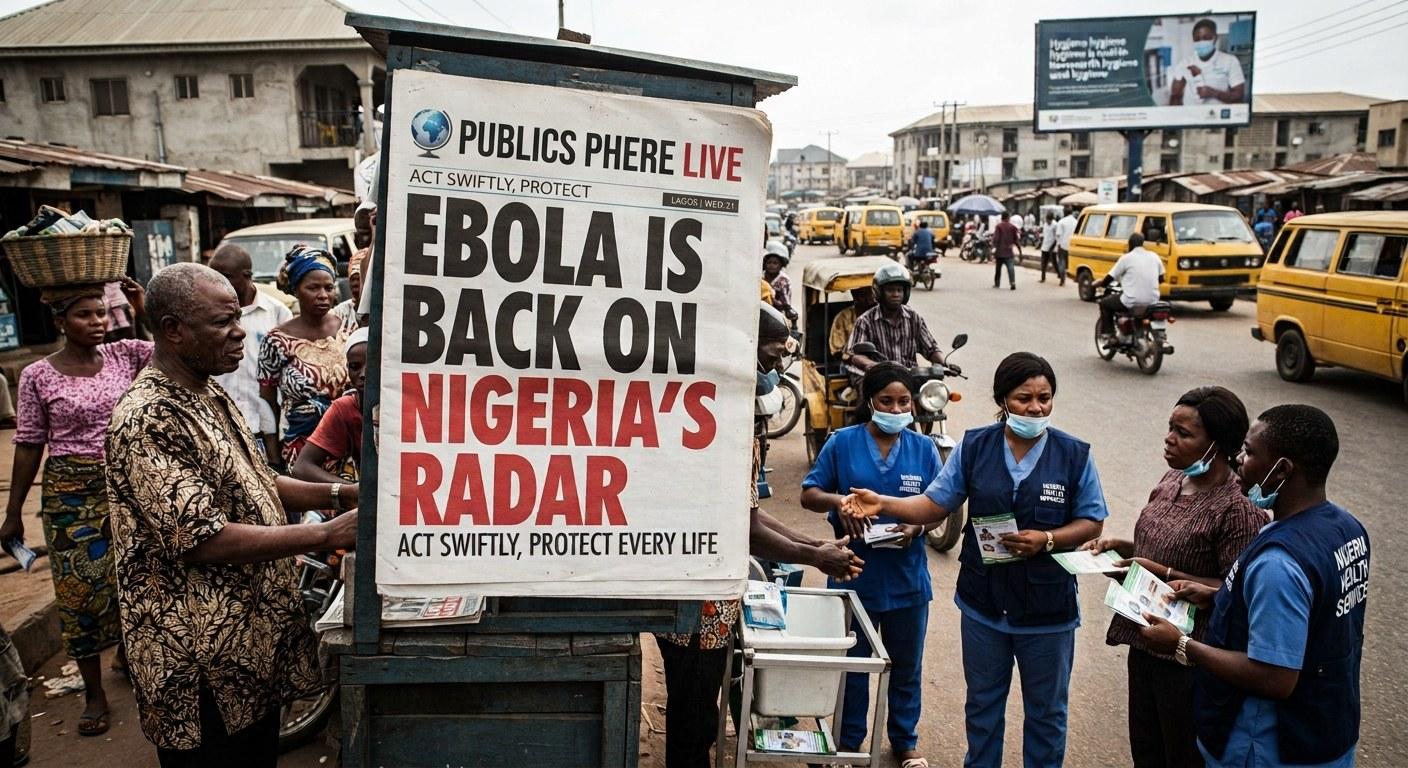
The confirmation of an Ebola Virus Disease (EVD) case in the Federal Capital Territory, Abuja, is a sobering reminder that infectious diseases recognise neither national borders nor the confidence of governments that believe they are adequately prepared. The Federal Government deserves commendation for its prompt public announcement, the isolation of the infected woman and the commencement of contact tracing involving 44 people. These are important initial steps in the battle to prevent further transmission. However, commendation must go hand in hand with vigilance, transparency and a comprehensive national response capable of containing the infection before it threatens more lives.
The laboratory confirmation of the case on Tuesday, October 20, 2026, following the admission of a woman who recently arrived in Nigeria from Uganda, has understandably raised concerns. The patient reportedly received medical care at a private hospital in the FCT for several days before the infection was confirmed. She has since been isolated and is receiving treatment, while the Nigeria Centre for Disease Control and Prevention (NCDC) and the FCT health authorities work to identify and monitor people who may have been exposed.
This is the right direction, and the authorities must be encouraged to sustain the effort. Nevertheless, the seriousness of Ebola demands that the country look beyond the confirmation of one case and ask the more important questions: How quickly was the infection detected? Were adequate protective measures observed at the hospital where the patient was treated? Have all potentially exposed individuals been identified? Are the country's health facilities, border surveillance systems and emergency response structures sufficiently prepared to deal with any additional cases?
These questions are not intended to undermine the government's response. They are necessary questions in the public interest because the consequences of complacency could be devastating.
Early Action Must Remain The Governing Principle
Ebola is among the infectious diseases that require an exceptionally rapid and coordinated response. Although one confirmed case does not establish that an epidemic is developing in Nigeria, it must be treated with the seriousness that its potential consequences demand.
The identification of 44 contacts is a significant part of the containment process. It does not mean that these individuals have contracted Ebola. Rather, they are people whose possible exposure requires professional assessment and appropriate monitoring. The effectiveness of this exercise will depend on the authorities' ability to establish where the patient travelled, whom she encountered, the circumstances of her hospital admission and whether any person came into contact with her blood or other potentially infectious bodily fluids.
Contact tracing must be exhaustive rather than convenient. Healthcare workers, patients, caregivers, transport personnel and others who may have had relevant exposure must be identified and assessed according to established public health protocols. Where the investigation establishes additional contacts, they must be incorporated into the monitoring process without delay.
The government must also ensure that the contact-tracing operation is adequately funded and staffed. Public health officials cannot effectively track potentially exposed people if they lack transportation, communication facilities, protective equipment and the personnel required to undertake field investigations.
The immediate objective should be clear: identify every relevant exposure, monitor contacts throughout the prescribed period, detect symptoms promptly and prevent further transmission.
Ebola's incubation period can extend to 21 days. Consequently, a successful initial investigation does not justify an early declaration of victory. The authorities must sustain surveillance throughout the appropriate monitoring period, following World Health Organisation guidance and national protocols, while remaining prepared to respond to any newly detected infection.
Government Deserves Commendation, But Must Not Relax
The Federal Government deserves credit for bringing the case into the public domain, isolating the patient and mobilising the NCDC and FCT health authorities. Timely disclosure is an essential component of public health management because secrecy and delayed communication can create the conditions in which rumours flourish and preventable infections spread.
Nigeria's experience during the 2014 Ebola outbreak demonstrated that effective coordination, prompt identification of contacts and decisive public health interventions can help prevent a limited number of infections from developing into a much larger crisis. The country successfully contained that outbreak through the efforts of health professionals and public institutions, supported by public cooperation.
That experience should strengthen confidence in Nigeria's capacity to respond, but it must not encourage complacency. Every outbreak has its own circumstances, and the success of previous interventions does not automatically guarantee success in a new emergency.
The government should therefore build on the existing response by establishing clear lines of responsibility among the Federal Ministry of Health and Social Welfare, the NCDC, the FCT health authorities, relevant airport and border health services, public and private hospitals, and other agencies whose cooperation may be necessary.
A coordinated response must also extend beyond Abuja. Although the confirmed case is in the FCT, the patient's travel history and the possibility of contacts in other locations mean that surveillance should be guided by the findings of the investigation rather than restricted by administrative boundaries.
State governments should be alerted through established public health channels and encouraged to review their preparedness plans. This does not mean that every state should assume an outbreak exists within its territory. It means that every state should know what to do if a suspected case or relevant exposure is identified.
The federal authorities must also communicate regularly with the public about the progress of the response, including the status of contact tracing and any additional laboratory-confirmed cases. Such updates should be factual, appropriately detailed and consistent with the protection of patients' privacy.
Hospitals Must Not Become Centres Of Transmission
One of the most important concerns arising from this incident is the patient's reported treatment at a private hospital for several days before confirmation of the infection.
The circumstances require careful investigation. The authorities should establish whether the hospital recognised the possibility of a high-risk infectious disease, whether the patient's travel history and symptoms were assessed appropriately, and whether infection prevention and control procedures were followed.
It would be premature to conclude that the hospital was negligent without the findings of an investigation. Nevertheless, the episode highlights the importance of ensuring that every healthcare facility can recognise and safely manage a suspected case of a dangerous infectious disease.
Hospitals are places where sick people seek protection and treatment. They must never become environments in which infections spread because of inadequate screening, insufficient protective equipment or delayed referral.
The government should direct health facilities to review their emergency protocols, reinforce staff training and ensure that appropriate isolation arrangements and protective equipment are available. Healthcare workers must understand when to suspect a high-consequence infectious disease, whom to notify and how to minimise exposure while awaiting specialist guidance.
Private hospitals deserve particular attention because patients may initially seek treatment outside designated public health facilities. They must be fully integrated into the national surveillance system and should have direct, clearly understood channels for reporting suspected cases to the relevant authorities.
The government should also ensure that health workers who may have been exposed receive prompt assessment, appropriate monitoring and the necessary support. They are indispensable partners in the national response, and their safety must not be sacrificed through inadequate preparation.
Strengthen Border Health Surveillance Without Creating Panic
The fact that the patient recently travelled from Uganda raises legitimate questions about the role of international travel in disease surveillance. It does not, however, justify stigmatising Uganda, its citizens or people who have travelled from the country.
Infectious diseases can cross borders through legitimate travel, and no country can eliminate every risk merely by inspecting passengers at airports. Effective preparedness requires a combination of proportionate screening, accurate travel histories, surveillance, laboratory capacity and cooperation among countries.
Nigeria should review the circumstances of the patient's arrival and determine whether existing public health procedures were followed. Where gaps are identified, the relevant authorities should correct them immediately.
Airport and border health personnel must have the training and equipment needed to recognise passengers who may require further medical assessment. Clear procedures should also exist for referring suspected cases to appropriate facilities without exposing other travellers or members of staff.
However, blanket restrictions or indiscriminate measures against travellers should not replace evidence-based public health decisions. Restrictions should be considered only where justified by risk assessments and applicable public health guidance.
The larger lesson is that national preparedness cannot begin only after a case has been confirmed. Nigeria must maintain the capacity to detect and respond to emerging infectious diseases before they acquire the opportunity to spread.
Public Enlightenment Is As Important As Medical Response
The government's success will depend not only on what health professionals do but also on what Nigerians understand and how they respond.
Fear can be as disruptive to an emergency response as complacency. If people are inadequately informed, they may conceal relevant travel histories, avoid health facilities, stigmatise suspected contacts or turn to unverified remedies. Such behaviour can undermine the very measures intended to protect them.
Public education must therefore be immediate, consistent and accessible. The Federal Ministry of Health and Social Welfare and the NCDC should work with radio and television stations, newspapers, online publishers, community organisations, religious institutions and local leaders to explain the nature of Ebola and the practical steps citizens should take.
The message must be accurate: Ebola is a serious disease, but one confirmed case does not mean that Nigeria is experiencing widespread transmission.
The virus is primarily transmitted through direct contact with the blood or other bodily fluids of an infected person who is symptomatic, or through contact with contaminated materials. It is not ordinarily transmitted through the air in the manner associated with common airborne respiratory infections. These distinctions matter because they help people understand the actual risks and avoid unnecessary panic.
Symptoms may include fever, fatigue, headache, muscle pain and sore throat, followed in some cases by vomiting, diarrhoea and other serious complications. These symptoms can resemble other illnesses, so neither the public nor individual patients should attempt to diagnose Ebola without professional assessment.
Anyone who believes they may have had relevant exposure should contact the appropriate health authorities promptly and follow their instructions. People who develop symptoms after a suspected exposure should seek urgent professional guidance and avoid unprotected contact with others while awaiting advice.
Regular handwashing and appropriate hygiene remain useful preventive practices, but they must not be presented as substitutes for medical assessment, contact tracing or other measures required in a suspected Ebola exposure.
The NCDC's published toll-free contact centre number, 6232, has been identified in the government's advisory as a channel for obtaining information and reporting concerns. Authorities should ensure that the line is adequately staffed, that callers receive reliable guidance and that its availability is communicated widely.
The Media Must Inform, Not Inflame
The media has a responsibility to help Nigerians understand the situation without exaggerating the threat or minimising its seriousness. In an emergency, the difference between responsible reporting and sensationalism can have practical consequences for public safety.
Headlines suggesting that the entire country is already in the grip of an Ebola epidemic would be unjustified on the information currently available. Equally, dismissing the confirmed case as insignificant would be irresponsible.
Editors and reporters should rely on official health advisories, qualified medical experts and verified information. They should avoid publishing unconfirmed casualty figures, speculative claims about transmission routes and personal details that could expose the patient or other individuals to stigma.
Social media platforms must also be used constructively. False claims about cures, supposed modes of transmission or alleged government concealment can spread quickly during a health emergency. Public institutions and media organisations should respond to demonstrably false information with clear explanations rather than allowing rumours to dominate the public conversation.
Responsible reporting should explain what is known, what remains under investigation and what members of the public can do to protect themselves. It should also scrutinise the authorities' preparedness and spending without undermining legitimate public health measures.
This is not the time for propaganda or political point-scoring. Protecting lives must take precedence over partisan considerations.
Government Must Invest In Lasting Health Security
Beyond the immediate containment exercise, the incident should prompt a wider review of Nigeria's preparedness for infectious disease emergencies.
The country needs sustained investment in disease surveillance, public health laboratories, emergency transport, trained personnel, isolation facilities and reliable supplies of protective equipment. These capacities cannot be improvised whenever an outbreak occurs.
Federal and state governments should establish clear emergency financing arrangements so that public health agencies can respond immediately without waiting for lengthy administrative approvals. Preparedness plans should be regularly tested through simulations involving hospitals, laboratories, emergency services and relevant government agencies.
Public and private healthcare providers should also receive periodic training in infection prevention, risk assessment and emergency notification procedures. Such training should be evaluated to determine whether staff can apply the protocols in practical situations.
International cooperation is equally important. Nigeria should maintain close communication with the World Health Organisation and relevant regional health institutions, share appropriate epidemiological information and obtain technical support where necessary.
Government must also protect health workers from avoidable exposure and ensure that they have the equipment, training and professional support required to carry out their responsibilities. A country cannot expect frontline personnel to contain a dangerous disease effectively while neglecting the conditions under which they work.
These investments will not only improve the response to Ebola. They will strengthen Nigeria's ability to manage other infectious diseases that periodically threaten public health.
Contain The Case Before It Becomes A Crisis
The confirmation of Ebola in Abuja presents Nigeria with a serious test, but it also offers an opportunity to demonstrate the value of preparedness, responsible leadership and collective action.
The Federal Government has taken important initial steps by confirming the infection, isolating the patient, mobilising health authorities and identifying 44 people for contact tracing. Those actions deserve recognition. The next task is to ensure that the response is sustained, comprehensive and guided by evidence.
The authorities must identify and monitor every relevant contact, investigate the circumstances surrounding the patient's hospital treatment, strengthen surveillance and keep the public properly informed. Hospitals must reinforce infection prevention measures, while citizens must cooperate with health officials and reject misinformation.
Above all, the government must not allow the urgency of the moment to fade once the initial headlines disappear. Ebola containment requires sustained attention, adequate funding and disciplined execution.
Nigeria has demonstrated before that a coordinated response can contain an Ebola outbreak. The country must now draw on that experience while recognising that preparedness requires constant improvement.
The immediate goal is to prevent further transmission. The broader responsibility is to ensure that Nigeria is better equipped to detect and manage the next public health threat, whenever it comes.
The message to government and citizens alike is straightforward: commend effective action, demand accountability, trust verified medical guidance and remain vigilant without panic. With speed, transparency, professional competence and public cooperation, Nigeria can give itself the best chance of containing this infection and protecting the lives of its people.