PublicSphere Live
Analysis
Adeleke Factor: Tinubu, APC National Leadership To Blame For Osun Campaign Crisis?
Beyond the argument over consultation and due process lies a deeper question about political maturity, party discipline and the willingness of defeated political actors to put collective interests above personal grievances.
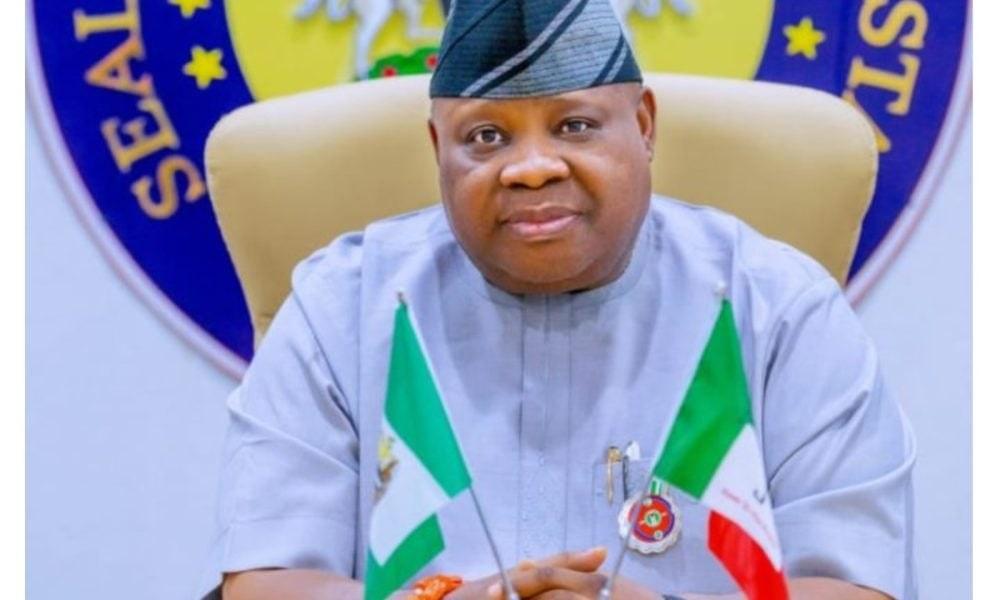
The rejection of President Bola Tinubu’s Osun State Presidential Campaign Committee exposes a troubling contradiction within the APC: a party demanding national loyalty while struggling to manage its own internal disagreements. Beyond the argument over consultation and due process lies a deeper question about political maturity, party discipline and the willingness of defeated political actors to put collective interests above personal grievances.
The rejection of the Osun State Presidential Campaign Committee by the All Progressives Congress (APC) has exposed a fundamental weakness in the ruling party’s preparations for the 2027 general election: the apparent failure of its national leadership to reconcile the pursuit of cross-party support with the interests, sensitivities and established structures of its own state organisation.
The controversy centres on Governor Ademola Adeleke, who belongs to the Accord Party but has declared support for President Bola Tinubu’s re-election. Rather than merely welcoming that support and allowing the existing APC machinery to coordinate its presidential campaign in Osun, the national campaign leadership named Adeleke as the coordinator of Tinubu’s campaign in the state.
That decision has produced an uncomfortable political confrontation. The Osun APC, through its chairman, Tajudeen Lawal, has rejected the inauguration of the state Presidential Campaign Committee, alleging that Adeleke’s camp failed to consult the party leadership before the list was released.
The development raises an important question: who should take responsibility for the crisis? Is it Tinubu, whose desire to attract support beyond the APC is understandable, or the national APC leadership, which designed and announced the campaign arrangement without adequately accommodating the state party’s concerns? And how much responsibility should be assigned to the Osun APC for responding to the development in a manner that threatens to turn a manageable disagreement into a public embarrassment?
The answers require a distinction between the president’s legitimate political objective, the national party’s responsibility for implementing that objective and the state chapter’s obligation to protect its interests without undermining the wider campaign.
Tinubu’s Cross-Party Strategy: Politically Smart, Administratively Flawed?
Tinubu’s decision to welcome political allies from outside the APC is not inherently objectionable. Presidential elections are contests for national support, not merely internal competitions among members of the candidate’s political party. A candidate who can attract influential figures from rival parties potentially expands his political reach, strengthens his mobilisation network and creates opportunities to win votes beyond his traditional base.
In a country where political alliances frequently cross party lines, Adeleke’s support for Tinubu could be electorally useful.
The Osun governor has his own political following, an established grassroots organisation and the advantages associated with incumbency. His support could help Tinubu reach voters who might not ordinarily identify with the APC. The same broader calculation appears to underpin the inclusion of other politicians outside the ruling party in the president’s campaign structure.
The problem, however, is not the decision to welcome Adeleke. It is the decision to place him in a position of campaign coordination in Osun without first ensuring that the APC’s existing leadership and organisational structures were adequately consulted and accommodated.
There is a significant difference between inviting a political ally to support a presidential candidate and placing that ally at the head of a campaign structure operating in a state where the candidate’s party has its own leadership, hierarchy and political ambitions.
The first is coalition-building. The second involves questions of authority, institutional legitimacy and the practical management of competing political interests.
Tinubu could reasonably conclude that Adeleke’s support would strengthen his re-election prospects. But the president and his campaign strategists should also have anticipated that the appointment could be interpreted by APC members as a declaration that their established political leaders were being subordinated to a governor from another party.
That risk was particularly obvious in Osun, where the APC had just suffered a governorship defeat and was preparing to rebuild its political fortunes.
The appointment therefore raises questions about the quality of political consultation within the national campaign machinery. A strategy intended to expand the president’s support base should not be implemented in a manner that unnecessarily alienates the very party members expected to deliver votes for him.
The National APC Must Accept Responsibility
The national APC leadership bears substantial responsibility for the controversy because it is responsible for the campaign structure and the arrangements under which its state coordinators were selected.
If the national leadership wanted Adeleke to coordinate Tinubu’s campaign in Osun, it should have engaged the state party leadership before announcing the decision. It should also have clarified the relationship between Adeleke’s campaign responsibilities and the existing APC structures.
Such consultation would have helped establish whether Adeleke would lead a broad coalition of supporters while working alongside the state APC leadership, or whether the national campaign council intended to replace the party’s existing coordination arrangements with a different structure.
These are not technical details that can be left unresolved until an inauguration ceremony. They go to the heart of how the campaign is expected to function.
The national leadership should have recognised that a governor’s willingness to support Tinubu does not automatically settle the question of who should coordinate the president’s campaign in that governor’s state.
Nor does the appointment of a political ally from another party eliminate the need to respect the established structures of the party whose presidential candidate is seeking re-election.
The APC has every right to develop an inclusive campaign that accommodates political allies, but inclusiveness should not be confused with the displacement of existing party organisations.
If the national leadership failed to anticipate the reaction of the Osun chapter, it demonstrated a lack of political sensitivity. If it anticipated the resistance but proceeded without adequately managing it, then it made a questionable calculation about the relative importance of cross-party support and internal cohesion.
Either way, the national campaign leadership should not escape scrutiny.
Tinubu, as the president and the principal beneficiary of the campaign arrangement, also bears political responsibility for ensuring that his re-election strategy does not unnecessarily weaken the organisation supporting him. That does not mean he must personally approve every appointment or be held solely responsible for every procedural omission. It means that the success of his political strategy requires him to ensure that his allies and party leaders can work together.
The president should be able to attract Adeleke’s support without creating the impression that the APC’s own state leadership has become an afterthought.
Adeleke Is An Ally, Not An APC Member
One of the central distinctions in this controversy is that Adeleke belongs to the Accord Party, not the APC.
His support for Tinubu may be genuine and politically significant, but it does not automatically make him a member of the ruling party or confer upon him the authority ordinarily exercised by its state officials.
This distinction matters because political parties are organisations with their own structures, internal rules, leadership arrangements and electoral ambitions. An alliance between two politicians does not necessarily merge their parties or erase their institutional differences.
Adeleke can support Tinubu while remaining in Accord. He can mobilise his supporters for the president and work with APC members towards a common electoral objective. He can also be appointed to a broader presidential campaign council if the relevant authorities consider that arrangement appropriate.
But the APC must clarify how such an appointment operates alongside its own state structures.
The problem arises when a political alliance is treated as sufficient justification for giving an outsider authority over the internal campaign arrangements of another party without establishing the necessary understanding with its recognised leadership.
This is not an argument against political cooperation. It is an argument for managing cooperation intelligently.
Adeleke’s political value to Tinubu should not be measured only by his formal designation as state coordinator. The more important question is whether his support can be integrated with the APC’s existing organisation to produce a stronger presidential campaign.
If the appointment creates a situation in which Adeleke’s supporters and APC members compete for control, the arrangement could become counterproductive.
The national campaign council must therefore ensure that the governor’s role is clearly defined and that the APC leadership understands how it is expected to cooperate with him.
Why The Osun APC’s Anger Is Understandable
The Osun APC’s reaction should not be dismissed simply because Adeleke has declared support for Tinubu.
The party has its own leaders, members and grassroots structures. These are the people expected to organise meetings, coordinate ward-level activities, mobilise longstanding supporters and maintain the political identity of the APC during the presidential campaign.
They cannot reasonably be expected to accept every decision affecting their responsibilities without consultation.
The published campaign arrangements reportedly named Adeleke as Osun coordinator while former governor Gboyega Oyetola, a prominent APC leader in the state, was not included in the list in the same coordinating capacity. The development inevitably raised questions about the standing of the existing APC leadership in the campaign.
The party’s concern, therefore, goes beyond the personal feelings of its chairman. It touches on whether the national organisation recognises the political investment made by its members and whether they will retain meaningful responsibility for a campaign conducted in the name of their party.
If APC members believe that their organisation has been sidelined in favour of a governor from another party, the resulting resentment could affect their willingness to cooperate enthusiastically with the new arrangement.
That is precisely why the national leadership should have anticipated the problem.
Nevertheless, the Osun APC must also recognise that its presidential candidate is entitled to seek votes beyond the party’s membership. The party cannot insist that Tinubu’s campaign should be restricted to APC members when the objective is to secure a national mandate.
Its responsibility is to negotiate a workable relationship between its own structures and the president’s wider coalition.
When A Legitimate Complaint Becomes Childish Politics
Although the Osun APC has a legitimate reason to demand consultation, its response must also be judged by the manner in which the disagreement is handled.
The party has stated that it supports Tinubu’s re-election while rejecting the inauguration of the campaign committee. That position creates a contradiction that requires urgent resolution.
If the objection concerns the process through which the committee was constituted, the state leadership should seek clarification from the national campaign council and insist that appropriate procedures be followed. If the issue concerns the exclusion of established APC leaders, the national organisation should consider how their responsibilities can be recognised within a unified campaign structure.
What would be politically immature is to allow the dispute to continue simply because the state leadership is unwilling to accept a campaign arrangement that does not place its preferred figures in control.
The childishness would lie in elevating wounded pride, resentment or the struggle for personal influence above the electoral interests of the party.
It would be equally wrong for the national leadership to assume that the state chapter must accept a controversial decision merely because it emanates from Abuja.
A mature political organisation resolves such disagreements through consultation, negotiation and clear rules. It does not expect local leaders to surrender their responsibilities without explanation, nor does it permit them to obstruct a national campaign because they are dissatisfied with an appointment.
The Osun APC should therefore avoid allowing its opposition to the committee’s composition to become a public demonstration of hostility towards Adeleke or the national leadership.
Its members must understand that Tinubu’s re-election is the larger political objective they claim to support.
The Shadow Of The Governorship Defeat
The controversy is also unfolding against the background of the APC’s loss of the Osun governorship election, a setback that has complicated the party’s position in the state.
Electoral defeat frequently intensifies internal rivalries. Leaders question one another’s strategies, political factions struggle to retain influence, and individuals who previously enjoyed considerable authority may become more sensitive to decisions that threaten their standing.
It is reasonable, therefore, to ask whether the APC’s defeat has contributed to the tensions surrounding the presidential campaign committee.
The available report does not establish that envy or resentment motivated the party’s rejection. It would be unfair to present such a motive as proven. Nevertheless, the circumstances raise the possibility that existing political frustrations have made the committee controversy more explosive than it might otherwise have been.
If the state party is still struggling to come to terms with its electoral setback, it must resist the temptation to treat every political development involving Adeleke as another contest for supremacy.
The governor’s victory does not mean that the APC has lost its right to organise in Osun. Equally, the APC’s defeat does not mean that the national leadership should automatically disregard the governor’s political influence when assembling a broad presidential coalition.
Both realities must be accommodated.
The APC’s most important task is to learn from its defeat, rebuild its structures and strengthen its appeal to voters. A prolonged confrontation over campaign appointments would divert attention from that task.
The party should not allow resentment towards the governor, if it exists among some of its members, to determine how it approaches Tinubu’s re-election.
The Danger To Tinubu’s 2027 Ambitions
The immediate electoral consequences of the dispute remain uncertain, but the potential risks are clear.
A presidential campaign depends on coordination between national leadership, state structures, local organisers and political allies. If those relationships are damaged before the campaign has properly commenced, the resulting divisions could weaken mobilisation and complicate the delivery of a unified message to voters.
The first danger is a divided campaign structure. If Adeleke’s Accord organisation operates separately from the APC’s established structures, the president could end up with competing centres of mobilisation in the same state.
The second is the possibility of declining morale among APC members who believe their contribution to the party has been undervalued. Political organisations depend on volunteers, local leaders and loyal supporters whose commitment cannot always be replaced by appointing influential outsiders.
The third is reputational. The opposition could use the dispute to portray the APC as an organisation unable to reconcile its internal interests with its national ambitions.
The fourth is strategic. A campaign distracted by disagreements over authority may devote less attention to persuading voters, strengthening its grassroots network and communicating the president’s policy agenda.
These risks do not mean Tinubu’s re-election prospects in Osun have already been damaged beyond repair. They mean that the national leadership must recognise the potential cost of poor coordination and act before the disagreement becomes entrenched.
The Way Forward: One Campaign, Clear Responsibilities
The solution is not to force Adeleke to abandon his support for Tinubu, nor is it to demand that the Osun APC surrender its organisational responsibilities.
The national campaign council should bring the relevant parties together and establish a clear framework for cooperation.
Adeleke can coordinate the mobilisation of his own supporters and contribute to a broader coalition backing Tinubu. The APC’s state leadership can retain meaningful responsibility for organising its members and managing the party’s established structures. Both can work within a common campaign plan, provided their responsibilities are clearly defined and recognised.
The national leadership should also explain the process through which the committee was constituted and address any legitimate complaint concerning consultation.
If the published list requires adjustment to accommodate the party’s established leadership, that should be considered on its merits rather than treated as a humiliating concession to a dissenting faction.
The objective must be electoral effectiveness, not the vindication of individual egos.
Tinubu should also recognise that political alliances are strongest when they are managed through respect and negotiation. Bringing influential opposition politicians into a campaign can be a smart strategy, but the strategy loses value if it alienates members of the candidate’s own party.
The president needs Adeleke’s support, if it can translate into additional votes. He also needs the APC’s existing structures to work effectively. There is no strategic justification for creating an unnecessary conflict between the two.
Conclusion: The Blame Is Shared, But Not Equally
The Osun campaign committee controversy reveals a failure of political coordination rather than a simple clash between a governor and a political party.
The national APC leadership bears primary responsibility for the campaign arrangement because it selected the state coordinator and should have anticipated the implications of appointing an Accord governor to lead Tinubu’s campaign in a state where the APC has its own leadership and political machinery.
Tinubu, as the president and the central figure in the re-election project, bears broader political responsibility for ensuring that his cross-party strategy strengthens rather than undermines his party’s electoral organisation. However, the available evidence does not establish that he personally directed any deliberate exclusion of the Osun APC leadership.
Adeleke, meanwhile, should not be blamed simply for belonging to Accord or for supporting Tinubu. His appointment and the authority attached to it are matters for the national campaign council to clarify.
The Osun APC also bears responsibility for ensuring that its procedural grievance does not degenerate into an obstruction of the presidential campaign it claims to support. Its complaint deserves consideration, but it must not become an excuse for factional warfare or a public display of wounded pride.
Ultimately, the national leadership should have managed the appointment more carefully, and the state chapter should now insist on a resolution rather than prolonged confrontation.
Tinubu’s re-election campaign needs both Adeleke’s political support and the effective cooperation of APC members in Osun. Neither can substitute completely for the other.
The lesson for the president and his party is that political inclusion must be accompanied by institutional sensitivity. An alliance designed to broaden electoral support should not alienate the party’s existing base.
In politics, winning influential allies is important. Knowing how to accommodate them without provoking avoidable resistance among loyal supporters is what distinguishes a sound strategy from a costly miscalculation.