PublicSphere Live
Business
Naira Weakens at Black Market, GTBank Desk as FX Turnover Surges 148%
The local currency weakened by N2 against the dollar at the parallel market, also known as the black market, to close at N1,360/$1, compared with N1,358/$1 recorded on Wednesday.
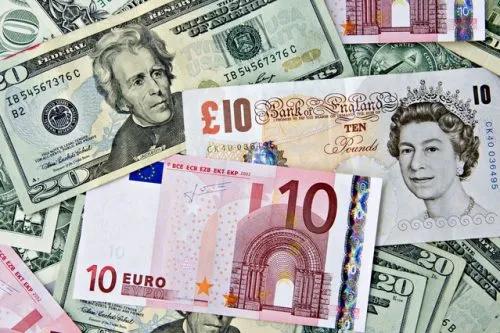
The Nigerian naira recorded mixed performance across the country’s major foreign exchange market segments on Thursday, October 22, depreciating against the United States dollar at the parallel market and GTBank forex desk while posting a marginal gain at the Nigerian Foreign Exchange Market (NAFEM).
The local currency weakened by N2 against the dollar at the parallel market, also known as the black market, to close at N1,360/$1, compared with N1,358/$1 recorded on Wednesday.
Similarly, the naira depreciated by N3 at the GTBank foreign exchange desk, where the dollar was quoted at N1,343, against the previous session’s N1,340.
However, the currency recorded a marginal improvement at the official market, appreciating by 32 kobo, representing 0.02 per cent, to settle at N1,334.40/$1 from N1,334.72/$1 on Wednesday.
The divergent movements reflected continuing pressures in Nigeria’s foreign exchange market, where demand for dollars and developments in foreign exchange supply continue to influence the naira’s performance across trading windows.
Figures from the Central Bank of Nigeria (CBN) showed a significant increase in activity in the interbank foreign exchange market during the session, with turnover rising sharply as the number of transactions also climbed.
Interbank FX Turnover Rises 148%
Data from the CBN indicated that interbank foreign exchange turnover increased by 148 per cent to $316.545 million on Thursday, compared with $127.628 million recorded in the previous session.
The number of foreign exchange deals also rose to 181 from 95, indicating a substantial increase in trading activity during the period.
The sharp increase in turnover suggested that more funds changed hands through the interbank market, although the higher transaction volume did not translate into a uniform appreciation of the naira across all market segments.
The naira’s marginal gain at NAFEM contrasted with its depreciation at the parallel market and GTBank forex desk, highlighting differences in pricing and supply-demand conditions across the various windows.
Market participants will continue to monitor the relationship between foreign exchange demand, available dollar liquidity and the CBN’s monetary policy measures as businesses and investors make decisions that could affect the direction of the currency.
Naira Loses Ground Against Pound, Euro
The naira also weakened against the British pound and the euro at the official market, reflecting pressure on the local currency against other major international currencies.
Against the pound sterling, the naira depreciated by N10.55 to close at N1,798.28/£1, compared with N1,787.73/£1 recorded on Wednesday.
It also lost N7.12 against the euro, with the exchange rate moving to N1,506.41/€1 from N1,499.29/€1 in the preceding session.
The developments mean that Nigerian businesses and individuals with obligations denominated in pounds and euros faced higher naira costs for settling those payments, all else being equal.
Importers sourcing goods from the United Kingdom, eurozone countries and other international markets will be watching exchange rate movements closely, particularly as demand for foreign currency fluctuates.
The naira’s performance against the major currencies also remains important for companies with foreign-denominated loans, international suppliers and other financial commitments.
Seasonal Demand May Increase Pressure
Market expectations point to the possibility of further pressure on the naira as importers seek foreign exchange to finance purchases ahead of the holiday season.
Businesses typically increase preparations for year-end trading during this period, potentially raising demand for dollars to pay overseas suppliers and replenish inventories.
Such demand could put additional pressure on the naira if foreign exchange inflows fail to keep pace with requirements.
Investors taking profits on securities could also influence currency-market conditions, depending on how they reposition their portfolios and whether the transactions generate additional demand for foreign exchange.
Market participants have consequently indicated that intervention by the CBN could be necessary in the coming week to ease pressure on the local currency.
However, the extent of any intervention and its potential impact will depend on the availability of foreign exchange, the scale of demand and prevailing market conditions.
The naira’s performance in the coming sessions will therefore be closely watched by importers, manufacturers, investors and other economic operators seeking greater certainty in foreign exchange pricing.
A sustained improvement in dollar supply could help moderate pressure on the currency, while a sharp increase in demand without corresponding inflows could intensify volatility across the market.
Cryptocurrency Market Remains Under Pressure
Meanwhile, the cryptocurrency market remained under pressure as traders liquidated positions in derivatives markets over a 24-hour period, including $385 million in bullish bets.
The liquidations reflected losses suffered by traders who had positioned themselves for price increases, as declining cryptocurrency prices triggered the forced closure of leveraged positions.
Market sentiment was also weighed down by persistently high oil prices and weak demand for spot Bitcoin exchange-traded funds (ETFs).
The spot Bitcoin ETFs reportedly recorded $381 million in outflows on Thursday, indicating that investors withdrew substantial funds from the investment products during the session.
The combination of ETF outflows and derivatives liquidations could limit a broader recovery in risk-sensitive assets as investors reassess their exposure to volatile markets.
Bitcoin, the world’s largest cryptocurrency by market capitalisation, declined by 1.2 per cent to $81,761.28.
Ethereum lost 1.4 per cent to trade at $2,401.89, while Ripple’s XRP fell by 1.3 per cent to $1.32.
Cardano declined by 0.9 per cent to $0.2166, while Solana shed 0.5 per cent to settle at $104.35.
TRON also recorded a decline, losing 0.3 per cent to trade at $0.3293.
The losses across these major digital assets indicated broad-based weakness, although the magnitude of the declines varied among individual cryptocurrencies.
BNB, Doge Post Modest Gains
Despite the general downturn, Binance Coin (BNB) and Dogecoin (DOGE) recorded modest gains during the session.
BNB appreciated by 0.5 per cent to $741.40, while Dogecoin rose by 0.2 per cent to $0.0798.
The two cryptocurrencies bucked the downward trend affecting several major digital assets, although their gains remained relatively modest against the broader market weakness.
Meanwhile, the dollar-pegged stablecoins Tether (USDT) and USD Coin (USDC) remained unchanged at $1.00 each.
Stablecoins are designed to maintain relatively stable values against reference assets, commonly the United States dollar, and are frequently used by cryptocurrency traders to move funds between digital assets without immediately converting them into traditional currencies.
The outlook for the cryptocurrency market will depend partly on investor appetite for risk, ETF investment flows, oil-price developments and the pace of liquidations in leveraged trading.
For Nigeria, developments in both the foreign exchange and cryptocurrency markets remain significant for investors and businesses navigating currency volatility, international payment obligations and changing global financial conditions.