 PublicSphere Live
International Finance
IMF Schedules October 29 Press Briefing as Global Economy Faces Mounting Uncertainties
According to the IMF, the briefing will commence at 9:30 a.m. Eastern Daylight Time (EDT), equivalent to 1:30 p.m. Coordinated Universal Time (UTC), and will be accessible to accredited journalists both physically and virtually.
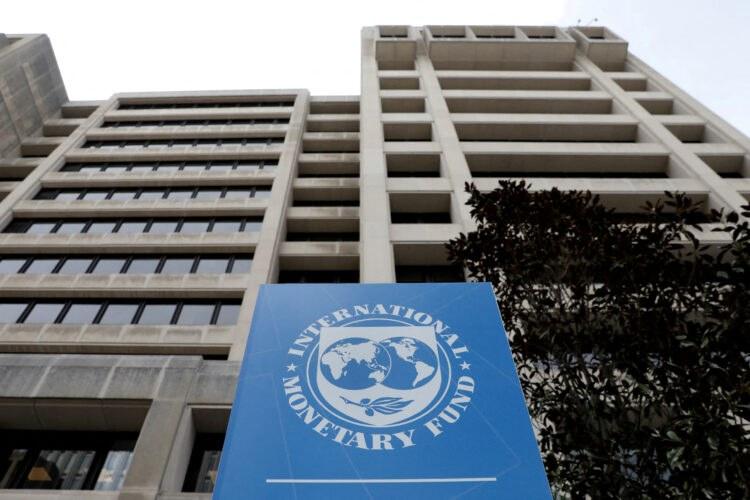
The International Monetary Fund (IMF) has scheduled a regular press briefing by its Director of the Communications Department, Julie Kozack, for Thursday, October 29, 2026, as the global financial institution continues to communicate its assessments, policy positions and responses to developments affecting the world economy.
According to the IMF, the briefing will commence at 9:30 a.m. Eastern Daylight Time (EDT), equivalent to 1:30 p.m. Coordinated Universal Time (UTC), and will be accessible to accredited journalists both physically and virtually.
The content of the briefing will, however, remain under embargo until 11:00 a.m. EDT, corresponding to 3:00 p.m. UTC, on the same day. The restriction means that participating journalists will be required to observe the specified publication deadline for any information released under the embargo.
The announcement provides an opportunity for journalists covering international finance, economic policy, development and financial markets to engage with the IMF's communications leadership and seek clarification on issues within the institution's mandate.
Although the announcement does not disclose the specific subjects to be discussed, the briefing comes at a time when governments, investors and policymakers continue to monitor economic growth, inflation, interest rates, debt sustainability, international trade and the financial pressures confronting developing economies.
For countries such as Nigeria, where exchange-rate stability, inflation, public borrowing, foreign investment and the cost of servicing government debt remain important economic considerations, statements from the IMF can attract considerable attention from financial institutions, policymakers and market participants.
Journalists Required To RSVP Before Deadline
The IMF has directed journalists wishing to participate in the briefing to review its media credentials policies and complete an online registration form no later than 2:00 p.m. EDT on Wednesday, October 28, 2026.
The registration deadline is intended to facilitate arrangements for both physical and virtual participation. Journalists seeking assistance with accreditation or other participation requirements have been advised to contact Randa Elnagar through relnagar@imf.org.
In-person attendees are expected to enter through the IMF Visitor's Center at 720 19th Street NW, Washington, DC, United States.
The doors will open at 9:00 a.m. EDT on Thursday, October 29, while journalists have been encouraged to arrive and take their seats by 9:25 a.m., five minutes before the scheduled commencement of the briefing.
The IMF said access to the studio would be subject to available capacity. Once the room reaches capacity, additional journalists may be accommodated in an overflow viewing area in the lobby.
The arrangements underscore the institution's provision for media participation while ensuring that the briefing can be conducted within the available facilities.
Virtual Participation And Question Submission
Journalists unable to attend physically will be able to follow the event through a live stream on the IMF Press Center.
Those wishing to ask questions by video will be required to join a Webex session, with the relevant access link expected to be published on the IMF Press Center on the morning of the briefing.
Questions and proposed discussion topics may be submitted before the event or during the press conference through the IMF Press Center or the designated online form.
Spanish interpretation will also be available to online participants, allowing Spanish-speaking journalists to follow the proceedings and participate more effectively.
The IMF has additionally made broadcast-quality video available through its Media Center, enabling news organisations to obtain material for television and other broadcast platforms.
Journalists and other interested observers can follow updates through the institution's official social media accounts, including @IMFSpokesperson and @IMFNews, as well as its Facebook platform.
The institution also encourages users to subscribe to its personalised updates covering the IMF Blog, Finance & Development magazine, podcasts and other publications.
Global Growth, Inflation And Debt In Focus
The forthcoming briefing will take place against a challenging international economic backdrop, with the IMF's latest assessments highlighting the combined effects of energy-market disruptions, persistent inflationary pressures, elevated borrowing costs and the uneven distribution of growth opportunities across countries.
At the IMF's October 2026 World Economic Outlook briefing, the institution projected global economic growth of 3.1 per cent in 2026, before an improvement to 3.4 per cent in 2027. However, it warned that the resilience demonstrated by the world economy was coming under increasing strain, with risks tilted towards weaker outcomes. <Link url="https://mediacenter.imf.org/news/imf-world-economic-output-press-briefing/s/85df82f1-2ffe-44b3-91c4-a7a0e01042ae" title="Read the IMF's October economic outlook briefing"/>.
The Fund identified two competing forces shaping the global outlook: the negative effects of higher energy and commodity prices associated with the conflict in the Middle East, and the positive stimulus from investment in artificial intelligence and related technologies.
While technology-driven investment has supported economic activity in some countries, the benefits have not been distributed evenly. Economies with limited access to emerging technology supply chains, particularly low-income and fragile states, face the risk of being left behind while simultaneously confronting higher energy costs.
Rising government debt and borrowing costs also remain significant concerns. The IMF has cautioned that increasing interest payments could divert public resources away from essential services and infrastructure, leaving governments with less capacity to respond to future economic shocks.
These issues are particularly important for emerging markets, where governments must balance the need for economic growth and social investment against the demands of fiscal discipline, debt repayment and currency stability.
The October 29 briefing could therefore provide an opportunity for journalists to seek further clarification on the IMF's assessment of these challenges, although the institution has not announced a specific agenda for the event.
Implications For Nigeria And Other African Economies
For Nigeria and other African countries, developments in the global economy have direct implications for domestic economic management.
Changes in international oil prices can influence government revenues, foreign-exchange earnings, fuel costs and inflation. Higher global interest rates can also increase the cost of raising funds internationally, while uncertainty in trade and investment can affect capital flows into emerging markets.
Nigeria's position as a major oil producer creates both opportunities and vulnerabilities. Higher crude oil prices may improve export earnings and government revenue, but the benefits depend on production levels, domestic energy costs, foreign-exchange management and the efficiency with which additional revenue is converted into productive investment.
Similarly, the country's efforts to attract foreign investment, expand manufacturing and strengthen non-oil exports could be affected by shifts in global financing conditions and investor confidence.
For African governments more broadly, the IMF's concerns about debt sustainability and limited fiscal buffers underline the importance of strengthening domestic revenue mobilisation, improving public expenditure efficiency, diversifying production and building resilience against external shocks.
Nigeria's policymakers and financial-market participants will consequently have reasons to monitor the IMF's statements, particularly where they concern the global economic outlook, commodity prices, international financing and the prospects for emerging and developing economies.
Nevertheless, the October 29 announcement is a notice of a scheduled media briefing, not an advance disclosure of new IMF policy decisions or country-specific assessments. Any conclusions about Nigeria, African economies or the global financial system will depend on what the institution actually communicates during the event.
Embargo And Publication Arrangements
The IMF has specified that the briefing's content will remain under embargo until 11:00 a.m. EDT on October 29, equivalent to 3:00 p.m. UTC and GMT.
Journalists intending to cover the event should therefore pay particular attention to the stated release time and any conditions attached to the information provided.
The briefing is scheduled for 9:30 a.m. EDT, or 1:30 p.m. UTC, while registration closes at 2:00 p.m. EDT on Wednesday, October 28. In Nigeria, which operates on West Africa Time (UTC+1), these times correspond to 2:30 p.m. on October 29 for the start of the briefing, 4:00 p.m. for the embargo's expiry, and 7:00 p.m. on October 28 for the registration deadline.
The IMF's media arrangements are designed to accommodate journalists attending in Washington and those participating remotely. Questions can be submitted through the institution's Press Center or the designated online form, while video participation will be facilitated through Webex.
For further information, journalists may contact Randa Elnagar at relnagar@imf.org or by telephone on +1 (202) 623-6528.
The briefing will be streamed through the IMF Press Center, where the Webex access link is expected to become available on the morning of the event.