 PublicSphere Live
Editorial
EDITORIAL: 2027 Elections: Why the Nigerian Media Must Protect Peace, Credible Polls and Public Trust
As Nigeria approaches the 2027 general elections, the media must promote issue-based campaigns, combat misinformation, scrutinise INEC, ensure balanced political coverage and defend the credibility of election results.
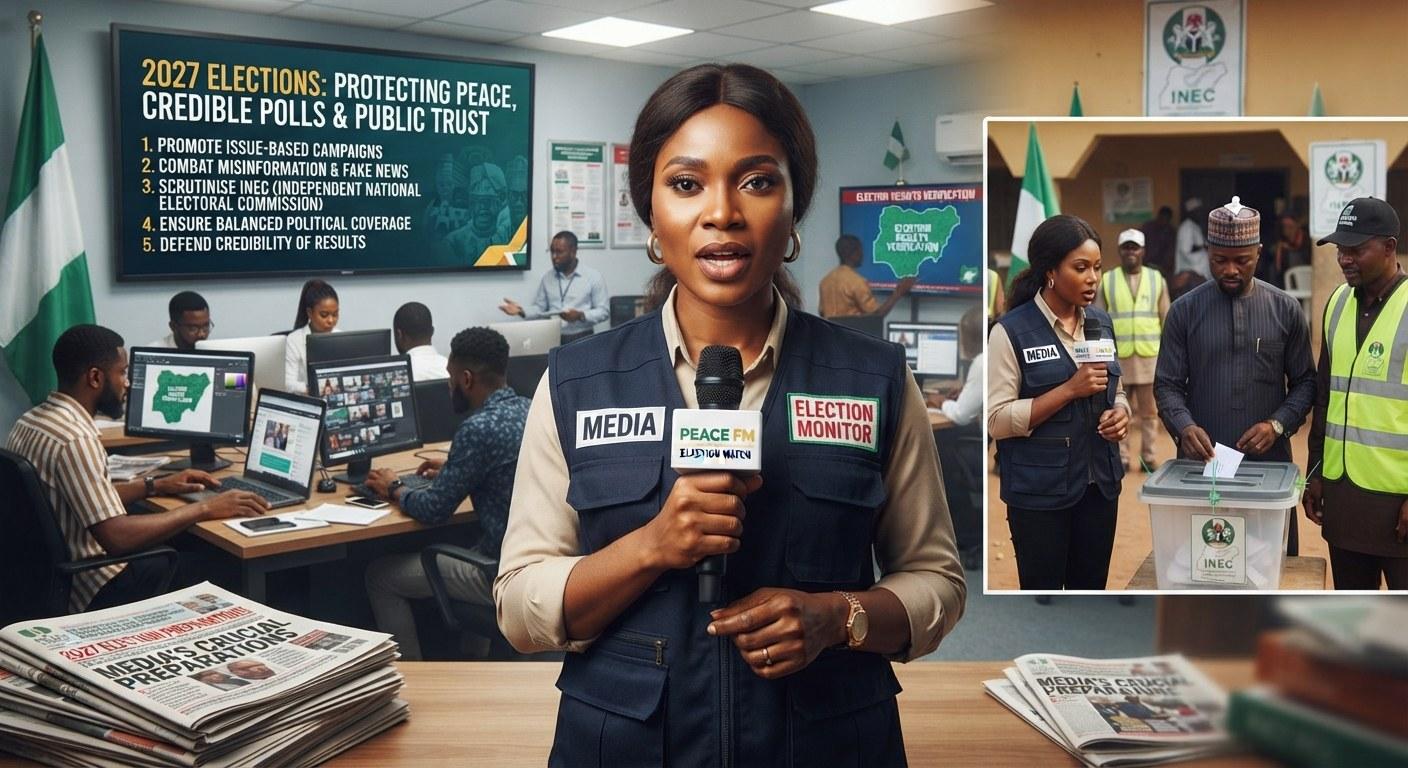
Beyond reporting political rallies and campaign promises, the Nigerian press has a constitutional and professional responsibility to inform voters, hold political parties and INEC accountable, counter electoral misinformation and help create an atmosphere in which peaceful, transparent and credible elections can thrive.
Democracy cannot flourish in darkness. It requires an informed electorate, accountable leadership, transparent institutions and a free press capable of bringing public affairs into the open. As Nigeria moves towards the 2027 general elections, the importance of the media in protecting these democratic foundations cannot be overstated. The press is not merely an observer of the electoral process; it is one of the institutions whose performance can influence the quality, credibility and public acceptance of an election.
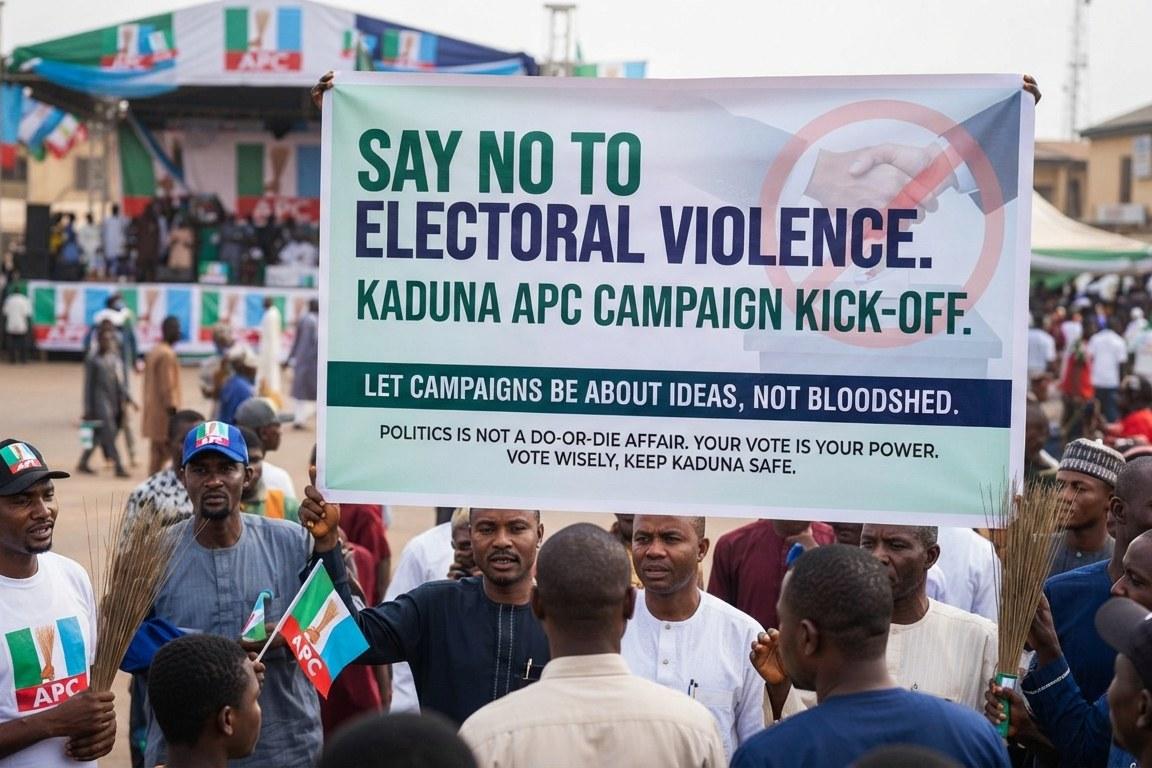
With political parties preparing to intensify their campaigns following the commencement of the All Progressives Congress presidential campaign activities in Kaduna, the country is entering a period in which political messages, competing claims, accusations and counteraccusations will increasingly dominate public discourse. The responsibility of the media at this critical moment is to ensure that Nigerians receive accurate, balanced and timely information with which to make informed electoral choices.
The stakes are enormous. An election is not credible simply because voters queue at polling units, ballot papers are counted or results are announced. Credibility depends on the integrity of the entire process, from voter education and campaigns to polling, counting, collation, declaration of results and the resolution of disputes. Throughout these stages, the media must serve as a reliable source of information, a watchdog over public institutions and a platform through which citizens can hold political actors accountable.
However, this responsibility demands more than publishing stories, broadcasting campaign speeches or transmitting election results. It requires professional courage, editorial independence, factual accuracy, impartiality and an unwavering commitment to the public interest.
The Media As A Pillar Of Democracy
The media occupies a central position in a democratic society because citizens cannot effectively exercise their political rights without access to reliable information. Voters need to know who the candidates are, what their parties stand for, what policies they propose and how their previous conduct measures against their present promises.
Section 22 of the 1999 Constitution of the Federal Republic of Nigeria, as amended, recognises the responsibility of the mass media to uphold the objectives of accountability and responsibility by ensuring that government remains accountable to the people. Section 39 also protects freedom of expression and the press, subject to the constitutional framework.
These provisions reinforce the importance of a media environment in which journalists can investigate public affairs, question those in authority and communicate information without improper interference.
As the 2027 elections approach, the press must exercise these responsibilities without fear or favour. It must scrutinise the ruling party and opposition parties with equal seriousness, subject candidates' promises to examination and report matters of public interest irrespective of the political personalities involved.
The media must not become a propaganda machinery for any party, candidate or government. Its loyalty must be to verifiable facts, democratic principles and the public interest.
A newspaper, radio station, television channel or digital publication that sacrifices accuracy for political patronage weakens the electorate's ability to make informed decisions. Equally, a journalist who deliberately suppresses relevant information to protect a favoured candidate betrays the public trust.
Editorial independence must therefore remain non-negotiable.
Issue-Based Campaigns Must Replace Political Vendetta
One of the greatest challenges facing Nigeria's electoral process is the tendency of political competition to degenerate into personal attacks, inflammatory statements and the circulation of unsubstantiated allegations.
The media must resist becoming an amplifier of this tendency.
Political parties are entitled to criticise one another, question government policies and expose weaknesses in their opponents' programmes. Such exchanges are necessary in a functioning democracy. But campaign coverage should distinguish legitimate criticism from deliberate incitement, character assassination and language that could provoke violence.
Rather than giving disproportionate attention to insults exchanged at rallies, journalists should interrogate the substance of campaign messages. What are the candidates proposing to do about unemployment, insecurity, inflation, education, healthcare, electricity and poverty? How will their programmes be funded? What evidence supports their claims? How do their proposals differ from existing policies?
These are the questions that deserve sustained public attention.
The press should also provide platforms for issue-based debates, interviews, town-hall meetings and public discussions that allow voters to compare candidates on their merits. Candidates must be encouraged to explain their positions instead of relying on personal attacks or emotional appeals.
Where a politician makes an allegation against an opponent, journalists should seek evidence, request a response from the person concerned and explain what has been established and what remains unverified.
The publication of an allegation is not proof of its truth. Responsible reporting requires that distinction to be maintained.
The media must also avoid headlines that distort the substance of a report merely to attract clicks, increase circulation or generate online engagement. Sensationalism may deliver immediate commercial benefits, but it can undermine public confidence and inflame political tensions.
The Media Must Hold INEC Accountable Without Undermining It
The Independent National Electoral Commission (INEC), as the body responsible for organising federal and state elections within its constitutional mandate, occupies a critical position in the 2027 electoral process. Its preparedness, impartiality, transparency and communication will significantly influence public confidence.
The media must therefore scrutinise the commission's activities throughout the electoral cycle.
This includes reporting on voter registration, the publication of electoral guidelines, the readiness of election materials, accreditation procedures, the deployment of technology, polling arrangements, the training of electoral personnel and the collation and declaration of results.
Where INEC makes an announcement, journalists should explain its implications in language ordinary citizens can understand. Where delays, technical difficulties or administrative shortcomings occur, the press should investigate them and seek clear explanations from the commission.
INEC must not be treated as an institution beyond criticism. Its decisions and conduct should be examined against the law, published procedures and the standards expected of an impartial electoral umpire.
Nevertheless, scrutiny must not become a licence for speculation. The media must distinguish between documented failures, reasonable questions, partisan allegations and deliberate attempts to discredit the commission without evidence.
An unsubstantiated claim that electoral technology has been compromised, for example, can generate widespread suspicion if published as established fact. Conversely, suppressing credible evidence of a genuine technical or administrative failure would amount to a dereliction of journalistic duty.
The correct approach is independent verification, fair questioning and transparent reporting.
The media must neither serve as INEC's public relations department nor join political actors in condemning the commission without evidence. Its role is to establish facts, explain procedures and enable citizens to assess the commission's performance objectively.
Accurate Reporting Of Results Is Essential
Election results are among the most sensitive pieces of information communicated during an electoral contest. Errors, premature declarations and misleading reports can generate confusion, distrust and unnecessary tension.
The media must therefore establish rigorous procedures for reporting results from polling units, collation centres and official announcements.
Journalists covering the elections should receive adequate training in electoral procedures, result sheets, accreditation rules and the distinction between unofficial tallies and results formally declared by authorised electoral officials.
Where reporters obtain polling-unit results or photographs of result sheets, these materials must be authenticated and their origins established before publication. Newsrooms should maintain clear records of their sources and verify figures against available official documents and credible independent observations.
Most importantly, media organisations must not present their own projections, partial tallies or figures supplied by political parties as final official results.
Only the legally authorised electoral authorities can declare election results in accordance with the applicable electoral framework. Media organisations can report verified developments, analyse trends and publish clearly labelled projections where their methods are transparent, but they must not create the impression that they possess the legal authority to declare winners.
When results are incomplete, journalists should say so. When figures conflict, they should investigate the discrepancies and explain what is known rather than rushing to conclusions.
A false report of victory can trigger celebrations, confrontations or accusations of manipulation before the official process has been completed. Accuracy and restraint are therefore indispensable, particularly during collation and the announcement of results.
Countering Fake News And Electoral Disinformation
The expansion of social media has transformed political communication in Nigeria. Citizens can now receive campaign messages, eyewitness accounts, videos and claims about electoral developments almost instantaneously.
While this has widened access to information, it has also created opportunities for misinformation and deliberate disinformation to spread rapidly.
Old photographs may be circulated as images from a current election. Videos may be edited to remove essential context. Fabricated statements may be attributed to candidates, while false claims about polling arrangements or election results may be shared widely before they can be corrected.
The media must respond by making fact-checking an essential part of election coverage.
Newsrooms should verify viral content, establish the dates and locations of photographs and videos, examine the authenticity of documents and seek confirmation from credible sources. Artificial intelligence-generated images, audio and videos require particular scrutiny where they purport to show political leaders making statements or electoral officials engaging in misconduct.
Where a false report has already gained significant attention, a correction should be published promptly and with sufficient prominence to reach the audience exposed to the original claim.
Media organisations should also explain the difference between misinformation, which may be shared without an intention to deceive, and disinformation, which is deliberately created or circulated to mislead. Both can damage electoral confidence, even though their origins and motives differ.
Fact-checking must be applied impartially. A newsroom cannot condemn false claims circulated by one political party while ignoring equally misleading claims from another.
Protecting Peace Without Sacrificing The Truth
The responsibility to promote peaceful elections does not mean that the press should conceal genuine problems, avoid uncomfortable investigations or suppress criticism in the name of national unity.
Peace and accountability are not opposing objectives. Indeed, credible reporting can help prevent violence by exposing threats, correcting rumours and providing citizens with reliable information during tense moments.
However, journalists must recognise the consequences of careless language and irresponsible publication. Reports that exaggerate communal divisions, assign collective blame to ethnic or religious groups, or repeat inflammatory statements without adequate context can intensify hostility.
Coverage of electoral violence must be factual, humane and proportionate. Journalists should verify casualty figures, avoid publishing unconfirmed claims about perpetrators and refrain from exposing vulnerable individuals to unnecessary danger.
Where there are credible threats against candidates, voters, journalists or electoral officials, the media should report them responsibly and direct appropriate questions to the relevant authorities.
It must also avoid presenting violence as an inevitable feature of Nigerian elections. Such framing risks normalising conduct that should be condemned and prevented.
At the same time, political leaders and security agencies must not exploit appeals for peace to discourage legitimate reporting. A peaceful election is not one in which journalists remain silent about irregularities; it is one in which problems can be exposed and addressed through lawful and transparent processes.
Balanced Coverage And Equal Opportunity
A credible election requires an electorate that can hear and assess competing political arguments. The media must therefore strive for fairness in its coverage of political parties and candidates.
Public broadcasters, in particular, must fulfil their public-service responsibilities rather than function as exclusive platforms for incumbents or dominant political interests. Private media organisations also have a duty to ensure that their editorial decisions are guided by professional standards and that paid political advertising is clearly distinguished from independent news reporting.
Fairness does not necessarily mean giving every claim identical prominence regardless of its significance or truthfulness. It means applying consistent editorial principles, providing appropriate opportunities for responses and ensuring that coverage is not distorted by political allegiance.
Newsrooms should disclose relevant conflicts of interest, establish clear guidelines for election reporting and train journalists to recognise partisan manipulation.
They should also pay attention to local elections and communities that are often overlooked by national political coverage. Credible democracy depends on informed participation across the country, not merely among the political elite in Abuja and major state capitals.
Voter Education And The Responsibility Of Citizens
The media must go beyond reporting political events to explain the electoral process itself.
Many citizens need accessible information about voter registration, polling procedures, accreditation, ballot secrecy, the responsibilities of election officials and the lawful channels for reporting electoral offences or challenging disputed outcomes.
Through public-service announcements, explanatory reports, interviews and community programmes, media organisations can help voters understand their rights and responsibilities.
They should explain why voters must reject inducements, intimidation and violence, and why the secrecy of the ballot must be respected. They should also provide accurate information about official electoral deadlines and procedures, avoiding the circulation of outdated instructions.
Voter education must be inclusive. Information should be communicated in languages and formats that reach people across different educational backgrounds, regions and levels of digital access.
The media should encourage citizens to evaluate candidates based on competence, integrity, policies and records rather than ethnic identity, religious affiliation, financial inducements or unverified allegations.
An informed electorate is less vulnerable to manipulation and better equipped to hold elected officials accountable after the election.
The Press Must Also Put Its Own House In Order
The media cannot credibly demand transparency from political parties and INEC while ignoring weaknesses within its own institutions.
Media owners must provide adequate resources for election coverage, ensure the safety of reporters and resist pressures that compromise editorial independence. Journalists should receive appropriate training in fact-checking, electoral law, conflict-sensitive reporting and the use of digital verification tools.
Newsrooms must establish effective correction procedures and be willing to acknowledge mistakes openly. Professional and regulatory bodies should promote ethical standards and address substantiated complaints through fair processes.
The financial pressures confronting many media organisations make these safeguards especially important. Dependence on political advertising, patronage or financial support from interested parties can compromise coverage if editorial decisions are not protected.
The credibility of the press depends not only on what it says about others but also on whether it consistently practises the standards it demands of public institutions.
Conclusion: The People's Mandate Must Be Protected
As Nigeria approaches the 2027 general elections, the media has an opportunity to strengthen democracy by placing truth, accountability and public interest at the centre of electoral coverage.
It must report political campaigns without becoming a vehicle for propaganda, scrutinise INEC without spreading unsupported allegations, expose electoral wrongdoing without sensationalism and promote peace without concealing the truth.
It must verify results, counter disinformation, educate voters, provide fair opportunities for political debate and hold all participants accountable to the law and professional standards.
Above all, the press must remember that credible elections are not merely about producing winners and losers. They are about ensuring that citizens can make informed choices, that votes are properly counted and that results are determined and declared through lawful procedures.
Political parties may disagree, candidates may compete fiercely and voters may support different visions for the country. But these differences must be managed within a democratic framework that protects lives, rights and institutions.
The media cannot guarantee a perfect election, nor can it replace the responsibilities of INEC, political parties, security agencies, the courts and voters. It can, however, help ensure that these actors operate under the searching light of public scrutiny.
The Nigerian press must rise to this responsibility. The credibility of the 2027 elections, the peaceful transfer or retention of political power in accordance with the people's choice, and public confidence in democracy all depend, in part, on the quality and integrity of the information citizens receive.
The ultimate duty of the media is not to help any candidate win. It is to help Nigerians know the truth, protect their democratic choices and ensure that the people's mandate is respected.
That is the standard the country deserves, and the standard the press must uphold.