 PublicSphere Live
Politics
2027: Sowore Rejects Atiku-Led Opposition Coalition, Says Members Not Different From Tinubu
The activist and politician made the remarks during an interview on the Deep Insight Podcast on Monday while discussing the opposition coalition and its efforts to challenge the ruling party ahead of the 2027 general elections.
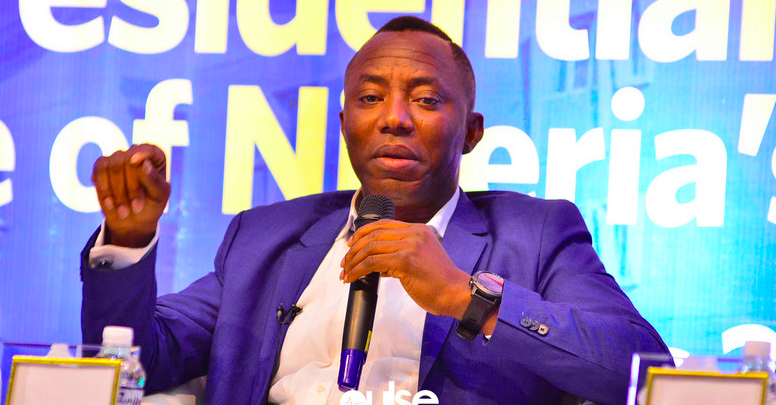
African Action Congress (AAC) presidential candidate, Omoyele Sowore, has rejected the opposition coalition led by former Vice President Atiku Abubakar, describing its members as no different from President Bola Tinubu.
Sowore said he would not join what he described as a coalition of “indecent people” merely to remove Tinubu from office, insisting that Nigeria needs a genuine political alternative rather than a return to power by politicians who have previously governed the country.
The activist and politician made the remarks during an interview on the Deep Insight Podcast on Monday while discussing the opposition coalition and its efforts to challenge the ruling party ahead of the 2027 general elections.
According to Sowore, the politicians assembling under the coalition were part of the political establishment he blamed for Nigeria’s longstanding governance challenges.
He argued that their coming together was driven more by the desire to gain political power than by a commitment to addressing the country’s problems.
“Opposition coalition members are not different from Tinubu. They are all the same. I can't be part of a coalition of indecent people just to remove Tinubu,” he said.
Sowore maintained that opposition politics should be based on a clear departure from the policies, practices and political interests associated with the existing establishment, rather than a common desire to defeat an incumbent president.
His comments highlight the divisions within Nigeria’s opposition as political parties and influential figures begin positioning themselves for the 2027 presidential election.
The coalition associated with Atiku and other opposition leaders is seeking to bring political forces together to challenge the All Progressives Congress (APC) and Tinubu’s administration. However, Sowore’s remarks underscore the difficulty of building a united opposition when some political actors question the records and motivations of those advocating collaboration.
For Sowore, the prospect of removing Tinubu from office is not, in itself, sufficient justification for joining forces with politicians whose previous records he considers inconsistent with the kind of change Nigeria requires.
He argued that Nigerians need an alternative that goes beyond replacing one set of established political figures with another, placing the emphasis on the substance of political leadership rather than the identity of the incumbent.
Sowore has consistently presented himself as a critic of Nigeria’s established political class, advocating a fundamental transformation of the country’s political and governance structures.
His latest position suggests that the AAC candidate intends to maintain an independent political path rather than join the opposition coalition, despite the shared objective of challenging the ruling party.
The development raises questions about the extent to which opposition leaders can reconcile their differences and agree on a common platform ahead of the 2027 elections.
While some political actors favour a broad alliance as a means of mounting a coordinated challenge to the APC, Sowore’s position reflects the argument that electoral cooperation without a clear ideological and policy distinction may fail to provide the change many Nigerians seek.
His criticism, however, remains his assessment of the coalition and its members. The opposition leaders involved have their own political records, positions and stated reasons for pursuing collaboration.
As preparations for the 2027 elections gather momentum, the challenge for the opposition will be to demonstrate not only its capacity to contest power but also the substance of the alternative it intends to offer Nigerians.