 PublicSphere Live
Health
Nigeria Has No Current Ebola Cases As Who Praises Response, But Surveillance Continues
The evacuation of the index patient to Switzerland marks a significant step in containing the imported infection, while 52 contacts remain under monitoring in Nigeria.
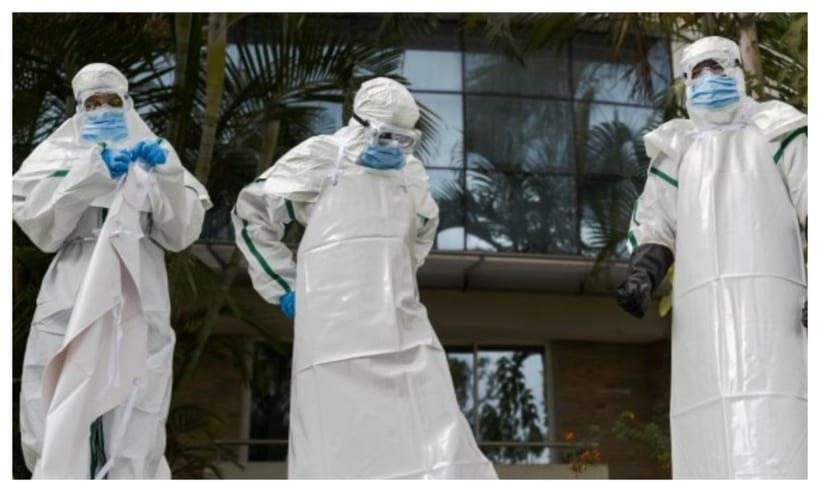
Nigeria has reported no current Ebola cases following the medical evacuation of the country's index patient to Switzerland, according to an announcement attributed to the World Health Organization's Regional Director for Africa, Dr Mohamed Janabi, but public health authorities must sustain surveillance until the risk of further transmission has been adequately assessed.
Janabi announced the development on Monday, October 26, 2026, in a statement posted on his verified X handle, following the transfer of the patient, whose condition had reportedly stabilised after treatment by Nigerian medical teams.
According to the statement, Nigeria would continue monitoring 52 contacts associated with the case, while Switzerland would assume responsibility for the patient's continued medical management and the follow-up of her husband, identified as the 53rd contact.
The development represents an important milestone in Nigeria's response to an imported Ebola infection linked to Uganda. It also provides an opportunity to assess the country's capacity to identify, manage and contain dangerous infectious diseases in an environment characterised by extensive domestic and international travel.
However, the reported absence of a current case should not be confused with definitive proof that the outbreak has formally ended. The remaining contacts must be monitored in accordance with public health protocols, and any new symptoms or suspected infections must be investigated promptly.
The distinction is important because the effectiveness of an outbreak response is determined not simply by the removal of an infected patient from a country, but also by whether further transmission has been prevented.
How Nigeria Responded To The Imported Case
The Nigeria Centre for Disease Control and Prevention (NCDC) had earlier confirmed an imported Ebola case and initiated measures to prevent the infection from spreading.
The response included the identification of 53 contacts associated with the patient, who were placed under monitoring as health authorities sought to establish the extent of possible exposure.
The patient subsequently received medical attention from Nigerian health professionals, who reportedly managed her through the acute phase of the illness and stabilised her condition before arrangements were made for her evacuation to Switzerland.
The WHO regional director's commendation of the Nigerian medical teams is significant because managing a suspected or confirmed Ebola infection requires specialised clinical procedures, appropriate infection-prevention measures, laboratory support and coordination among healthcare providers and public health agencies.
The response also demonstrates the importance of early notification and contact tracing when an imported infection is identified.
For a country as populous as Nigeria, with busy international airports and extensive commercial and social connections across Africa and beyond, the rapid identification of infectious diseases is an essential component of national security.
An imported infection does not automatically translate into a domestic outbreak. The outcome depends considerably on how quickly the infection is recognised, whether the patient is appropriately isolated, the extent of exposure before diagnosis and the effectiveness of measures to identify and monitor contacts.
Nigeria's immediate objective must therefore remain the prevention of secondary transmission.
Why The 52 Contacts Remain Important
The decision to continue monitoring 52 contacts in Nigeria is central to understanding the current situation.
Contact tracing enables health authorities to identify people who may have been exposed to an infected individual, assess the circumstances of that exposure and monitor their health for the recommended period.
This is particularly important with Ebola because the incubation period can range from two to 21 days. A person who has been exposed may not develop symptoms immediately, meaning that the absence of symptoms at the time of identification does not necessarily eliminate the need for further observation.
Health authorities must consequently maintain accurate records, communicate with the individuals under monitoring and ensure that anyone who develops compatible symptoms receives prompt medical assessment.
The monitoring process should be conducted with appropriate confidentiality and without stigmatising the people concerned. Being identified as a contact does not mean that an individual has contracted Ebola; it means that the person's possible exposure requires assessment.
The transfer of responsibility for the patient's husband to Swiss authorities also illustrates the importance of cross-border coordination. Where a case involves travel between countries, public health agencies must exchange relevant information and agree on responsibilities for monitoring, clinical management and follow-up.
Nigeria must therefore continue cooperating with the WHO and the relevant Swiss authorities while ensuring that its own surveillance arrangements remain fully operational.
The completion of this work will provide a more reliable basis for assessing whether the incident has been contained without further transmission.
No Current Case Is Not Necessarily The Same As An Outbreak Being Over
One of the most important issues arising from the WHO announcement is the distinction between a country having no current confirmed cases and the formal conclusion of an outbreak.
The two situations are related, but they are not necessarily identical.
The evacuation of the index patient means that Nigeria no longer has the patient under its direct clinical management. The announcement that the country has no current Ebola case is therefore an important indicator of the immediate situation.
Nevertheless, people who were exposed before the patient was isolated or evacuated may still require monitoring. Public health authorities must also consider the timing of the last possible exposure and the applicable criteria for determining when an outbreak can officially be declared over.
It would therefore be premature to interpret the announcement as evidence that all risks have disappeared or that contact-tracing activities can be discontinued.
The most responsible description is that Nigeria has no current Ebola case, according to the statement attributed to the WHO regional director, while surveillance of identified contacts continues.
This formulation recognises the significance of the development without overstating what it establishes.
It also places the emphasis where it belongs: on preventing additional cases and ensuring that the response is completed according to established public health standards.
The Significance Of Nigeria's 2014 Ebola Experience
Nigeria's experience during the 2014 Ebola outbreak offers valuable lessons for the present situation.
That outbreak began after an infected traveller arrived in Lagos from Liberia. The circumstances presented a substantial challenge because Lagos is a major commercial centre with a large population and extensive domestic and international connections.
Nigeria eventually contained the outbreak through a combination of case identification, isolation, contact tracing, laboratory testing and coordinated public health intervention.
The experience demonstrated that a country can prevent an imported infection from becoming a wider epidemic when its institutions respond rapidly and the public cooperates with health authorities.
It also established the importance of coordination between hospitals, laboratories, emergency response teams and government agencies.
However, the success of the 2014 response should not encourage complacency. Each new incident has its own epidemiological circumstances, and the virus involved in the present case must be considered on its own terms.
The current case has been reported as involving the Bundibugyo species of Ebola virus, rather than the species responsible for the major West African epidemic of 2014.
This distinction matters because public health decisions must be based on the characteristics of the specific infection, current scientific evidence and the recommendations of competent health authorities.
Nigeria should use the latest incident to review its emergency response systems, assess whether any weaknesses emerged and strengthen the capacity of hospitals and surveillance teams to recognise and manage similar cases in the future.
Healthcare Preparedness Must Go Beyond An Emergency
The commendation of Nigerian medical teams provides an opportunity to recognise the importance of professional competence, but it also raises a broader question about the sustainability of the country's healthcare preparedness.
Nigeria cannot rely solely on the dedication of health workers during emergencies. Effective disease control requires sustained investment in diagnostic laboratories, protective equipment, isolation facilities, emergency transportation and personnel training.
Public and private hospitals must have clear procedures for identifying suspected cases, obtaining relevant travel histories, notifying the appropriate authorities and preventing exposure among healthcare workers and other patients.
The NCDC and state health authorities also need adequate resources to maintain surveillance, investigate reports and coordinate responses across different jurisdictions.
These investments would strengthen the country's capacity to respond not only to Ebola but also to other infectious diseases that can place substantial pressure on public health services.
Preparedness is particularly important in Nigeria because the economic consequences of an uncontrolled outbreak could extend beyond healthcare. International travel, trade, tourism, business operations and public confidence could all suffer if an infection were allowed to spread widely.
The cost of maintaining surveillance and emergency readiness must therefore be understood as an investment in national resilience rather than merely an expense incurred during a health crisis.
International Cooperation And Regional Security
The transfer of the patient to Switzerland highlights the role of international cooperation in managing infectious diseases.
When an infection involves international travel, responsibility for clinical care and exposure monitoring may extend beyond one country. Health authorities must therefore exchange relevant information, coordinate follow-up arrangements and maintain clear communication about potential risks.
The WHO provides an important framework for this cooperation by supporting surveillance, technical guidance and coordination among countries facing public health threats.
Nigeria should maintain close contact with the organisation and other relevant health institutions while ensuring that the monitoring of its 52 contacts is completed appropriately.
The government should also remain attentive to developments in the wider region. International travel and the movement of people across borders mean that no country can rely on geographical separation alone to protect its population from infectious diseases.
Effective regional cooperation, timely information-sharing and the strengthening of national surveillance systems are essential to preventing isolated cases from developing into larger outbreaks.
Public Communication Must Remain Clear And Responsible
Another important lesson from the episode concerns the communication of public health information.
Reports of Ebola can provoke fear because of the seriousness of the disease. Unverified claims about suspected cases, patients' movements or the possibility of widespread transmission can deepen anxiety and undermine public confidence.
The NCDC should therefore continue providing clear updates on the monitoring process and any material changes in the public health assessment.
Information should distinguish between confirmed infections, suspected cases and people being monitored because of possible exposure. This would help prevent the public from interpreting every contact-tracing exercise as evidence of an active outbreak.
Citizens should cooperate with health authorities, report relevant symptoms when appropriate and avoid spreading unverified information. People identified as contacts should not be subjected to discrimination merely because they are under observation.
The media also has a responsibility to report developments accurately, particularly when an announcement involves an important distinction between the absence of current cases and the formal conclusion of an outbreak.
Clear communication is not an optional part of outbreak management. It helps sustain public trust, encourages cooperation and reduces the risk that misinformation will interfere with public health measures.
Conclusion: A Positive Development That Requires Continued Vigilance
The WHO announcement attributed to Dr Mohamed Janabi that Nigeria currently has no Ebola case following the evacuation of the index patient to Switzerland is welcome news.
The reported stabilisation of the patient by Nigerian medical teams deserves recognition, while the arrangements for continued treatment and the monitoring of her husband demonstrate the importance of international cooperation.
However, the monitoring of 52 contacts in Nigeria remains a critical responsibility. The authorities must sustain surveillance, investigate any suspected secondary infection promptly and ensure that the applicable criteria for concluding the outbreak response are satisfied.
The incident should also encourage renewed investment in diagnostic capacity, infection prevention, emergency preparedness and the training of healthcare personnel.
Nigeria has reason to be encouraged by the reported outcome, but the ultimate measure of success will be the prevention of further transmission and the effective completion of the public health response.
The appropriate course is neither panic nor complacency. It is disciplined vigilance, transparent communication and sustained investment in the institutions responsible for protecting the health of Nigerians.