 PublicSphere Live
News
Tinubu Defends Nigeria’s Rising Borrowing, Says Infrastructure Investments Will Create Wealth for Future Generations
The President's defence comes amid growing criticism from opposition politicians and other stakeholders over Nigeria's increasing debt obligations and the government's decision to secure fresh loans from international financial institutions and commercial lenders.
President insists loans must be judged by projects delivered, not amounts borrowed; cites $1trn economic ambition, falling inflation, rising reserves and major highway projects as justification for sustained infrastructure spending
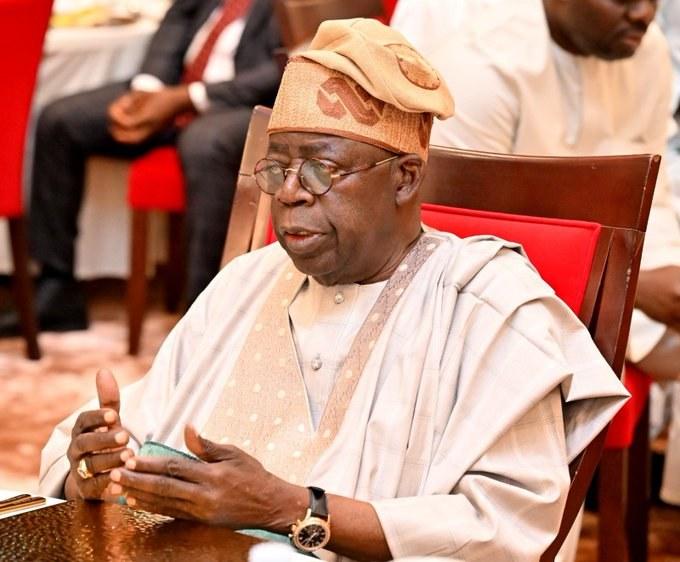
President Bola Ahmed Tinubu has mounted a strong defence of his administration’s borrowing strategy, insisting that Nigeria must be prepared to access long-term financing to build critical infrastructure, expand economic opportunities and secure a prosperous future for generations yet unborn.
The President's defence comes amid growing criticism from opposition politicians and other stakeholders over Nigeria's increasing debt obligations and the government's decision to secure fresh loans from international financial institutions and commercial lenders.
Tinubu argued that the debate surrounding public borrowing should go beyond the volume of loans contracted and focus instead on the economic value, productivity and long-term benefits generated by the investments financed through such borrowings.
In an essay titled "From Reforms to Delivery: Our Infrastructure Investment and Growth Strategy," which is scheduled for publication on Nigerian news platforms, the President maintained that borrowing should not automatically be regarded as a sign of economic failure, provided the funds are deployed responsibly into projects capable of generating sustainable economic returns.
"The real question is not how much we borrow, but what we build, what value we create and what future we leave behind," he declared.
The President's position represents a renewed attempt by the administration to explain the economic thinking behind its infrastructure financing strategy, particularly at a time when concerns over public debt, debt servicing, the cost of living and the purchasing power of Nigerians remain prominent in national conversations.
According to him, Nigeria cannot achieve its ambition of becoming a $1 trillion economy by 2030 without making substantial investments in transportation, electricity, commercial infrastructure, education, healthcare and other productive sectors.
He identified the Lagos-Calabar Coastal Highway, Sokoto-Badagry Superhighway, Trans-Sahara Superhighway, electricity grid upgrades and the modernisation of major commercial ports in Lagos as some of the critical projects expected to transform the country's economic landscape.
Tinubu explained that these investments were designed not merely as construction projects but as economic instruments capable of connecting production centres with markets, reducing transportation costs, stimulating industrial activities and attracting private capital.
"We are not simply building highways. We are opening economic corridors, connecting markets, unlocking industries and reshaping Nigeria's economic geography," he said.
$1 Trillion Economy Requires Massive Infrastructure Investment
The President maintained that Nigeria's aspiration to build a $1 trillion economy within the next few years would remain unrealistic without a corresponding transformation of its infrastructure base.
He argued that the country's existing transportation, electricity and commercial infrastructure could no longer adequately support the scale of economic expansion envisaged by his administration.
"We cannot build a USD 1 trillion economy with infrastructure designed for an economy a fraction of that size," Tinubu stated.
He explained that infrastructure investment would be central to increasing productivity, strengthening domestic manufacturing, expanding agricultural output and positioning Nigerian businesses to compete more effectively in regional and international markets.
The Lagos-Calabar Coastal Highway, in particular, was identified as one of the flagship projects expected to generate significant economic benefits.
According to projections cited by the President, the highway could reduce logistics costs along its corridor by between 15 and 20 per cent while potentially adding up to two per cent to Nigeria's Gross Domestic Product through increased trade, tourism and industrial activities.
The project is also expected to generate approximately 100,000 direct employment opportunities in construction and engineering, in addition to more than 150,000 indirect jobs across logistics, building materials, transportation and related services.
Beyond employment generation, the administration believes the highway will improve connectivity between economic centres along the country's coastal belt, facilitate the movement of goods and services and create new opportunities for businesses operating within the corridor.
The President also highlighted the Sokoto-Badagry Superhighway and the proposed Trans-Sahara Superhighway as important components of a broader transportation network designed to strengthen trade connections across Nigeria and the wider African region.
He said the projects would help reduce the cost of doing business, improve access to markets and encourage investment in areas where poor transportation infrastructure has historically constrained economic activities.
Tinubu Links Economic Reforms to Improving Indicators
In defending the administration's borrowing strategy, Tinubu also pointed to what he described as improvements in Nigeria's macroeconomic performance since the introduction of major economic reforms in May 2023.
He said the removal of petrol subsidies, unification of the foreign exchange market, tax reforms and coordinated measures to address inflation had helped restore macroeconomic stability, strengthen government finances and improve Nigeria's standing in international financial markets.
According to figures presented in the essay, Nigeria's real Gross Domestic Product growth reached 4.43 per cent in the second quarter of 2026, indicating an improvement in economic activities.
The President also stated that headline inflation declined to 14.63 per cent in September 2026 from 20.98 per cent recorded in September 2025.
He further disclosed that the country's gross external reserves had increased to $55.1 billion as of October 9, 2026, including approximately $46 billion in net reserves.
Tinubu also cited an improvement in the country's tax-to-GDP ratio, which he said had risen to 12.5 per cent from seven per cent.
He attributed these developments to the difficult but necessary economic decisions taken by his administration, arguing that the reforms were beginning to create a more stable foundation for investment and sustainable economic expansion.
"The decisions taken since 2023 were difficult but necessary," he said.
The President maintained that although the reforms initially generated considerable economic pressures for households and businesses, they were intended to address longstanding structural weaknesses that had undermined the country's economic competitiveness.
He argued that a more stable exchange rate framework, improved revenue mobilisation and stronger external reserves would provide Nigeria with greater capacity to attract foreign investment and finance critical infrastructure.
Lower Borrowing Costs and Growing Investor Confidence
Tinubu also sought to reassure Nigerians that the country's improving international financial standing was creating opportunities for the government to secure financing on more favourable terms.
He said Nigeria's cost of borrowing was declining, while the country's risk premium had reduced significantly as international investors increasingly recognised improvements in its macroeconomic management.
"Confidence has a price; our cost of borrowing is going down, and the country risk premium has drastically decreased," he stated.
The President cited favourable assessments by international credit rating agencies, index providers, regulators and investors as evidence that Nigeria's economic reforms were gradually restoring confidence in the country's financial management.
According to him, these assessments were based on improvements in external reserves, macroeconomic management and the credibility of the country's financial system rather than political considerations.
"These are not political endorsements; they are independent assessments by global rating agencies, index providers, regulators and investors, recognising stronger external reserves, improved macroeconomic management and greater financial credibility," he said.
He explained that stronger investor confidence could help Nigeria attract more institutional investors, access longer-term financing and reduce the cost of funding infrastructure and other productive investments.
The administration believes that improved access to international capital markets would provide an opportunity to accelerate infrastructure development without placing excessive pressure on short-term government finances.
However, the President's argument places considerable emphasis on the ability of the government to translate improved financial credibility into tangible economic benefits for ordinary Nigerians.
A Shift From Borrowing for Consumption to Productive Investments
One of the central arguments in Tinubu's essay is that Nigeria must change the manner in which public borrowing is deployed.
He said his administration was shifting government borrowing away from financing immediate fiscal pressures towards investments capable of generating economic returns, creating employment and expanding opportunities for future generations.
The President explained that infrastructure assets, particularly highways, electricity facilities and commercial ports, require long-term financing arrangements because their economic benefits are realised over several years.
He said the government was therefore pursuing financing structures that would match the repayment periods of loans with the expected lifespan and economic returns of the projects being financed.
Such arrangements, he argued, would reduce refinancing pressures, provide more competitive funding conditions and ensure that the financial obligations associated with infrastructure investments were managed more sustainably.
The underlying principle, according to the President, is that future generations should inherit productive assets alongside the financial obligations incurred to construct them.
This argument is central to the administration's response to concerns about rising public debt. Tinubu believes that borrowing for infrastructure capable of stimulating economic activities is fundamentally different from borrowing to finance recurrent expenditure without creating corresponding assets.
Nevertheless, the success of this strategy will depend on transparency in loan procurement, effective project implementation, prudent debt management and the ability of completed infrastructure to generate the economic benefits projected by the government.
Five Priorities to Drive the Next Phase of Economic Strategy
Tinubu also outlined five major priorities that would guide the next phase of the Federal Executive Council's economic strategy.
The first is ensuring food affordability and energy price stability. The President recognised the importance of addressing the cost of essential commodities and energy, given their direct implications for household welfare, production costs and the overall performance of the economy.
The second priority is budget harmonisation and fiscal discipline, which he said would strengthen public financial management and ensure that government spending aligns with national development priorities.
The third is the completion of high-impact projects and sustained investment in critical infrastructure. This, according to him, would require the government to concentrate resources on projects with significant economic implications rather than spreading available funds across numerous initiatives without measurable results.
The fourth priority involves improving the economic policy framework and regulatory efficiency to create a more predictable business environment, reduce unnecessary bottlenecks and encourage private-sector participation.
The fifth is targeted household support alongside investment in human development, particularly in education, healthcare and vocational training.
The President stressed that infrastructure development alone would not deliver the desired economic transformation unless Nigerians possessed the skills, knowledge and opportunities required to participate meaningfully in the expanding economy.
He said investments in education and vocational training would strengthen the country's human capital, while improved healthcare would support a healthier and more productive workforce.
From Financial Announcements to Tangible Benefits
Perhaps the most significant aspect of Tinubu's intervention is his acknowledgement that the success of the administration's economic programme must ultimately be judged by what Nigerians experience in their daily lives.
He said securing loans and attracting foreign financing should not be mistaken for development achievements in themselves.
Rather, the government must demonstrate that borrowed funds have translated into completed infrastructure, increased private investment, employment opportunities and improved living standards.
"Securing financing is not the achievement. Completing the project, delivering value and improving the lives of Nigerians is the achievement," he declared.
The statement appears to recognise the growing demand among Nigerians for visible evidence that the sacrifices associated with the administration's economic reforms are producing meaningful results.
While the government has repeatedly highlighted improvements in macroeconomic indicators, many households and businesses continue to face the consequences of elevated living costs, expensive transportation, high energy expenses and limited purchasing power.
Consequently, the administration's infrastructure programme will be judged not only by the number of kilometres of highways constructed or the volume of loans secured but also by the extent to which these projects reduce the cost of living, expand economic opportunities and improve the quality of life.
For instance, a reduction in transportation costs should eventually translate into lower distribution expenses for agricultural produce and manufactured goods. Similarly, improvements in electricity supply should reduce dependence on expensive alternative energy sources and make local manufacturing more competitive.
The modernisation of commercial ports should also reduce delays, improve cargo handling and strengthen Nigeria's position as a major trading destination in West Africa.
These are the kinds of measurable economic benefits that would provide substance to the President's argument that infrastructure borrowing is an investment in the country's future.
The Accountability Question Remains
Despite the President's elaborate defence, the debate over Nigeria's borrowing strategy is unlikely to disappear.
Opposition leaders and other critics are expected to continue demanding greater clarity on the country's total debt exposure, the terms of new loans, repayment obligations and the capacity of the economy to sustain additional borrowing.
There are also legitimate questions about project costs, procurement transparency, implementation timelines and whether the anticipated economic returns will justify the financial commitments being undertaken.
For a country with substantial infrastructure deficits and competing development needs, borrowing may provide an important financing instrument. However, the sustainability of such a strategy depends on the quality of investments, the efficiency of public expenditure and the government's ability to generate sufficient revenue.
The challenge is particularly important because debt servicing competes with other essential government responsibilities, including education, healthcare, security and social protection.
Tinubu's argument that future generations should inherit productive infrastructure rather than merely financial obligations therefore places an additional responsibility on the administration to ensure that every borrowed naira produces demonstrable value.
Ultimately, the credibility of the President's $1 trillion economic ambition will depend on whether the current investment drive can deliver the infrastructure, industrial expansion and employment opportunities necessary to support it.
For now, Tinubu has made his position clear: Nigeria cannot achieve its economic aspirations by avoiding investment, and responsible borrowing, when directed towards productive assets, can become a catalyst for national development.
But for millions of Nigerians still waiting for the dividends of economic reforms, the decisive test will not be the strength of the President's argument or the volume of international financing secured.
It will be whether the roads are completed, electricity becomes more reliable, businesses expand, jobs become available, food becomes affordable and the economy begins to offer ordinary citizens a more dignified standard of living.