 PublicSphere Live
Analysis
Aaron Greenspan, Tinubu and The American Courts: What Is the Real Objective, Who Is Funding the Campaign and Can It Affect Nigeria's Presidency?
Perhaps the most important question is whether an American civil court proceeding, initiated by a private individual under the Freedom of Information Act (FOIA), can ultimately affect Tinubu's constitutional eligibility to remain Nigeria's President or seek another term in 2027.
The legal controversy involving Aaron Greenspan, President Bola Ahmed Tinubu, the United States government and Washington-based public affairs firm DCI Group raises questions that deserve careful examination. Beyond the headlines about court applications and rejected requests for evidence, Nigerians need to understand what Greenspan is actually pursuing, what he hopes to establish, whether there is evidence of Nigerian political sponsorship, and what the consequences could be if he eventually succeeds in obtaining the information he wants.
Perhaps the most important question is whether an American civil court proceeding, initiated by a private individual under the Freedom of Information Act (FOIA), can ultimately affect Tinubu's constitutional eligibility to remain Nigeria's President or seek another term in 2027.
These questions must be examined separately. There is a substantial difference between investigating allegations, obtaining government documents, establishing wrongdoing and securing a legal judgment capable of producing political or constitutional consequences.
The first point Nigerians should understand is that the case, as described in the October 30, 2026 ruling, is not a criminal prosecution of President Tinubu. It is an information-access dispute involving Greenspan and American federal agencies. The fact that Tinubu's name appears in an application for evidence does not make him an accused person, much less a person indicted by an American court.
The Real Objective: What Does Greenspan Want?
To understand Greenspan's actions, it is necessary to go beyond the latest application involving Tinubu and DCI Group and examine the original lawsuit.
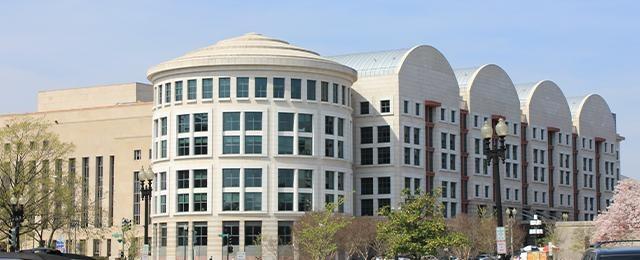
The case is titled Greenspan v. Executive Office for U.S. Attorneys et al., Civil Action No. 23-cv-1816, before Judge Beryl A. Howell of the US District Court for the District of Columbia.
Greenspan submitted 12 FOIA requests to six American federal agencies in 2022 and 2023. They included the FBI, DEA, Central Intelligence Agency (CIA), Internal Revenue Service (IRS), the Executive Office for United States Attorneys and the Department of State.
His central objective was to obtain records relating to an American federal investigation of a Chicago-based heroin-trafficking and money-laundering operation that allegedly operated during the early 1990s.
Tinubu and Abiodun Agbele were among the individuals identified in the requests.
Greenspan specifically sought the entire FBI file on Tinubu, including records of FBI interviews allegedly conducted in 1992 and 1993, as well as DEA investigative records relating to the Nigerian individuals.
The questions he wants answered go beyond whether American investigators once examined Tinubu's activities.
He wants to establish what the American authorities knew, what evidence they collected, how they handled the investigation, whether any prosecution was contemplated, and why the investigation apparently did not result in a publicly established criminal prosecution of Tinubu.
There is another particularly important question that Greenspan himself has raised.
In an interview with Empowered Newswire in September 2026, he questioned whether there might have been a separate sealed criminal proceeding involving Tinubu and whether any arrangement or understanding had been reached with American authorities beyond the $460,000 that was forfeited in 1993.
That is Greenspan's line of inquiry, not an established judicial finding.
He also referred to a separate sealed case involving Abiodun Agbele, whom he said had been indicted. The distinction is important: an indictment involving Agbele cannot automatically be transferred to Tinubu merely because their names appeared in records relating to the same investigation.
Greenspan has repeatedly presented his interest as one of transparency and public access to American court records.
In the September interview, he said he was interested in understanding what happened in the American courts. He also argued that Nigerians had a legitimate interest in the background of someone who subsequently became their President.
His stated objective, therefore, is to obtain the underlying records and expose the full history of the American investigation.
Whether those records would establish wrongdoing by Tinubu is an entirely different question.
The $460,000 Forfeiture: What Actually Happened?
The historical background is central to understanding why this controversy has refused to disappear.
On July 26, 1993, the United States Department of Justice filed a civil forfeiture action in the Northern District of Illinois concerning $460,000 held in an account at First Heritage Bank in the name of Bola Tinubu.
The proceedings related to an investigation of a Chicago-based drug-trafficking operation.
An affidavit by IRS Special Agent Kevin Moss, attached to the government's forfeiture complaint, stated that there was probable cause to believe that funds in certain accounts controlled by Tinubu were involved in financial transactions violating American money-laundering laws and represented proceeds of drug trafficking.
On October 4, 1993, the court entered a decree forfeiting the $460,000 to the United States government.
This is an important historical fact. It is not an allegation invented by Greenspan.
However, the legal character of the proceeding must be properly understood.
It was a civil forfeiture action involving money in a bank account. It was not a criminal trial in which Tinubu was convicted of drug trafficking, money laundering or another criminal offence.
A civil forfeiture order against funds does not, by itself, establish the criminal guilt of the account holder.
The distinction between probable cause, forfeiture and criminal conviction is fundamental to any objective discussion of this matter.
Indeed, the American court handling Greenspan's FOIA lawsuit referred to the 1993 public court documents as evidence that the government had previously acknowledged an investigation involving Tinubu.
That acknowledgement was important because the FBI and DEA had initially refused to confirm or deny whether relevant investigative records existed.
In April 2025, Judge Howell ruled that the agencies could no longer rely on those blanket refusals in the circumstances of the case. She ordered them to search for and produce non-exempt records.
That ruling was a procedural victory for Greenspan. It was not a declaration that Tinubu was guilty of any offence.
Who Is Paying Greenspan In Nigeria?
This is perhaps the most politically sensitive aspect of the controversy.
Given the intense political competition surrounding the 2027 presidential election, it is understandable that Nigerians would want to know whether Greenspan is acting independently or whether Nigerian political interests are financing his legal activities.
However, there is an important journalistic responsibility here: suspicion is not evidence.
As of October 31, 2026, the publicly available court materials and reporting reviewed for this analysis do not establish that any Nigerian politician, political party, opposition organisation or individual is financing Greenspan's litigation.
In fact, Greenspan has publicly denied having any financial or political interest in Nigeria.
In his September interview, he specifically denied working with Karl Von Batten, the lawyer whose attempted intervention in the proceedings became another subject of controversy. He said he had never met Von Batten and had no financial relationship with him.
He also acknowledged that Von Batten appeared to have a common interest in the litigation because, according to his understanding, Von Batten represented a political opponent of Tinubu.
These statements are Greenspan's own account and should not be treated as independent financial auditing. Nevertheless, they are relevant evidence when considering allegations of political sponsorship.
There is another significant detail.
Greenspan has operated PlainSite, a legal transparency website, and has represented himself in the FOIA proceedings. Tinubu's lawyers have argued that the website is operated for profit and that the material about the President generates considerable traffic. But commercial interest in attracting website traffic is not the same thing as receiving money from a Nigerian politician.
The October 30 judgment also discussed Greenspan's proposed discovery involving DCI Group. According to his application, DCI Group AZ, LLC, or its parent company, was to be subpoenaed as a registered agent of the Nigerian government.
Greenspan wanted to investigate alleged distributed denial-of-service (DDoS) attacks against his website. He claimed the attacks had caused him financial losses and disrupted access to his published litigation materials.
Importantly, he did not accuse Tinubu personally of organising those attacks.
The court rejected his application because investigating the source of the alleged cyberattacks would not help determine whether the FBI and DEA had properly searched for and processed the records requested under FOIA.
There was no judicial finding that DCI Group carried out the attacks. Therefore, Nigerians should resist the temptation to declare that an opposition politician is paying Greenspan without documentary evidence.
Equally, if anyone possesses credible evidence of financial sponsorship, the appropriate response is to investigate and establish the facts rather than circulate an unverified accusation.
What Does The October 30 Ruling Mean?
The latest ruling deserves closer attention because some headlines could create the impression that Greenspan's entire lawsuit has collapsed. That is not what happened.
The judge denied Greenspan's motion for summary judgment but granted the FBI summary judgment concerning the adequacy of its search and its reliance on one of the FOIA exemptions. Other aspects of the agencies' arguments were not accepted, and the court directed them to provide additional explanations before seeking to maintain certain withholdings.
The court also denied Greenspan's application to investigate the alleged cyberattacks through discovery involving Tinubu and DCI Group.
There is a further important detail in the judgment.
The FBI processed 399 pages of records, while the DEA processed 240 pages. A substantial proportion was withheld, either entirely or partially, under statutory exemptions.
Significantly, the judge observed that none of the records released by either agency contained the name Tinubu.
This does not establish that no additional records mentioning him exist. Many pages remain withheld or redacted.
The judge's October 30 decision therefore leaves the FOIA dispute alive, with further explanations and possible additional proceedings required.
Greenspan has not obtained everything he wants. Neither have the FBI and DEA secured a final victory on every disputed withholding.
Can The American Government Or Courts Disqualify Tinubu?
This is where the Nigerian constitutional question becomes particularly important.
The straightforward answer is that Greenspan's FOIA lawsuit cannot, by itself, disqualify Tinubu from contesting the 2027 presidential election or remove him from office.
The American court has no constitutional authority to determine who qualifies to become President of Nigeria.
That responsibility belongs to Nigeria's constitutional and judicial institutions.
Under Section 137 of the 1999 Constitution, as amended, certain circumstances disqualify a person from election as President.
These include specified criminal sentences, convictions involving dishonesty, bankruptcy and other constitutionally prescribed conditions.
Section 137(1)(d) addresses a person under a qualifying sentence of imprisonment or fine imposed by a competent court or tribunal. Section 137(1)(e) addresses a conviction and sentence for an offence involving dishonesty within the prescribed ten-year period before the election.
The important distinction is that an investigation is not a conviction.
An allegation is not a conviction.
A civil forfeiture is not automatically a criminal conviction.
And obtaining documents from the FBI or DEA does not constitute a criminal judgment against Tinubu.
Consequently, even if Greenspan eventually obtains every document he has requested, the discovery of historical investigative records would not automatically render Tinubu constitutionally ineligible.
For a constitutional disqualification argument to succeed, those seeking to challenge his eligibility would have to establish that the relevant facts satisfy an actual provision of the Nigerian Constitution.
The evidence would also have to be presented through the appropriate Nigerian legal process.
There is another important consideration. Section 137(1)(i), which previously contained a disqualification provision concerning certain administrative or judicial commission indictments for fraud and embezzlement, was deleted by the First Alteration to the Constitution in 2010.
This makes it particularly important not to confuse historical allegations or investigative findings with the disqualification provisions currently in force.
The Nigerian Constitution, not political interpretation of an American FOIA judgment, determines presidential eligibility.
What If Greenspan Finally Obtains Damaging Documents?
Although the FOIA proceedings cannot automatically disqualify Tinubu, their potential consequences should not be dismissed.
Suppose Greenspan succeeds in obtaining additional FBI and DEA documents.
Suppose those documents contain information that raises fresh questions about the 1993 investigation, the handling of the forfeited money, the activities of other individuals or the reasons certain investigations did not result in criminal proceedings against particular persons.
Such information could have several consequences.
First, it could generate renewed public scrutiny of Tinubu's historical financial and business activities.
Second, it could provide journalists, researchers and Nigerians with additional material for examining questions that have remained controversial for decades.
Third, if the documents contain credible evidence of an offence, they could attract the attention of relevant Nigerian or American law-enforcement authorities, depending on jurisdiction, the nature of the alleged offence and applicable limitation or other legal rules.
Fourth, if admissible evidence establishes facts relevant to a constitutional qualification provision, an appropriate legal challenge could potentially follow.
But none of these outcomes is automatic.
A document in an FBI file does not necessarily establish that the information it contains is true. Investigative records can include unverified intelligence, witness statements, allegations, leads and conclusions that never resulted in prosecution.
Every document must therefore be examined in context.
There is also the question of the age of the investigation. Events from more than three decades ago raise issues concerning the availability of witnesses, the reliability of evidence, the circumstances in which documents were created and the legal significance of subsequent developments.
Even if a document is authentic, its interpretation requires care.
This is why the publication of investigative records should not be confused with a judicial determination of guilt.
The Political Implications For Nigeria And 2027
The timing of the controversy is politically significant.
Nigeria is approaching another presidential election, and Tinubu's political opponents will naturally regard any new information concerning his background as relevant to the national conversation.
His supporters, on the other hand, will argue that a civil forfeiture proceeding and an ongoing American records-disclosure lawsuit cannot substitute for proof of criminal wrongdoing.
Both the political and legal dimensions must be recognised without allowing either to distort the facts.
The controversy could affect public perception, particularly among voters who attach importance to transparency, integrity and the personal history of presidential candidates.
It could also become an instrument of political communication during the 2027 campaign.
However, there is a danger in allowing the controversy to overshadow the substantive questions Nigerians must ask every presidential candidate.
The country's economic direction, insecurity, unemployment, education, healthcare, industrial development, public debt and the cost of living remain critical national concerns.
A presidential election should not become exclusively a referendum on historical allegations, just as it should not be reduced to defending an incumbent against every question raised about his past.
The electorate deserves answers on governance and accountability, but those answers must be supported by evidence.
There is also a foreign-relations dimension.
Nigeria and the United States have longstanding diplomatic, security and economic relations. An American civil court's handling of a FOIA dispute should not be interpreted as an official American government campaign against Nigeria or its President.
The American judiciary is required to determine legal disputes according to applicable law. Its decisions should not automatically be attributed to the foreign-policy position of the US administration.
Similarly, Nigeria's government should not treat legitimate questions about public accountability as an attack on national sovereignty.
Transparency and sovereignty are not mutually exclusive.
The Bigger Question: Why Has This Matter Refused To Disappear?
Perhaps the most revealing aspect of the Greenspan litigation is that it has persisted despite the passage of several years and the enormous legal resources available to the parties.
Tinubu intervened in the proceedings in November 2023, citing his privacy interests in confidential tax records and federal investigative documents.
Greenspan challenged the agencies' refusal to acknowledge the existence of records, and in April 2025 obtained an order compelling the FBI and DEA to process non-exempt documents.
The subsequent dispute has centred on how much information should be released and what the government can legitimately withhold.
This history demonstrates that the controversy is not simply about a Nigerian politician being mentioned in an American investigation.
It is also about the tension between personal privacy, public accountability, law-enforcement confidentiality and the public's right to know how government agencies perform their responsibilities.
The American court has recognised a public interest in examining how the FBI and DEA handled an investigation involving a person who subsequently became the leader of a major foreign country.
But recognition of that public interest does not mean the court has endorsed every allegation made by Greenspan.
Indeed, the same court has rejected some of his applications and denied his latest request for discovery.
That is how judicial independence is supposed to work: applications are considered on their legal merits, not on the political importance of the individuals mentioned.
Conclusion: Nigerians Need Facts, Not Political Speculation
The Aaron Greenspan controversy deserves attention, but it must not be turned into something it is not.
There is no established criminal conviction of Tinubu arising from the FOIA proceedings. The $460,000 forfeiture in 1993 was a civil proceeding, not a criminal conviction. The October 30, 2026 judgment did not indict the Nigerian President, establish his guilt or pronounce him constitutionally ineligible.
Neither has the available evidence established that a Nigerian politician is financing Greenspan.
What is established is that Greenspan is pursuing access to historical American investigative records, that the FBI and DEA have released some material while withholding substantial portions, and that the litigation remains unresolved.
If he eventually succeeds in obtaining more documents, Nigerians should examine them objectively. If they contain evidence of wrongdoing, the relevant authorities should investigate. If they do not, the public should equally be prepared to acknowledge that.
The Presidency should not be above legitimate scrutiny, but neither should the presumption of innocence be sacrificed on the altar of political competition.
Ultimately, the most important question is not whether Greenspan will embarrass Tinubu, nor whether his litigation will provide ammunition for the opposition ahead of 2027.
It is whether the truth about the historical American investigation can be established through credible evidence and whether that evidence, whatever it reveals, will be treated according to the law.
Nigeria's democracy must be strong enough to accommodate scrutiny of its leaders without turning allegations into convictions or legal proceedings into instruments of political persecution.
The final verdict on Tinubu's constitutional eligibility belongs to Nigerian law and Nigerian courts, not to Aaron Greenspan, the FBI, the DEA or the American political establishment.
Principal documents and references:
1.US District Court, Greenspan v. Executive Office for US Attorneys, October 30, 2026 — the full judgment.
2.US District Court's April 8, 2025 judgment — the earlier FOIA ruling.
3.Aaron Greenspan's September 2026 interview — his explanation of his objectives and his response to questions about Nigerian political sponsorship.
4.1999 Constitution of Nigeria, as amended — particularly Section 137.
5.1993 US civil forfeiture case record — the $460,000 forfeiture proceeding.