PublicSphere Live
Business
Manufacturing Contribution to Nigeria’s GDP Must Rise, Says Tinubu
President calls for shift from consumption-driven economy to production as MAN inaugurates new leadership
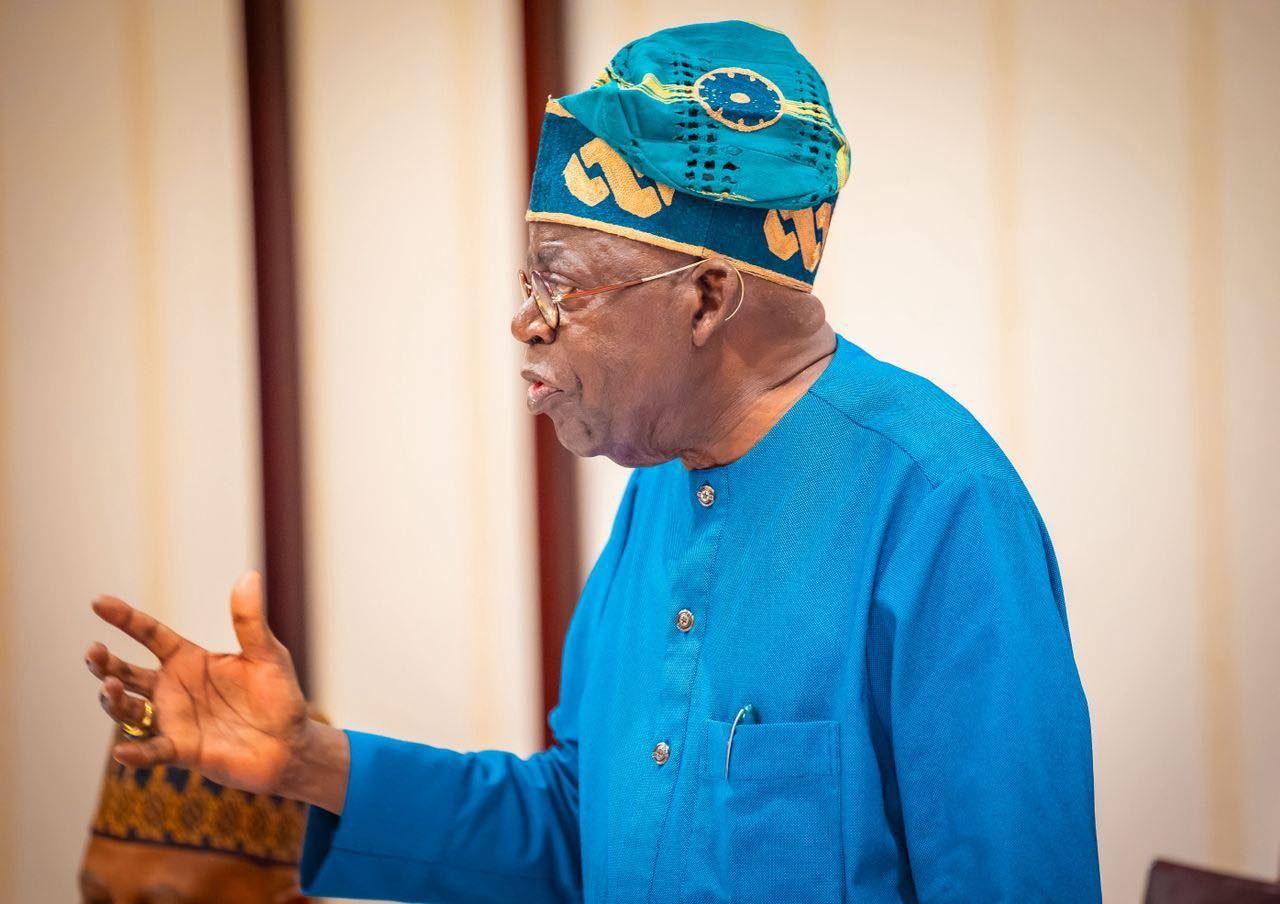
President Bola Ahmed Tinubu has called for deliberate efforts to strengthen Nigeria’s manufacturing sector, saying the country must move away from a consumption-driven economy towards a productive system capable of creating jobs, adding value to raw materials and competing effectively in the global market.
Tinubu made the call following his attendance at the inauguration ceremony of the newly elected President of the Manufacturers Association of Nigeria (MAN), Dr. Eric Okoye, held at the Oriental Hotel, Lagos. Hewasrepresented by Senator John Owan Enoh, Minister of State for Industry, Trade and Investment.
The President, who disclosed his participation in the event in a statement on his visit to the association, said Nigeria had enormous manufacturing potential that could be harnessed through appropriate government policies, an enabling business environment and stronger collaboration between the public and private sectors.
He noted that manufacturing currently accounts for approximately 7.5 per cent of Nigeria’s Gross Domestic Product (GDP), a contribution he described in the context of the significantly higher manufacturing shares recorded by several other developing economies.
According to the President, manufacturing contributes about 14 per cent of GDP in Egypt, 15 per cent in Morocco, 25 per cent in Vietnam, 19 per cent in Indonesia and 20 per cent in Bangladesh.
The comparison, he said, highlights the opportunity available to Nigeria to expand its industrial base, increase domestic production and improve the contribution of manufacturing to national economic growth.
Tinubu maintained that a stronger manufacturing sector would provide multiple benefits to the economy, including expanded employment opportunities, increased productive capacity, reduced dependence on imported goods, higher export earnings and improved living standards for Nigerians.
He also stressed the importance of sustained engagement between the government and manufacturers in addressing the conditions necessary for industrial expansion.
The President said his interaction with Okoye and other members of the association on the sidelines of the inauguration provided an opportunity to reiterate the potential of Nigeria’s manufacturing industry and the need for policies that would enable businesses to grow and compete.
MANUFACTURING GAP WITH COMPARABLE ECONOMIES
The figures cited by Tinubu place Nigeria's manufacturing sector below the levels recorded by the selected economies, underscoring the scale of the industrial development challenge facing the country.
Manufacturing is an important component of economic diversification because it enables countries to transform raw materials into finished and semi-finished products, develop industrial supply chains, create skilled employment and generate additional value within their domestic economies.
For Nigeria, expanding the sector could also provide opportunities to process more of its agricultural produce, mineral resources and other natural endowments locally rather than relying heavily on imported finished goods.
However, increasing manufacturing's contribution to GDP would require more than setting targets or announcing new industrial initiatives. Manufacturers must be able to operate in an environment where electricity, transportation, access to finance, foreign exchange, raw materials and other essential inputs are available at costs that allow them to remain competitive.
The sector's expansion also depends on predictable regulations, efficient ports, reliable infrastructure and a stable macroeconomic environment that enables businesses to plan investments over the medium and long term.
These challenges have implications for both large industrial enterprises and small and medium-sized manufacturers, many of which operate with limited financial resources and are particularly vulnerable to increases in production costs.
Tinubu's emphasis on an enabling business environment therefore places renewed attention on the relationship between government policy and the capacity of Nigerian industries to expand output.
JOB CREATION AND REDUCED IMPORT DEPENDENCE
A significant expansion of manufacturing could help address Nigeria's employment challenge by creating jobs directly within factories and indirectly across transportation, logistics, packaging, distribution, maintenance and other supporting industries.
Industrial growth can also support the development of technical skills, encourage investment in modern production technologies and create opportunities for local suppliers to participate in domestic and international value chains.
For a country with a large and growing population, the ability to generate productive employment remains an important consideration in determining whether economic growth translates into broader improvements in household incomes and living standards.
Manufacturing can also reduce import dependence when local producers are able to supply goods that would otherwise be purchased from overseas markets. This could ease some of the pressure on foreign exchange demand, although the extent of the benefit would depend on the proportion of imported machinery, components and raw materials required by domestic factories.
The sector's export potential is equally significant. Nigerian manufacturers that can produce competitively priced goods to internationally accepted standards would have opportunities to reach markets across Africa and beyond, particularly through the African Continental Free Trade Area.
Realising this potential would require businesses to improve productivity, product quality and operational efficiency while meeting the regulatory and technical requirements of destination markets.
GOVERNMENT AND PRIVATE SECTOR COLLABORATION
Tinubu identified stronger collaboration between the public and private sectors as a critical element in unlocking the manufacturing industry's potential.
The relationship is important because manufacturers depend on government decisions affecting taxation, trade policy, infrastructure, customs procedures, industrial financing and the broader regulatory environment.
At the same time, businesses are responsible for making investment decisions, developing products, adopting technology, training workers and improving productivity.
Effective collaboration could help identify the most pressing constraints confronting industrial operators and establish practical measures for addressing them. Such engagement would also enable policymakers to assess whether existing incentives and industrial programmes are producing measurable results.
For manufacturers, the central concern is often whether policies announced by the government can be translated into tangible improvements in operating conditions.
Reliable electricity supply, efficient transport networks, affordable financing and consistent policy implementation can influence whether companies expand production, establish new factories or defer investment.
The ability to address these issues will be important if Nigeria is to increase manufacturing's contribution to GDP and narrow the gap between its industrial performance and that of the other economies cited by the President.
OKOYE ASSUMES MAN LEADERSHIP
Tinubu congratulated Okoye and his team on their inauguration, wishing the new leadership a successful and productive tenure.
The President also expressed his intention to sustain engagement with the manufacturing sector as part of efforts to build a more productive and prosperous Nigerian economy.
MAN represents manufacturers operating across different segments of the country's industrial economy and provides a platform through which businesses can communicate common concerns, engage policymakers and advocate measures to improve the operating environment.
The new leadership is therefore expected to work with its members and relevant public institutions on issues affecting industrial production, investment, competitiveness and the sustainability of manufacturing businesses.
For the association, one of the major priorities will be ensuring that the concerns of manufacturers are translated into practical policy responses capable of improving factory operations and encouraging new investment.
The sector's performance will also depend on how effectively manufacturers adapt to changing market conditions, invest in modern production systems and develop products capable of competing with imports and meeting export-market requirements.
TURNING INDUSTRIAL POTENTIAL INTO RESULTS
Nigeria's manufacturing ambitions come at a time when economic diversification and the development of domestic productive capacity remain central to discussions about sustainable growth.
Although the country has significant natural resources, a large domestic market and a substantial pool of entrepreneurial talent, the extent to which these advantages can support industrial development depends on the ability to convert them into competitive products and services.
The challenge is to establish an industrial environment in which local production becomes commercially viable, investors can plan with greater certainty and businesses have the infrastructure required to increase output.
Tinubu's call for a transition from a consumption-driven economy to a productive one places manufacturing at the centre of that ambition.
The manufacturing sector's contribution to GDP, however, is only one measure of progress. Other important indicators include factory capacity utilisation, the number and quality of jobs created, the growth of non-oil exports, domestic value addition, productivity and the ability of local industries to compete without depending indefinitely on protection from foreign competition.
A sustainable industrial strategy would need to demonstrate progress across these measures while ensuring that locally manufactured products become increasingly affordable and accessible to Nigerian consumers.
The comparison with Egypt, Morocco, Vietnam, Indonesia and Bangladesh provides a reference point for the scale of the opportunity, but the more immediate test will be whether policies and investments can produce measurable improvements in industrial output.
For Okoye and the newly inaugurated MAN leadership, sustained engagement with government and the resolution of long-standing operational constraints will be important in pursuing that objective.
For the government, the task will be to create conditions in which manufacturers can invest, produce and expand, while ensuring that industrial development contributes to employment, export growth and improved economic welfare.
The broader objective, as articulated by Tinubu, is to build an economy that creates more of the goods it consumes, generates greater value from its resources and develops the productive capacity required for long-term prosperitay.