PublicSphere Live
Editorial
EDITORIAL:2027: Let Democracy Prevail, Not Political Bitterness
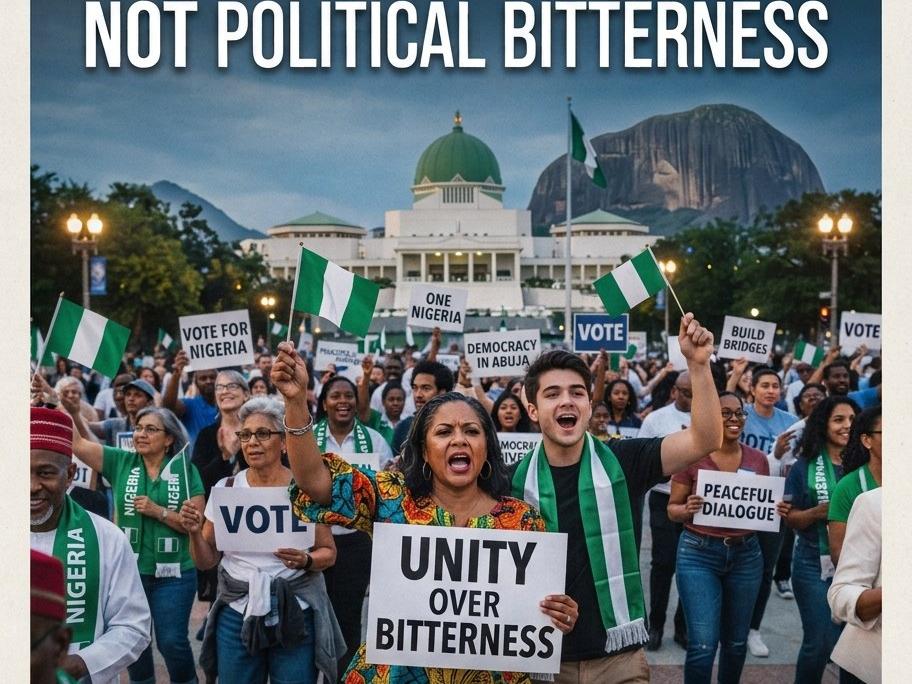
Nigeria must not lose sight of a fundamental truth: elections are intended to provide a peaceful means of choosing leaders, not an excuse for political hostility, personal destruction or the deepening of divisions among citizens.
PublicSphere Editorial
As Nigeria enters the campaign phase of the 2027 general election, the country faces another defining moment in its democratic journey, one that will test not only the maturity of its political class but also the credibility of its electoral institutions and the willingness of citizens to defend the principles upon which a peaceful and democratic society must rest. The competition for political offices is expected to intensify in the months ahead, with parties and candidates seeking to persuade voters that they possess the ideas, character and capacity to address the country's many challenges. Yet, in the heat of this contest, Nigeria must not lose sight of a fundamental truth: elections are intended to provide a peaceful means of choosing leaders, not an excuse for political hostility, personal destruction or the deepening of divisions among citizens.
The message must therefore be clear from the outset. Politicians should compete vigorously, but they must not hit below the belt. They should challenge one another on policies, performance, public records, leadership experience and the credibility of their promises, rather than resorting to insults, deliberate falsehoods, character assassination, ethnic profiling, religious manipulation or the exploitation of the country's social fault lines. A democracy becomes stronger when candidates are subjected to rigorous scrutiny, but it becomes vulnerable when political competition degenerates into a contest of intimidation, disinformation and personal vendetta.
Nigeria has conducted several general elections since the return to civilian rule in 1999. These elections have produced changes in political leadership, expanded opportunities for participation and provided lessons about the importance of electoral integrity. However, the persistence of disputes over electoral processes, allegations of malpractice, political violence and distrust in institutions demonstrates that the work of consolidating democracy remains unfinished. The 2027 election should be approached as an opportunity to strengthen public confidence in the democratic process rather than another occasion for deepening suspicions and partisan animosity.
Political Competition Must Be Issue-Based
The campaign season will inevitably bring competing interpretations of the country's economic and political circumstances. The administration of President Bola Tinubu will be assessed by supporters and opponents on its economic reforms, security policies, infrastructure programmes, management of public resources and capacity to improve living standards. Opposition parties will seek to convince Nigerians that they can offer better approaches, different priorities or more effective leadership. Such arguments are not a threat to democracy; they are an essential part of it.
Indeed, an election without meaningful debate is little more than a ritual. Citizens need to hear competing ideas about inflation, employment, electricity, education, healthcare, insecurity, agricultural productivity, industrial development and the cost of transportation. They deserve clear explanations of how candidates intend to finance their programmes, what measurable results they expect to achieve and how they will be held accountable if they fail to deliver.
The responsibility of political parties is to make these questions central to their campaigns. Candidates should explain their policies and defend their records without portraying every critic as an enemy of the state or treating every opponent as a threat to national survival. Incumbents must recognise that criticism is a legitimate feature of democratic government, while opposition politicians must understand that the desire to win office does not justify misrepresenting facts or deliberately inflaming public anger.
There is a difference between robust political criticism and personal abuse. A candidate's public decisions, official conduct, policy positions and record in office are legitimate subjects of scrutiny. Allegations of misconduct should be supported by credible evidence and presented responsibly, with due regard for the presumption of innocence and the right of every individual to respond. Rumours, fabricated documents and misleading recordings should not become substitutes for facts simply because they offer temporary political advantage.
Political parties must also resist the temptation to mobilise Nigerians along ethnic, religious and regional lines. Nigeria's diversity is a national asset, but it can become a source of instability when political actors deliberately exploit differences to create fear or encourage hostility. No candidate should be made to appear unacceptable merely because of ethnic origin, religion or geographical background. The central question should be whether the candidate can serve the Nigerian people, respect the Constitution and govern in the public interest.
The Electoral Umpire Must Earn Public Trust
While political parties have a responsibility to conduct decent campaigns, the Independent National Electoral Commission occupies a particularly important position in the democratic process. INEC is expected to organise elections that are free, fair, transparent, credible and sufficiently well administered to command public confidence. Its responsibility goes beyond announcing results; it must ensure that the procedures through which those results emerge are lawful, understandable and open to legitimate scrutiny.
Trust in an electoral umpire cannot be demanded from citizens. It must be earned through consistency, transparency, impartiality and demonstrated competence. INEC must therefore communicate clearly about its preparations, explain its procedures, enforce electoral regulations fairly and provide timely information on matters that affect the credibility of the exercise. Where operational difficulties arise, the commission should address them promptly and openly rather than allow uncertainty to create room for speculation.
The commission must also ensure that political parties receive equal treatment under the law. Rules governing campaign conduct, candidate registration, campaign finance, election-day procedures and the handling of complaints should be applied without fear or favour. Neither the governing party nor the opposition should enjoy an advantage arising from the selective application of electoral regulations.
The use of technology in elections must equally be accompanied by transparency and effective public communication. Electronic voter accreditation, result-management systems and other digital processes can improve electoral administration, but technology alone cannot guarantee credibility. Its effectiveness depends on sound implementation, clear procedures, adequate safeguards and the willingness of electoral authorities to explain how the systems work. Any technical failure or disruption should be addressed in accordance with the law, with clear information provided to stakeholders and the public.
INEC must also communicate its procedures for transmitting, collating and declaring results in a manner that leaves as little room as possible for avoidable confusion. Political parties, candidates, observers and voters should understand what the law requires, what technology is intended to achieve and what remedies are available when disputes arise.
The commission must prepare adequately for the logistical demands of the election, including the deployment of personnel and materials, the protection of election officials, the accessibility of polling units and the provision of reasonable opportunities for eligible citizens to vote. Voters should not be disenfranchised because of preventable administrative failures, while polling officials must be protected from intimidation and political interference.
Where mistakes occur, INEC should acknowledge and correct them through lawful procedures. An institution does not become weaker by admitting an error and taking corrective action; rather, it demonstrates that accountability is an integral part of its work. Conversely, silence, inconsistent explanations and the appearance of preferential treatment can damage public confidence even where no deliberate wrongdoing has been established.
Security Agencies Must Remain Impartial
The credibility of the 2027 election will also depend on the conduct of security agencies. The police and other authorised security institutions have a duty to protect voters, candidates, party officials, electoral personnel and election materials, regardless of political affiliation. Their presence should reassure citizens that they can participate freely, not create the impression that state power is being deployed to intimidate political opponents.
Security personnel must act professionally and within the law. Reports of threats, violence, unlawful detention or interference with campaign activities should be investigated promptly and impartially. Equally, political parties and their supporters must not organise private intimidation, attack rival campaign teams or use violence to prevent citizens from attending political gatherings.
Political leaders should publicly discourage their supporters from engaging in violence and make it clear that electoral victory cannot justify the destruction of lives or property. Candidates must also understand that inflammatory statements can have consequences beyond the immediate campaign audience, particularly in communities where political, ethnic or religious tensions are already pronounced.
The security agencies, for their part, must not allow political considerations to influence their response to offences. The law must apply equally to supporters of the governing party and those of opposition parties. Such impartiality is indispensable to creating an environment in which citizens can exercise their democratic rights without fear.
Citizens Must Not Become Hostages To Political Loyalties
Nigerians themselves have an important role to play in protecting the democratic process. The proliferation of social media has made it easier for citizens to participate in political discussions, challenge public officials and share information. However, the same platforms can also spread fabricated claims, manipulated images and inflammatory messages at extraordinary speed.
Voters should exercise caution before forwarding allegations about candidates or electoral institutions. Political loyalty should not remove the obligation to verify information, while disagreement should not become an excuse to circulate material intended to provoke hatred. Citizens who encounter suspicious claims should seek credible confirmation before treating them as established facts.
The media also has a special responsibility to provide accurate, balanced and timely reporting throughout the campaign. Journalists should scrutinise political promises, investigate allegations and give candidates reasonable opportunities to respond to claims concerning them. False equivalence should be avoided, but so should the presentation of unverified allegations as proven facts. Editorial independence and professional restraint are particularly important when political passions are running high.
Civil society organisations, professional associations, religious institutions, traditional leaders and community groups should reinforce the message that political differences must be managed peacefully. Their influence can help discourage violence, promote voter education and encourage citizens to participate in the electoral process without surrendering their judgment to partisan pressure.
Above all, Nigerians must remember that political parties and candidates are temporary participants in the democratic process, whereas the country and its people must endure beyond every election cycle. A person who supports one party today should be able to maintain friendships, business relationships and peaceful coexistence with someone who supports another. Democracy should widen the space for disagreement without destroying the foundations of national unity.
Free And Fair Elections Are A Collective Responsibility
The demand for free and fair elections must not be reduced to a slogan invoked only when a political party believes that the outcome favours it. Every party must be prepared to accept the same rules before the election, during voting and after the declaration of results. Those who believe that an electoral decision is unlawful should pursue available legal remedies and present credible evidence rather than resort to violence or encourage citizens to take the law into their own hands.
At the same time, citizens cannot reasonably be expected to trust an election merely because officials declare it successful. Credibility must be reflected in the process itself: eligible voters must have a genuine opportunity to vote; ballots must be protected; votes must be counted accurately; complaints must be handled fairly; and results must emerge through procedures consistent with the law.
The judiciary will also have an important role where electoral disputes arise. Courts must consider the evidence and applicable law independently, free from political pressure. Political actors, meanwhile, should respect lawful judicial processes even when decisions do not align with their expectations. The objective must be to resolve disputes through institutions established for that purpose rather than allow disagreement to become a threat to public order.
There is also a responsibility on the part of the political class to avoid presenting elections as a winner-takes-all struggle in which defeat means exclusion from national life. Political offices confer authority and responsibility, not ownership of the country. A successful candidate must govern for all Nigerians, including those who voted against them, while those who lose should retain their rights to participate in public affairs, criticise government policy and prepare for future contests.
This is why the tone of the 2027 campaign matters. Political leaders who speak responsibly can help reduce tensions, while those who encourage hostility risk creating divisions that may persist long after the votes have been counted. Campaign rhetoric should therefore reflect an understanding that the pursuit of power must remain subordinate to the preservation of peace and constitutional order.
Let The People's Will Prevail
As the campaign progresses, PublicSphere urges all political parties, candidates and their supporters to place national interest above partisan bitterness. Let the contest be vigorous, but civil; competitive, but peaceful; critical, but grounded in facts. Let candidates present their programmes, defend their records and challenge their opponents without resorting to personal destruction or the deliberate manipulation of citizens' fears.
INEC must demonstrate through its preparations and conduct that it is committed to impartial administration, transparent procedures and credible outcomes. Security agencies must protect the process without political bias. The media must inform rather than inflame, and voters must insist on facts, accountability and respect for the law.
The 2027 general election should be judged not merely by the identities of those who emerge victorious, but also by the integrity of the process through which they are chosen. A credible election gives winners a stronger democratic mandate and gives losers a clearer basis for accepting the outcome or pursuing legitimate legal challenges. More importantly, it gives citizens confidence that their votes matter and that public office remains subject to their collective choice.
Nigeria's democracy will not be strengthened by the destruction of political opponents, the intimidation of voters or the manipulation of electoral institutions. It will be strengthened when candidates understand that their opponents are fellow citizens, when institutions perform their duties without fear or favour, and when citizens can express their preferences freely and peacefully.
The stakes are too high for anything less. The 2027 election must be an exercise in democratic choice, not a theatre of bitterness. Political ambition must not override national responsibility, and the struggle for power must never become more important than the country itself.
Let every candidate seek the people's mandate through persuasion rather than intimidation, through ideas rather than insults, and through credible promises rather than manufactured divisions. Let INEC earn the confidence of Nigerians through transparency and impartiality. Let the security agencies safeguard the rights of all participants, and let every eligible voter have the opportunity to make a free and informed choice.
Ultimately, democracy belongs neither to the ruling party nor to the opposition. It belongs to the people. Their will must be expressed freely, counted accurately and respected in accordance with the law. That is the standard Nigeria must demand of the 2027 election, and that is the responsibility every participant in the democratic process must be prepared to uphold.