PublicSphere Live
International Finance
G-24 Ministers to Tackle Debt Crisis, Global Financing as Nigeria’s Taiwo Oyedele Chairs Bangkok Meeting
Oyedele, who serves as chairman of the G-24, will lead the group’s engagement with other finance ministers, central bank governors and senior economic officials from developing countries on policy options for addressing challenges affecting their economies.
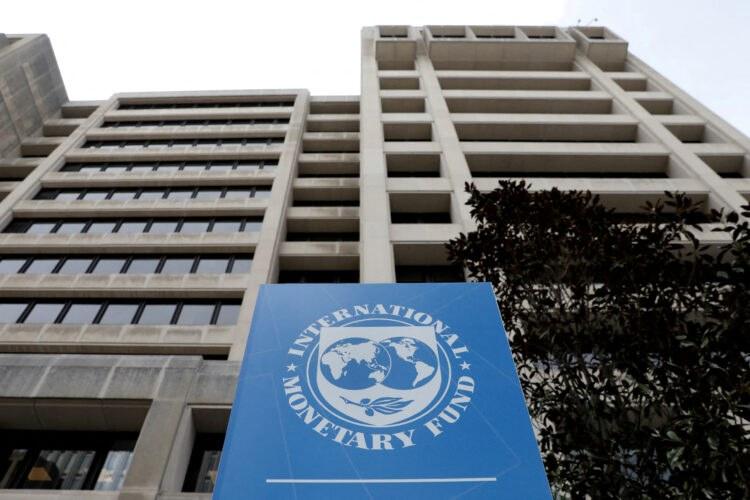
Nigeria’s Minister of Finance and Coordinating Minister of the Economy, Taiwo Oyedele, is expected to lead discussions on global economic challenges, debt sustainability, development financing and reforms of international financial institutions as the Intergovernmental Group of Twenty-Four on International Monetary Affairs and Development (G-24) convenes its 2026 ministerial meetings in Bangkok, Thailand.
The meetings, scheduled to take place on Tuesday, October 13, 2026, will focus on the theme, “Navigating Global Economic Interdependence in a Fragmented World,” against the backdrop of economic uncertainty, financial pressures and changing patterns of international trade and cooperation.
Oyedele, who serves as chairman of the G-24, will lead the group’s engagement with other finance ministers, central bank governors and senior economic officials from developing countries on policy options for addressing challenges affecting their economies.
The G-24, an intergovernmental forum established to coordinate the positions of developing countries on international monetary affairs and development finance, provides a platform for members to articulate common concerns and influence decisions taken by major multilateral financial institutions.
The Bangkok meeting is expected to provide an opportunity for participating countries to examine how developing economies can navigate growing global economic interdependence while responding to geopolitical tensions, financial market uncertainties, rising financing needs and the demands of sustainable development.
A formal communiqué outlining the group's position on key economic and financial issues will be issued shortly before the press conference scheduled for 11:30 a.m. to 12:15 p.m. local time on Tuesday at Room G-03 of the Queen Sirikit National Convention Center in Bangkok.
The communiqué will present the G-24's collective position on a broad range of issues, including global economic conditions, macroeconomic and financial stability, international liquidity, development financing, debt sustainability, climate finance and international tax cooperation.
It will also address the global trading system and the role of multilateralism in managing economic challenges that increasingly transcend national borders.
Debt Sustainability and Development Financing
Debt sustainability is expected to feature prominently in the deliberations, given the importance of affordable financing to developing countries seeking to fund infrastructure, social services, industrialisation and economic diversification.
For many developing economies, the challenge is not simply the size of public debt but also the cost of servicing it, the terms under which borrowing is obtained and the extent to which available financing translates into productive investments capable of generating economic growth.
High debt-service obligations can constrain governments' capacity to invest in essential infrastructure, education, healthcare and programmes designed to reduce poverty, while limited access to affordable long-term capital can delay the implementation of development projects.
The G-24's deliberations on development financing will therefore provide an opportunity for member countries to press for international financial arrangements that better reflect their financing requirements and economic circumstances.
The group is also expected to address the broader question of how multilateral development institutions can improve access to funding for countries facing substantial development needs, while maintaining financial stability and responsible debt management.
The discussions are particularly relevant to African economies, many of which must simultaneously address infrastructure deficits, population growth, climate-related risks and the need to create productive employment.
For Nigeria, the outcome could help shape the country's engagement with other developing economies on international financing arrangements, although the communiqué will be required to establish the specific positions adopted by the group.
IMF and World Bank Governance Reforms
Another important issue on the agenda is the reform of quota arrangements and governance structures at the International Monetary Fund (IMF), alongside the World Bank Shareholding Review.
These issues are significant because the distribution of voting power and institutional representation influences how member countries participate in decisions concerning international financial assistance, economic surveillance and development financing.
Developing countries have long sought greater representation in international financial institutions to reflect changes in the size, importance and composition of the global economy.
The G-24 provides a platform for these countries to coordinate their positions and advocate reforms intended to make the international financial system more representative of the interests and contributions of its members.
Discussions on IMF quota and governance reforms will centre on the group's position regarding the institutional arrangements through which member countries participate in the Fund's decision-making processes.
Similarly, the World Bank Shareholding Review raises questions about representation, voting power and the evolving relationship between the institution and the countries it serves.
For developing countries, stronger representation in global financial institutions is closely linked to the ability to influence policies affecting access to financing, economic adjustment programmes and development priorities.
However, the precise recommendations or demands to be advanced by the G-24 will depend on the contents of the formal communiqué to be released ahead of the press conference.
Global Economic Fragmentation and Multilateralism
The meeting's central theme reflects growing concern about the consequences of economic fragmentation in a world where countries remain interconnected through trade, investment, financial markets, technology and supply chains.
Trade restrictions, geopolitical tensions and competing economic interests can complicate international cooperation, disrupt supply chains and increase uncertainty for businesses and governments.
Developing economies can be particularly exposed to such disruptions because many depend on external markets for exports, imported industrial inputs, capital goods and essential commodities.
Changes in global financing conditions can also affect borrowing costs, exchange-rate stability and the ability of governments to mobilise resources for domestic development.
Against this background, the G-24 is expected to examine how developing countries can protect their economic interests while preserving the benefits of international cooperation.
Multilateralism remains central to that discussion because global economic challenges often require coordinated responses that individual countries cannot achieve independently.
The group's position on the global trading system will also be important in assessing how international trade rules can support development, improve market access and enable developing countries to participate more effectively in global value chains.
For economies seeking to expand manufacturing, agricultural processing and other productive sectors, predictable trade arrangements and access to international markets can be critical to investment and employment creation.
The challenge for policymakers will be to balance domestic economic priorities with the need to sustain mutually beneficial international economic relationships.
Climate Finance and International Tax Cooperation
Climate finance and international tax cooperation are also included in the agenda for the Bangkok discussions.
Climate finance remains an important issue for developing countries that must invest in energy systems, transport infrastructure, agriculture and other sectors vulnerable to climate-related disruptions.
Many of these countries face competing demands on limited public resources, making the availability, affordability and accessibility of external climate financing an important consideration in their development strategies.
The G-24's deliberations are expected to address the group's position on climate finance within the wider framework of international development financing.
International tax cooperation, meanwhile, concerns the rules and mechanisms through which countries coordinate taxation policies and address challenges arising from cross-border economic activities.
For developing economies, the effectiveness of international tax arrangements can have implications for domestic revenue mobilisation, investment and the capacity of governments to finance public expenditure.
Cooperation on international taxation is therefore relevant to efforts to strengthen public finances and improve the resources available for development.
The formal communiqué is expected to outline the G-24's position on these issues alongside its views on international liquidity, macroeconomic stability and the wider global financial system.
Nigeria's Role in The G-24
Oyedele's position as chairman places Nigeria at the head of the forum's deliberations at a time when developing countries are seeking stronger collective engagement on global economic governance and financing.
Nigeria is among the 11 African countries represented in the G-24, alongside Algeria, Côte d'Ivoire, Egypt, Ethiopia, Gabon, Ghana, Kenya, Morocco, South Africa and the Democratic Republic of Congo.
The group also includes countries from Latin America and the Caribbean, as well as Asia, with China participating as a special invitee.
Other members of the G-24 leadership expected at the Bangkok press conference are Pakistan's central bank governor, Jameel Ahmed, who serves as first vice-chair, and Bernardo Acosta, Ecuador's alternate executive director at the IMF, who serves as second vice-chair.
Acosta will represent Ecuador's Minister of Economy and Finance, Sariha Moya. Iyabo Masha, director of the G-24 Secretariat, will also participate.
The breadth of the membership provides the forum with a platform for coordinating perspectives from economies with different development levels, financing requirements and exposure to global economic shocks.
For Nigeria, participation in the group offers an avenue to contribute to collective positions on the international monetary system, development finance and the governance of multilateral institutions.
However, the practical significance of the meeting will depend on the positions agreed by members and the extent to which those positions inform subsequent discussions within the IMF, World Bank and other international economic forums.
The press conference at the Queen Sirikit National Convention Center is scheduled to provide an account of the group's deliberations and present its formal position on the issues under consideration.
Media representatives have been asked to submit questions in advance through the G-24 press briefing registration form, while additional information is available through the organisation's official website.
The communiqué, to be issued immediately before the briefing, will provide the authoritative account of the G-24's decisions and policy positions following the 2026 meetings.