PublicSphere Live
Politics
Tinubu Hails World Bank Report, Says Reforms Stabilising Nigeria’s Economy
President promises lower food prices, more jobs, expands cash transfers to over 10 million households
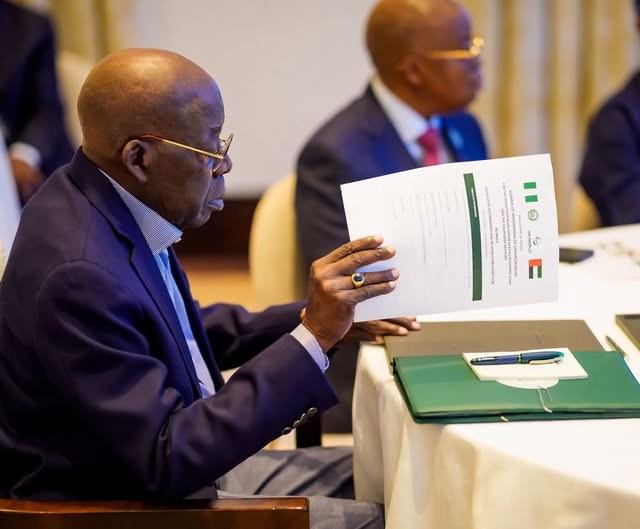
President Bola Ahmed Tinubu has welcomed the World Bank’s October 2026 Nigeria Development Update, describing its findings as evidence that his administration’s economic reforms are beginning to stabilise the economy, improve government revenues and create opportunities for sustainable growth.
The President, however, acknowledged that more work remained to ensure that the gains from the reforms translated into tangible improvements in the living conditions of Nigerians, particularly through lower food prices, decent employment opportunities for young people and improved access to essential public services.
The World Bank report, titled Beyond the Federal Purse: How Higher Revenues Reshaped State Priorities, examines the effects of increased government revenues on spending priorities across Nigeria’s 36 states, highlighting changes in infrastructure investment, internally generated revenue, debt management and social-sector expenditure.
In a statement issued on Sunday by his Special Adviser on Information and Strategy, Bayo Onanuga, Tinubu said the report reinforced his administration’s position that the difficult economic decisions taken since 2023 were necessary to place the country on a stronger fiscal and economic footing.
According to the President, the removal of petrol subsidies, unification of the foreign exchange market and efforts to strengthen fiscal discipline have increased government revenues, helped stabilise the economy and created additional financial resources for federal and state governments to invest in development.
He maintained that the administration would sustain the reforms while intensifying measures aimed at ensuring that their benefits reached households across the country.
“The dividends of reform are becoming visible. But more work remains to ensure they fully translate into better living standards for every household, starting with lower food prices and decent jobs for our young people,” Tinubu said.
The President also urged state governments to manage their increased allocations prudently and direct more resources towards projects that would improve the welfare of citizens, particularly in healthcare, education, transportation and other areas of economic and social development.
Economy Grows By 4.2 Per Cent
One of the major findings highlighted by the President was the improvement in Nigeria’s economic growth, with the World Bank reporting that the economy expanded by 4.2 per cent in the first half of 2026, compared with 3.9 per cent during the corresponding period of 2025.
The report indicated that the growth occurred despite the economic consequences of the conflict in the Middle East, which has contributed to higher global fuel prices and complicated the international economic outlook.
The World Bank is projecting that Nigeria’s economy will grow by an average of at least 4.4 per cent annually between 2026 and 2028, suggesting that the country could maintain a stronger growth trajectory if current economic conditions and reform measures remain supportive.
For the Tinubu administration, the growth figures provide support for its argument that the economy is gradually adjusting to the consequences of the major policy changes introduced since May 2023.
However, the broader significance of the projected expansion will depend not only on the rate at which national output increases but also on whether economic growth generates sufficient employment, raises household incomes and improves the purchasing power of ordinary Nigerians.
Economic growth can strengthen government finances and attract investment, but its effect on poverty depends substantially on the distribution of its benefits, the performance of labour-intensive sectors and the ability of households to cope with the cost of essential goods and services.
These remain important considerations as the government seeks to demonstrate that macroeconomic stabilisation is producing meaningful improvements in everyday life.
Poverty Rate Stabilises After Years Of Pressure
Tinubu also welcomed the World Bank’s finding that Nigeria’s poverty rate had stabilised for the first time since 2019, describing the development as an encouraging indication that the economy could be approaching a turning point.
The Bank expects poverty to decline gradually as economic growth accelerates beyond population growth.
The finding offers a measure of encouragement to the administration, which has faced criticism over the immediate consequences of its economic reforms, particularly the removal of petrol subsidies and the changes to the foreign exchange market.
Those measures have been associated with significant adjustments in the cost of transportation, food distribution, production and other economic activities, placing considerable pressure on households and businesses.
The stabilisation of poverty, as reported by the World Bank, does not necessarily mean that poverty has fallen substantially or that living conditions have returned to their previous levels. Rather, it suggests that the deterioration observed in preceding years may have stopped, with a gradual improvement expected if growth strengthens and other conditions remain favourable.
The pace at which such an improvement occurs will be crucial to the public’s assessment of the reforms.
For millions of Nigerians, the immediate test of economic recovery is whether they can afford food, transport, housing, electricity and healthcare without an increasingly large share of their earnings being consumed by basic necessities.
The administration will therefore face pressure to translate the positive economic indicators into visible relief, particularly among low-income households, informal-sector workers and young people seeking employment.
Inflation Declines, But Food Prices Remain A Challenge
On inflation, the World Bank report showed that Nigeria’s inflation rate declined from 27.6 per cent in January 2025 to 15.2 per cent in December 2025.
However, higher global fuel prices linked to the Middle East conflict have slowed the subsequent decline, underscoring the vulnerability of the domestic economy to external developments.
The Bank expects inflation to ease towards approximately 12 per cent by 2028.
The projected moderation would represent further progress in the effort to restore price stability, although the implications for consumers would depend on how the decline affects the prices of essential goods and services.
A lower inflation rate means that prices are increasing more slowly; it does not automatically mean that prices are falling or that goods have become affordable again.
This distinction is particularly important in Nigeria, where the cost of food has become a central concern for households, while manufacturers and service providers continue to contend with energy, logistics and other operating expenses.
Tinubu acknowledged the importance of addressing these concerns, identifying lower food prices and decent jobs for young Nigerians as immediate priorities.
His administration also plans to accelerate the deployment of compressed natural gas (CNG), improve agricultural productivity and expand access to affordable healthcare and quality education.
The success of these measures will depend on effective implementation, adequate investment and coordination between federal and state authorities.
Improved agricultural productivity, in particular, could help ease food-supply pressures over time, provided that farmers have better access to inputs, financing, storage, transportation, security and reliable markets.
Similarly, wider adoption of CNG could reduce exposure to some petrol-related transportation costs, although the benefits would depend on conversion costs, infrastructure availability and the pace of deployment.
External Reserves Rise To $53.8 Billion
The World Bank also reported an improvement in Nigeria’s external position, with the country’s current account surplus increasing to $12 billion, equivalent to 7.0 per cent of gross domestic product, in the first half of 2026.
This compared with a surplus of $8.6 billion during the corresponding period of the previous year.
Gross external reserves also increased from $45.5 billion at the end of 2025 to $53.8 billion at the end of August 2026.
The improvement in the external position provides an important buffer against international economic shocks and can strengthen confidence in the country’s ability to meet external payment obligations.
Higher reserves may also support confidence in the foreign exchange market, although their impact on exchange-rate stability depends on several factors, including foreign currency supply and demand, capital flows, external debt obligations and the Central Bank of Nigeria’s monetary and foreign exchange policies.
The increase in the current account surplus is similarly significant because it indicates that Nigeria’s external transactions generated a stronger net surplus during the period under review.
Nevertheless, the sustainability of these improvements will depend on the country’s capacity to diversify exports, expand non-oil foreign exchange earnings and reduce structural dependence on imported goods and production inputs.
For the administration, the figures strengthen its argument that the policy changes introduced since 2023 are helping to improve macroeconomic stability.
States Benefit From Higher Federation Revenues
A central feature of the World Bank report is its assessment of how increased government revenues have changed spending priorities across Nigeria’s states.
According to the report, reforms introduced since 2023 helped raise federation revenues by 69 per cent in real terms between 2023 and 2025, with state governments emerging as the largest beneficiaries of the increase.
The report also found that states increased capital expenditure by 151 per cent in real terms over the same period.
Most of the additional spending went into roads and other transportation infrastructure, agriculture, energy and housing, reflecting a shift towards investments intended to support economic activity and improve public infrastructure.
Twenty-nine of the 33 states assessed in the report redirected a greater proportion of their expenditure towards economic infrastructure.
The World Bank also found that real social spending per person increased in all but one of the states covered by its assessment.
These findings are particularly important because state governments are responsible for delivering many services that directly affect citizens, including primary and secondary education, healthcare, rural roads, agricultural support and aspects of local economic development.
Higher revenues can give states greater capacity to finance such services without relying exclusively on borrowing or waiting for external funding.
However, the increase in allocations and capital spending does not, by itself, establish that all projects have been completed efficiently or that citizens have benefited equally. The quality of expenditure, project selection, procurement practices and accountability remain critical to determining the actual developmental impact.
The World Bank’s findings therefore place renewed emphasis on the responsibility of state governments to convert additional fiscal resources into functioning infrastructure, better services and stronger local economies.
Tinubu called on governors to ensure that the additional revenues were used prudently and that spending priorities reflected the needs of their populations.
Internally Generated Revenue Improves In 31 States
The report further showed that internally generated revenue increased in real terms in 31 of the 35 states assessed for this indicator.
The improvement suggests that the benefits of the changing fiscal environment may extend beyond statutory allocations from the federation account, with many states recording stronger revenue performance from their own sources.
A sustainable improvement in internally generated revenue is important for state governments because it can provide a more dependable source of funding for public services and reduce excessive dependence on federal transfers.
It can also strengthen fiscal autonomy, enabling states to plan development projects with greater certainty.
Nevertheless, the expansion of internally generated revenue must be pursued in ways that do not impose disproportionate burdens on low-income residents and small businesses.
Efficient tax administration, a broader formal economic base, improved compliance and the reduction of revenue leakages can help governments raise more funds without resorting to arbitrary or excessive taxation.
The World Bank’s findings also indicated that 21 states reduced their debt-to-GDP ratios between 2021 and 2025, suggesting that several subnational governments improved their fiscal positions relative to the size of their economies.
At the national level, Nigeria’s overall public debt is projected to decline from 40.0 per cent of GDP in 2025 to 38.1 per cent in 2026.
Although the debt ratio is an important indicator of fiscal sustainability, its movement must be assessed alongside the cost of servicing debt, the maturity structure of outstanding obligations, government revenues and the productivity of investments financed through borrowing.
For Nigeria, the challenge is to maintain fiscal discipline while ensuring that borrowing and public expenditure support projects capable of generating economic and social returns.
Tinubu Promises Expansion of Cash Transfers
As part of the effort to ensure that economic recovery reaches vulnerable Nigerians, Tinubu said his administration would continue to expand targeted cash transfers, which he stated had already reached more than 10 million households.
The programme is intended to provide direct support to eligible households facing economic hardship while broader reforms work their way through the economy.
Cash transfers can help vulnerable families meet immediate needs, particularly when inflation and other economic pressures erode purchasing power. Their effectiveness, however, depends on accurate beneficiary identification, transparent payment systems, adequate funding and safeguards against diversion or exclusion.
The President also pledged to accelerate CNG deployment, raise agricultural productivity and improve access to affordable healthcare and quality education.
These commitments indicate that the administration recognises that macroeconomic reforms alone cannot resolve the country’s development challenges without complementary measures that support employment, human capital and household welfare.
The emphasis on agriculture is particularly relevant because improvements in food production, storage and distribution could help address one of the most pressing concerns facing Nigerians.
Likewise, greater investment in education and healthcare could strengthen the productivity of the workforce and improve the ability of young people to participate in a growing economy.
The challenge for the government will be to ensure that these commitments are backed by measurable targets, effective delivery mechanisms and sustained funding.
Government Defends Reform Agenda
The President commended the Economic Management Team, led by the Minister of Finance and Coordinating Minister of the Economy, state governors and other stakeholders for their cooperation in implementing the reforms.
He reaffirmed his commitment to the Renewed Hope Agenda, promising that the administration would intensify efforts to deliver what it described as shared prosperity under Renewed Hope Agenda 2.0.
“These findings confirm that the difficult but necessary decisions to remove the petrol subsidy, unify the foreign exchange market and strengthen fiscal discipline have raised revenues, stabilised the economy and created fiscal space for every tier of government to invest in its people,” the President said.
The statement reflects the administration’s determination to use the World Bank’s assessment as evidence in support of its economic policy direction.
However, the ultimate judgment on the reforms will depend on whether improvements in economic growth, public revenues and external reserves can be sustained while poverty declines and the cost of living becomes more manageable.
The increased resources available to state governments also create an opportunity to strengthen public services, but they demand greater transparency and accountability in the management of public funds.
For households struggling with food prices, transport costs and unemployment, the most convincing evidence of reform will be an improvement in their purchasing power, access to work and ability to meet essential needs.
The World Bank’s projections provide a basis for cautious optimism, but the transition from macroeconomic stabilisation to broad-based prosperity remains a work in progress.
Tinubu said his administration would remain committed to the reform programme and work towards ensuring that the gains of economic recovery were shared by Nigerians across the country.
“The best is yet to come under the Renewed Hope Agenda 2.0, which will accelerate the delivery of shared prosperity for all Nigerians,” the President assured.