 PublicSphere Live
Politics
INEC’S 2027 Credibility Test: Mike Igini Warns That Political Infiltration Could Undermine Nigeria’s Elections
One of the most important aspects of Igini’s intervention is his insistence that Nigerians should pay closer attention to presiding officers, the personnel who manage voting and record results at polling units.
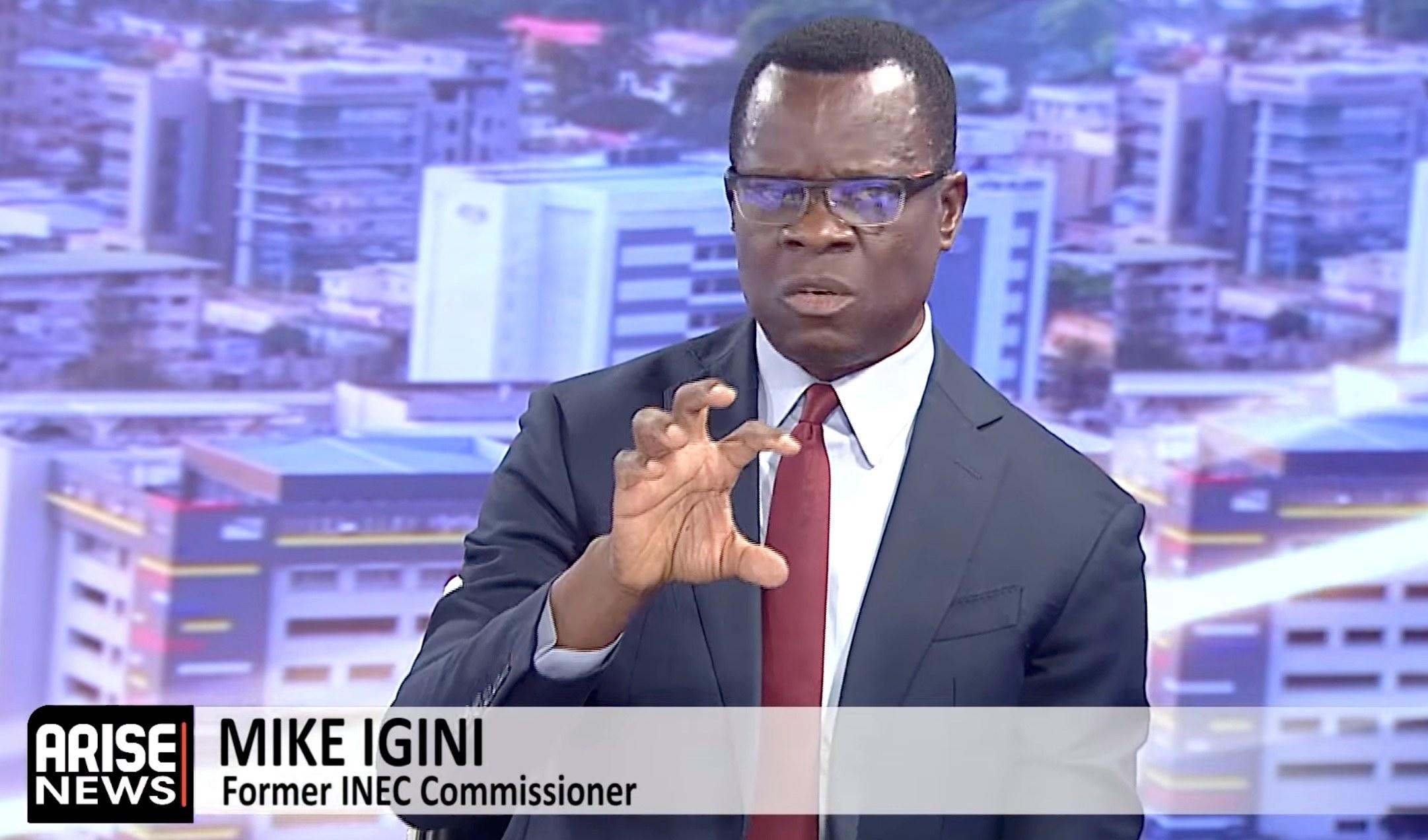
As politicians allegedly penetrate agencies supplying election personnel, the former electoral commissioner says the integrity of presiding officers, enforcement of electoral laws, transparent results management and protection of citizens’ rights will determine whether Nigerians can trust the next general election.
Nigeria’s preparations for the 2027 general election face a fundamental question that goes beyond the competence of the Independent National Electoral Commission (INEC): can an electoral system deliver credible results when the integrity of the institutions and personnel supporting it is under suspicion?
That question lies at the heart of the warning issued by former INEC National Commissioner Mike Igini, who has raised concerns about alleged political infiltration of agencies responsible for supplying election personnel, the failure to enforce electoral laws and the vulnerability of the officials charged with protecting the votes cast by Nigerians.
Speaking during an interview with ARISE NEWS on Tuesday, Igini argued that political interference in the recruitment process could expose INEC to institutional weaknesses beyond its direct control. His concerns extend to the use of technology, the accountability of public officials, the transparency of election results and the right of journalists and citizens to report electoral developments without intimidation.
The significance of his intervention lies in its emphasis on the people and procedures through which elections are conducted. While political parties devote considerable attention to candidates, campaign strategies, alliances and voter mobilisation, the credibility of an election is ultimately tested at polling units, where voters make their choices and officials record the outcome.
Igini’s warning therefore raises an important issue ahead of 2027: electoral credibility cannot be secured by the commission’s public assurances alone. It depends on whether every institution involved in the process performs its duties impartially, whether the law applies equally to political actors and whether the votes recorded at polling units remain the foundation of the final result.
The Presiding Officer: Where The Credibility Of An Election Begins
One of the most important aspects of Igini’s intervention is his insistence that Nigerians should pay closer attention to presiding officers, the personnel who manage voting and record results at polling units.
In the public imagination, INEC is often treated as a single institution whose chairman and national commissioners bear responsibility for everything that happens on election day. However, the actual process is more decentralised. Thousands of officials must perform specific duties across polling units, wards, local government areas and states, with each stage depending on the accuracy and integrity of the preceding one.
Section 25 of the Electoral Act 2022 establishes the officials authorised to announce election results at different stages, beginning with the presiding officer at the polling unit and extending through the collation process. The law also specifies the returning officers responsible for declaring winners in the relevant elections.
This statutory arrangement underscores why the integrity of frontline election personnel matters so much. A national electoral commission may design sound procedures, acquire technological equipment and issue detailed instructions, but those safeguards can be compromised if the officials implementing them disregard the rules.
The implications of political interference in recruitment, if established, could therefore extend beyond individual misconduct. They could undermine the reliability of the entire electoral chain, from voter accreditation and ballot counting to the recording, transmission and collation of results.
Igini’s warning should not, however, be mistaken for proof that every agency supplying election personnel has been infiltrated or that every recruited official is vulnerable to manipulation. His allegations require investigation, evidence and an appropriate institutional response. The commission should be expected to explain how recruitment is conducted, what safeguards exist against political interference and how suspected breaches are investigated.
The practical question is whether INEC can demonstrate that its personnel selection processes are sufficiently transparent and resistant to pressure from politicians who have an interest in the outcome.
Political Infiltration And The Danger Of Institutional Capture
Political competition naturally encourages parties and candidates to seek every lawful advantage available to them. The problem begins when the pursuit of electoral advantage crosses the boundary between legitimate political organisation and interference with institutions that must serve the public impartially.
If politicians can influence the recruitment, deployment or conduct of election personnel through agencies outside INEC’s direct control, the commission could find itself responsible for failures arising from decisions it did not independently make.
This is the institutional vulnerability that Igini appears to be highlighting when he says that infiltration creates liabilities for INEC itself.
The concern is particularly significant because election management involves cooperation among multiple institutions. Personnel may be sourced through established public institutions, while security agencies, courts and other public bodies have distinct responsibilities in the broader electoral process. Each institution must fulfil its mandate without becoming an instrument of partisan competition.
Political neutrality cannot be secured simply by instructing officials to remain impartial. It requires transparent procedures, clear professional standards, verifiable records and credible sanctions for violations.
INEC should therefore ensure that the identities and qualifications of prospective ad hoc personnel are independently verified, deployment procedures are documented and allegations of partisan influence are examined promptly. Where credible evidence points to deliberate interference, the appropriate authorities should investigate and take action in accordance with the law.
Political parties, for their part, must understand that an election conducted by personnel they have improperly influenced cannot provide a sustainable foundation for democratic legitimacy. Even a party that benefits temporarily from compromised procedures risks weakening the credibility of the institution through which it expects to exercise political power.
The challenge is not merely to prevent malpractice on election day. It is to make the electoral process sufficiently transparent and accountable that attempts to compromise it become difficult to execute and easier to detect.
The Rule Of Law: Igini’s Greatest Concern
Igini identifies the failure to enforce electoral laws as his greatest worry ahead of the 2027 election. His concern shifts the debate from the existence of laws to the willingness and capacity of institutions to enforce them.
Nigeria does not lack legal provisions governing elections. The Electoral Act establishes procedures for conducting polls, announcing results and resolving electoral disputes, while the Constitution provides the broader framework for political participation, public authority and fundamental rights.
Yet the effectiveness of any legal framework depends on compliance. Rules that are enforced selectively can become instruments of political advantage rather than safeguards for democratic competition.
When violations go unpunished, they may encourage repetition. When sanctions are applied inconsistently, public officials and political actors may conclude that their connections or influence offer protection from consequences.
This is the significance of Igini’s warning that Nigeria is moving from the rule of law towards what he describes as the “rule of men”. His argument is that institutions lose their authority when personal influence becomes more consequential than established procedures.
For the 2027 election, this raises questions about the treatment of electoral offences, including vote buying, intimidation, bribery, impersonation and interference with election officials. It also raises questions about whether investigations lead to prosecution and whether cases are handled fairly, regardless of the political affiliations of those involved.
The authorities must distinguish between allegations and proven offences. But that distinction should not become an excuse for inaction. Credible complaints should be investigated, evidence should be preserved and established violations should attract lawful consequences.
The government also has a responsibility to ensure that law enforcement agencies operate professionally and do not selectively pursue political opponents while overlooking comparable conduct by allies.
Without consistent enforcement, electoral reforms risk becoming a collection of formal provisions that offer limited protection when political interests collide.
Technology Is Important, But It Cannot Replace Integrity
Igini also emphasises the importance of technology, warning that organisations that fail to embrace its benefits risk being overtaken by institutional decay.
Nigeria’s experience with technological innovations in elections has generated considerable public debate about accreditation, electronic transmission, result viewing and the relationship between electronically captured information and legally recognised results.
Technology can improve the electoral process by reducing opportunities for certain forms of manipulation, creating verifiable records and making it easier for stakeholders to compare information from polling units with figures subsequently collated at higher levels.
However, technological equipment cannot independently guarantee a credible election. Its effectiveness depends on how it is deployed, whether personnel understand its operation, whether procedures are followed and whether technical failures are addressed transparently.
A system can possess sophisticated equipment and still produce controversy if officials do not follow prescribed procedures or if the public cannot establish what happened when a failure occurs.
Equally, technology must be supported by contingency arrangements that protect the integrity of the process without creating opportunities for arbitrary decisions. Officials should know what to do when equipment fails, communication networks become unavailable or records cannot be uploaded as expected.
INEC must communicate these procedures clearly before election day rather than wait until a disputed incident occurs to explain its decisions.
The commission should also provide credible opportunities for political parties, election observers and other authorised stakeholders to understand the technology being used, the safeguards built into it and the procedures for verifying results.
Transparency does not require the disclosure of security-sensitive information that could facilitate interference. It requires sufficient openness to establish that the system is reliable, that its rules are consistently applied and that failures can be independently examined.
Polling-Unit Results And The Politics Of Transparency
Igini’s rejection of arguments against political parties and candidates publicising polling-unit results touches one of the most sensitive aspects of Nigeria’s electoral politics.
He argues that candidates and parties can publicise results officially announced at polling units. The distinction is important: documenting and sharing an announced result is not the same thing as assuming the statutory authority to declare a winner.
Under the Electoral Act 2022, different officials have designated responsibilities at successive stages of the announcement and declaration process.
The public availability of polling-unit results can help political parties compare their records with official collation figures. It can also assist journalists, observers and citizens in identifying discrepancies that warrant investigation.
However, the information must be presented accurately and with the appropriate context. A result from one polling unit does not establish the winner of a constituency, governorship or presidential election. Nor should preliminary figures be represented as final outcomes before the authorised process is completed.
The challenge is to protect the right to share verifiable information while preventing misinformation, premature declarations and deliberate attempts to inflame political tensions.
Igini’s reference to the possibility of an unauthorised person impersonating an official and announcing results raises a related concern. Such incidents, if established, would demand investigation into the identity of the individual, the circumstances surrounding the announcement and the effectiveness of existing safeguards.
His assertion that a similar problem occurred in 2023 and remains unresolved is a claim that should be examined against documented evidence. INEC and the relevant authorities should provide clear accounts of any such cases, including the investigations conducted and the measures introduced to prevent recurrence.
The objective should be to ensure that the public can distinguish between authentic results, independently documented polling-unit figures and unauthorised claims.
Freedom of The Press And The Right To Report Elections
Another important dimension of Igini’s warning concerns attempts to intimidate media organisations and citizens reporting on electoral matters.
Section 39(1) of the 1999 Constitution guarantees freedom of expression, including the right to hold opinions and receive and impart information and ideas without interference, subject to the Constitution’s applicable legal limitations.
This constitutional protection is particularly important during elections, when citizens require reliable information to assess the conduct of public officials and understand the choices before them.
Journalists must be able to report polling-unit developments, document irregularities, question public officials and investigate allegations of misconduct without facing unlawful intimidation. Citizens and accredited observers should likewise be able to document events and share information through lawful means.
Nevertheless, freedom of expression does not remove the responsibility to verify information. Media organisations must distinguish confirmed facts from allegations, avoid publishing misleading results and correct errors when they occur.
Security agencies also have legitimate responsibilities to maintain public order and protect voters. Those responsibilities must be exercised lawfully and must not become a pretext for suppressing legitimate scrutiny.
The credibility of an election is strengthened when accurate reporting is possible, complaints can be aired and officials respond to questions with evidence rather than hostility.
Igini’s argument that calls for transparency cannot be answered by secrecy is therefore a challenge to the culture of institutional communication. INEC should explain its decisions, publish information required by law and provide timely clarification when credible questions arise.
Elections, Economic Conditions And The Crisis Of Leadership
Perhaps the broadest part of Igini’s intervention is his assertion that Nigeria’s economic problems cannot be resolved without fixing its politics.
The relationship between electoral credibility and economic performance is not always direct, and a credible election does not automatically produce effective governance. Nevertheless, the way political authority is acquired influences public expectations about accountability, representation and the use of public resources.
When citizens believe their votes count, elections provide a mechanism for rewarding or rejecting political leadership. When confidence in that mechanism weakens, the connection between public preferences and political authority becomes harder to sustain.
Economic policy decisions are made by elected governments and other public institutions. Their consequences can affect employment, investment, inflation, infrastructure, education, healthcare and the cost of living. Citizens therefore have an interest not only in who wins elections but also in whether the process provides a credible basis for holding those who govern accountable.
For a country facing persistent demands for better living conditions and more effective public services, electoral integrity is part of the wider question of institutional performance.
Igini’s reference to a leadership recruitment crisis invites Nigerians to examine how political leaders emerge, what commitments they make and whether they remain answerable to the public after securing office.
It also places responsibility on political parties, whose internal procedures shape candidate selection and the quality of choices presented to voters. Parties that fail to practise transparency and accountability internally may struggle to convince citizens that they will uphold those principles in government.
Yet the responsibility cannot rest on political parties alone. Citizens, civil society organisations, the media, the judiciary and public institutions all have roles in sustaining a democratic culture in which authority is exercised within the law.
The ₦26.7 Billion Question: Who Is Accountable?
Igini’s reference to ₦26.7 billion spent on election-related activities, alongside his question about accountability, introduces a financial dimension to his criticism.
The figure requires clarification concerning the particular expenditure, the institution or institutions involved, the period covered and the specific responsibilities for which the money was committed. Without that information, it would be premature to conclude that the expenditure was wasted or that identified officials were culpable.
Nevertheless, the underlying question is legitimate: what mechanisms ensure that public funds committed to election administration produce the intended results?
Electoral expenditure should be supported by appropriate procurement procedures, documented payments, performance monitoring and independent scrutiny. Where money is spent on recruiting, training or deploying election personnel, there should be verifiable evidence that the intended services were delivered.
Accountability should also extend to failures of duty. Where an official is implicated in misconduct, established procedures should determine responsibility and ensure that any sanction is proportionate and lawful.
Public expenditure cannot guarantee integrity on its own. But a system that spends substantial sums on elections without adequately evaluating performance risks allowing recurring weaknesses to persist.
The Road To 2027: Rebuilding Trust Before Election Day
Igini’s warning is ultimately a call for preventive action. The credibility of the 2027 election will depend not only on what happens when voting begins but also on the institutional preparations made well before the first ballot is cast.
INEC should use the period before the election to strengthen personnel verification, review recruitment arrangements, train election officials and communicate clearly about the procedures governing accreditation, voting, result recording and collation.
The commission should also provide channels through which political parties, civil society groups and citizens can submit credible complaints about suspected interference. Such complaints should be assessed on their evidence rather than dismissed automatically or accepted uncritically.
Political parties must instruct their agents to observe the law, document proceedings accurately and challenge discrepancies through established channels. Security agencies must protect voters, officials, journalists and observers impartially. The judiciary must resolve electoral disputes in accordance with the law and the evidence presented.
Media organisations, meanwhile, have a responsibility to scrutinise the process without becoming instruments of partisan propaganda. Their task is to establish facts, interrogate claims and make information accessible to citizens.
Above all, public officials must recognise that an election is not the property of the incumbent government, the ruling party, opposition parties or the candidates competing for office. It is a constitutional process through which citizens exercise their political rights.
Igini’s statement that “the power of the people at the polling unit is awesome” captures the central principle at stake. That power is meaningful only when voters can express their choices freely and have those choices accurately recorded, transmitted and counted under the law.
The 2027 general election will present Nigeria with another opportunity to demonstrate the resilience of its democratic institutions. Whether public confidence grows or diminishes will depend on the actions of institutions and individuals across the electoral process.
The decisive test is not whether INEC can promise a credible election. It is whether the commission and the wider state can establish, through transparent procedures, impartial enforcement and verifiable results, that the votes of Nigerians will be protected.
As Igini’s intervention suggests, democracy is sustained not merely by the holding of elections but by the confidence that the outcome reflects the choices of the people. Without that confidence, elections risk becoming exercises in political competition without the public trust necessary to sustain legitimate authority and peaceful transfers of power.