PublicSphere Live
Business
CBN Moves to Absorb Excess Liquidity as Banks Park N6.28trn at Deposit Window
Apex bank offers N2trn in fresh OMO bills amid substantial funds in banking system
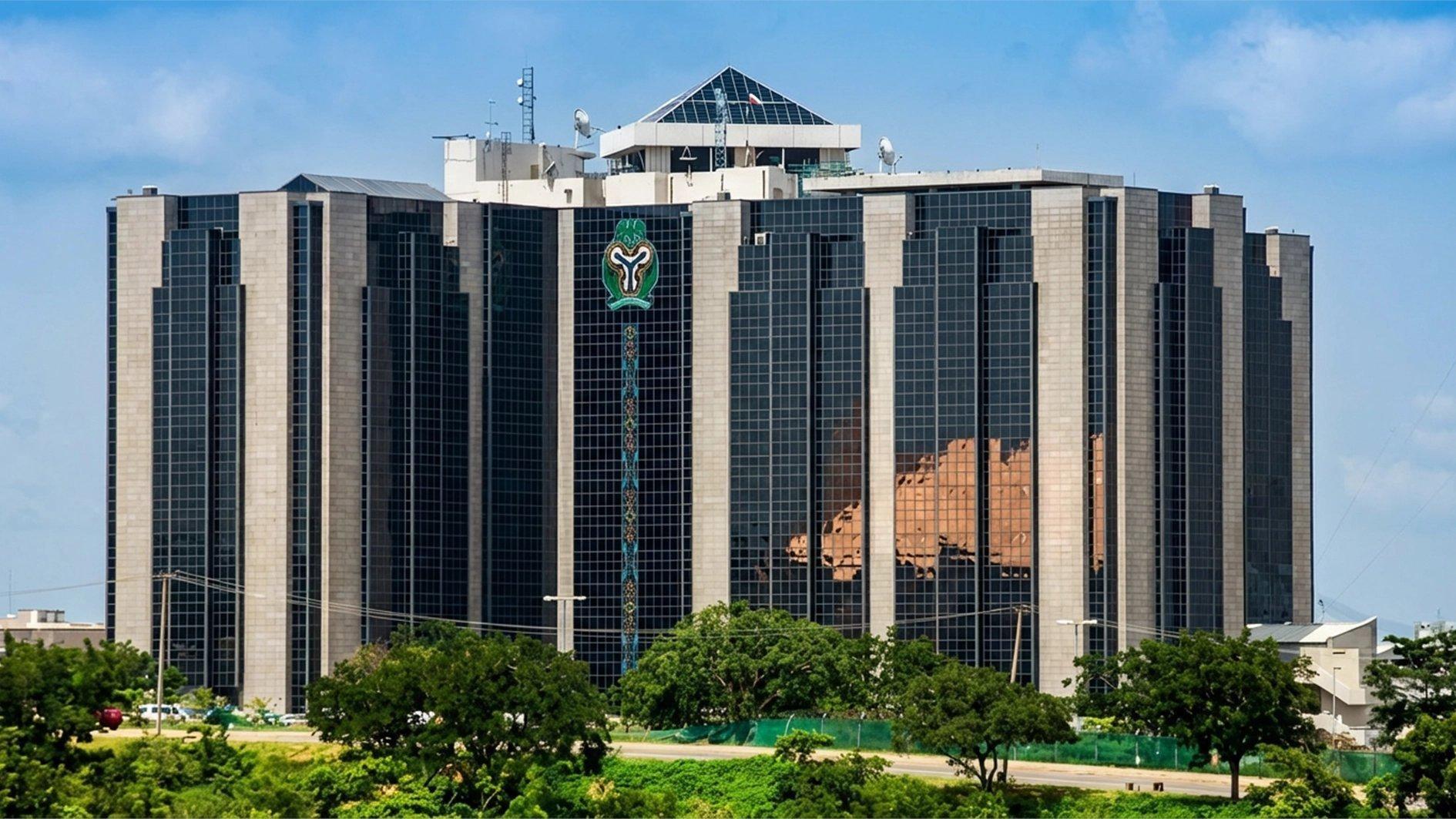
The Central Bank of Nigeria (CBN) has offered N2 trillion worth of Open Market Operations (OMO) bills to investors in a fresh move to manage excess liquidity in the banking system, where banks’ placements at the apex bank’s Standing Deposit Facility (SDF) have remained above N6 trillion.
The latest auction, scheduled for Thursday, October 22, 2026, comprises N1 trillion each in 138-day and 180-day bills, as the CBN seeks to absorb part of the liquidity circulating within the financial system following substantial repayments on maturing securities.
The offer comes against the backdrop of an estimated N2.067 trillion in OMO maturities projected for the week beginning October 19, according to the Financial Markets Dealers Association (FMDA). The amount offered by the CBN is therefore close to the volume of funds expected to return to investors during the week.
However, the extent to which the operation will tighten liquidity depends on the volume of subscriptions received, the amount ultimately allotted and the impact of maturing securities and other transactions on the banking system.
The development underscores the continuing challenge facing monetary authorities as they attempt to manage surplus liquidity while maintaining appropriate financial conditions to support the broader objectives of price stability, exchange-rate stability and sustainable economic growth.
N6.28 Trillion In Bank Deposits
The latest liquidity-management operation follows a sharp increase in banks’ placements at the CBN’s Standing Deposit Facility after repayments on previously issued OMO bills released substantial funds into the financial system.
Data cited by market reports showed that net placements at the facility rose to approximately N6.283 trillion in the week ended October 16, from N3.709 trillion in the preceding week, representing an increase of about 69.4 per cent.
The increase followed an OMO repayment of approximately N2.408 trillion on October 13, which returned funds to investors holding the maturing securities.
Banks’ net placements at the facility subsequently remained above N6 trillion for three consecutive days, indicating that substantial balances were still being deposited with the apex bank rather than being immediately deployed elsewhere.
The Standing Deposit Facility allows commercial banks to place surplus funds with the CBN and earn interest on their deposits. It serves as one of the instruments through which the central bank manages short-term liquidity and influences money-market conditions.
When banks hold substantial sums at the deposit window, it can indicate that available funds exceed their immediate liquidity requirements or that alternative investment opportunities do not offer sufficiently attractive returns relative to the risk and cost of deploying those funds.
Nevertheless, the amount placed at the facility should not automatically be interpreted as evidence that banks are unwilling to lend to businesses or households. Lending decisions also depend on credit risks, borrowers’ capacity to repay, capital adequacy requirements, regulatory considerations and the expected returns on competing assets.
Even so, the persistence of such substantial deposits raises questions about how efficiently liquidity is being channelled through the financial system to productive economic activities.
OMO Bills As A Liquidity-Management Tool
Open Market Operations are among the monetary instruments the CBN uses to influence the amount of money circulating in the financial system.
Through OMO auctions, the apex bank sells securities to eligible investors, including banks and other financial-market participants. Investors pay for the securities, thereby transferring funds to the CBN for the duration of the investment.
This process absorbs liquidity that might otherwise remain available for interbank transactions, lending, investment or other financial activities.
When the securities mature, however, the CBN repays the principal to investors. Unless the funds are absorbed through fresh securities sales or other transactions, these repayments return liquidity to the financial system.
This explains why the timing and volume of OMO maturities are important to monetary-policy implementation.
The N2 trillion offer on October 22 represents a fresh opportunity for the CBN to absorb funds returning to the market. With projected weekly maturities of approximately N2.067 trillion, the offer is equivalent to about 96.8 per cent of the expected repayments.
The difference between the projected maturities and the new offer is approximately N67 billion.
However, the comparison does not mean the banking system will experience a net liquidity injection or withdrawal of a particular amount. The final outcome will depend on the securities actually sold, the value of maturing instruments paid during the relevant period and other transactions affecting system liquidity.
If the CBN allots the full N2 trillion, the auction will absorb a substantial volume of funds. But the overall impact must be measured against the liquidity returned through maturities and other flows rather than the headline offer alone.
Two Instruments With Different Maturity Dates
The October 22 auction is structured around two instruments: a 138-day bill worth N1 trillion and a 180-day bill also worth N1 trillion.
The 138-day instrument is scheduled to mature on March 9, 2027, while the 180-day bill will mature on April 20, 2027.
The structure gives investors an opportunity to choose between two relatively short investment periods while enabling the CBN to absorb funds for several months.
For the apex bank, the use of securities with different maturities also helps distribute repayment obligations across future dates rather than concentrating all repayments within a single period.
For investors, the choice between the instruments will depend on their liquidity requirements, expectations about future interest rates and assessments of the returns available on competing investments.
The shorter instrument offers an earlier return of principal, while the longer instrument commits funds for an additional period. Whether investors favour one over the other will depend partly on the interest rates offered and their expectations about the direction of monetary policy.
The final stop rates and allotment figures will therefore provide useful indications of investor appetite and the cost at which the CBN is able to absorb liquidity.
Lessons From Previous OMO Auctions
The latest offer follows a series of substantial OMO operations through which the CBN has withdrawn liquidity from the banking system.
At its October 6 auction, the apex bank offered N2 trillion in bills but ultimately allotted approximately N3.31 trillion following subscriptions of about N3.51 trillion.
The allotment comprised approximately N2.67 trillion in 182-day bills at a stop rate of 16.92 per cent and N637.20 billion in 147-day bills at 17.22 per cent.
At the time, approximately N2.17 trillion in maturing OMO bills also returned to the financial system. The resulting net liquidity withdrawal was estimated at N1.14 trillion.
The figures demonstrated that the CBN could allot more than its initial offer when market demand and its liquidity-management objectives justified the decision.
They also revealed a preference among investors for the longer-dated instrument. Although the 182-day bill offered a slightly lower stop rate than the 147-day paper, it attracted significantly greater subscriptions.
That preference may reflect investors’ willingness to lock away funds for longer periods in exchange for predictable returns, although individual investment decisions can be influenced by several factors.
The October 22 auction will provide another indication of whether demand remains strong and how the CBN intends to manage the volume of liquidity returning to the banking system.
Monetary Easing Versus Liquidity Sterilisation
The latest operation also comes after the CBN reduced its Monetary Policy Rate (MPR) by 350 basis points to 23 per cent at its September 2026 Monetary Policy Committee meeting.
The reduction marked a significant adjustment in the benchmark interest rate, but it did not mean that the apex bank had abandoned liquidity management or its efforts to contain inflationary pressures.
The MPR and OMO operations serve related but distinct purposes. The policy rate communicates the central bank’s broad monetary-policy stance, while OMO auctions can be used to manage the immediate availability of funds within the financial system.
Consequently, the CBN can reduce its benchmark rate while continuing to absorb excess liquidity through securities sales.
This combination reflects the complexity of monetary policy in an economy where inflation, exchange-rate movements, borrowing costs, credit demand and financial-market liquidity interact.
If surplus funds expand rapidly without a corresponding increase in productive output, they could contribute to demand pressures and complicate efforts to sustain price stability. However, the relationship is not automatic, and the consequences depend on how the funds are deployed and the prevailing economic conditions.
Conversely, withdrawing too much liquidity could tighten financial conditions, potentially increasing the cost of short-term funding and making credit more expensive for businesses.
The central bank must therefore balance the need to manage excess liquidity against the importance of ensuring that monetary conditions do not unnecessarily constrain productive investment.
What The High Deposit Balances Mean For The Economy
The continued accumulation of funds at the CBN’s deposit facility raises broader questions about the transmission of monetary policy to the real economy.
Nigeria requires substantial financing for manufacturing, agriculture, infrastructure, small businesses and other productive sectors. Yet the availability of liquidity within the banking system does not automatically guarantee that businesses seeking loans will obtain affordable financing.
Banks must evaluate the risks associated with lending, particularly where businesses face high operating costs, uncertain demand, inadequate infrastructure or foreign-exchange exposure.
For small and medium-sized enterprises, the cost of borrowing can be particularly consequential. High lending rates and stringent collateral requirements may discourage investment, expansion and job creation even when aggregate liquidity appears abundant.
The presence of trillions of naira at the CBN’s deposit facility therefore highlights the distinction between financial-system liquidity and accessible credit for productive economic activity.
It would be misleading, however, to assume that all funds placed at the facility could immediately be converted into loans. Banks must maintain liquidity buffers, comply with regulatory requirements and assess the creditworthiness of prospective borrowers.
The more pertinent policy question is whether Nigeria's financial system can improve the flow of credit to viable businesses without compromising banking stability or weakening the CBN's efforts to contain inflation.
This requires more than liquidity injections or withdrawals. It also depends on improvements in the business environment, stronger credit-information systems, effective risk-sharing arrangements and policies that encourage investment in productive sectors.
Investors Await Auction Results
Attention will now turn to the outcome of the October 22 auction, particularly the total subscriptions, accepted bids, stop rates and final allotments.
Strong demand could give the CBN greater flexibility to absorb liquidity beyond the initial offer, as occurred at the October 6 auction. Weaker demand, on the other hand, could limit the amount withdrawn and influence the rates required to attract investors.
The results will also help market participants assess the balance between the funds expected to return through maturing securities and the amount the CBN is prepared to absorb through fresh issuance.
For banks, the decision to invest in OMO bills will depend on the returns available relative to alternative placements, lending opportunities and liquidity requirements.
For policymakers, the challenge is to ensure that liquidity management supports price stability while preserving the conditions needed for sustainable credit growth.
Ultimately, the N2 trillion offer is another step in the CBN’s continuing effort to manage monetary conditions. Whether it significantly reduces excess liquidity will depend not simply on the amount announced, but on the final allotment and the wider movement of funds through the financial system.