 PublicSphere Live
Business
Sanwo-Olu Urges Banks to Finance Industrial Growth, Unlock Private Investment
Lagos Governor says recapitalisation must translate into factory expansion, increased productivity, job creation and affordable long-term credit for businesses
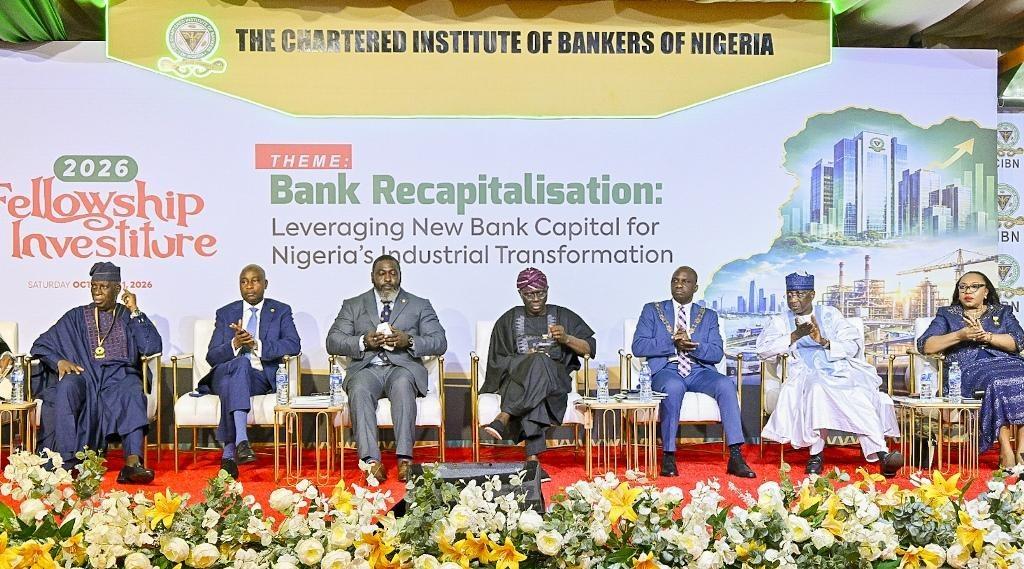
Lagos State Governor, Mr. Babajide Sanwo-Olu, has challenged Nigerian financial institutions to translate the benefits of bank recapitalisation into increased investment in the real economy, urging them to move beyond conventional lending and become active partners in industrial development, productivity improvement and employment generation.
The governor said the stronger capital base of Nigerian banks should provide an opportunity to address longstanding financing challenges confronting manufacturers, agricultural processors, small businesses and other productive enterprises.
Sanwo-Olu, who spoke on Saturday at the 2026 Chartered Institute of Bankers of Nigeria (CIBN) Fellowship Investiture in Victoria Island, Lagos, stressed that the success of bank recapitalisation should not be measured solely by the amount of capital raised by financial institutions but by the extent to which the funds support businesses, expand industrial capacity and generate economic opportunities.
The event was themed, "Bank Recapitalization: Leveraging New Bank Capital for Nigeria's Industrial Transformation."
According to the governor, recapitalisation has strengthened the capacity of Nigerian banks to withstand economic pressures and undertake larger financial transactions, but the next critical responsibility is ensuring that the additional capital finds its way into productive sectors of the economy.
"Recapitalization has strengthened the capacity of our banks to withstand economic pressures and undertake larger transactions. But raising capital is only the beginning. The true measure of success will be how effectively that capital supports productive enterprises, industrial expansion and economic opportunities for Nigerians," he said.
He identified access to affordable, long-term financing as one of the major obstacles facing Nigerian businesses, explaining that industrial investments require funding arrangements that recognise the time businesses need to establish operations, expand production and generate returns.
Sanwo-Olu noted that manufacturers require substantial financing to acquire machinery, modernise production facilities and compete in international markets, while agricultural processors need capital for storage, processing and distribution.
He also observed that growing enterprises require credit facilities structured around their operational realities rather than conventional lending arrangements that may not adequately accommodate their business cycles.
The governor consequently urged recapitalised banks to develop innovative financing models capable of supporting long-term industrial investments without undermining prudent risk management.
Lekki Corridor, Infrastructure Offer Investment Opportunities
Highlighting investment opportunities in Lagos, Sanwo-Olu identified the Lekki Deep Sea Port, expanding industrial activities along the Lekki corridor, investments in rail and road infrastructure, and opportunities created by the Lagos State Electricity Law as important developments capable of stimulating private-sector investment.
He said these projects were creating new opportunities in manufacturing, logistics, energy and international trade, requiring stronger participation by financial institutions.
According to him, the expanding economic activities around the Lekki corridor demonstrate the importance of connecting infrastructure development with accessible financing to accelerate industrialisation.
He maintained that financial institutions could play a significant role in unlocking private investment in these sectors, improving productivity and creating employment opportunities.
The governor also emphasised that infrastructure development and financial sector reforms must complement each other if Nigeria is to achieve sustainable economic transformation.
He assured investors and business operators that the Lagos State Government would continue to provide the infrastructure, policies and enabling environment necessary for businesses to thrive.
Small Businesses Must Benefit From Recapitalisation
Sanwo-Olu further called on commercial banks to ensure that small and medium-sized enterprises benefit from the stronger capital position of the banking industry.
He warned that the financing needs of smaller businesses could not be adequately addressed through government intervention alone, stressing the need for commercial banks to develop more accessible credit products for entrepreneurs.
He cited the Lagos State Employment Trust Fund as part of his administration's efforts to support entrepreneurs through access to finance, enterprise development and capacity building.
However, he argued that the scale of financing required by Lagos businesses demands greater participation by commercial financial institutions.
"We must ensure that smaller businesses benefit from this stronger banking system. Through the Lagos State Employment Trust Fund, we have continued to support entrepreneurs with access to finance, enterprise development and capacity building.
"However, government intervention alone cannot meet the financing needs of our growing business community. We need commercial banks to develop more accessible credit products, support industrial clusters, finance equipment acquisition and strengthen the supply chains that connect small enterprises to larger markets," he said.
He added that collaboration between government, financial institutions and private investors was essential to mobilising the level of investment required to transform the economy.
The governor challenged banks to move away from an approach that focuses primarily on accumulating capital towards one that ensures available funds are deployed productively.
"Lagos will continue to provide the infrastructure, policies and enabling environment that businesses require to thrive. But the scale of investment needed to transform our economy demands stronger collaboration between government, financial institutions and private investors. We must move from simply having more capital in our banks to putting more capital to work in our economy," he stated.
Governance, Professionalism Critical To Banking Sector
While advocating greater lending to productive sectors, Sanwo-Olu cautioned that the pursuit of industrial growth must not come at the expense of financial sector stability.
He said stronger capital positions must be supported by sound corporate governance, responsible lending practices, transparency and professional competence.
He particularly highlighted the responsibility of the CIBN in developing banking professionals capable of understanding the financing requirements of industries, emerging technologies and Nigeria's broader economic development priorities.
According to him, the Institute's responsibility extends beyond professional certification and the recognition of outstanding practitioners to building the capacity of banking leaders who can contribute meaningfully to the country's economic transformation.
He urged the Institute to continue strengthening professional standards and preparing bankers for the changing demands of the financial services industry.
"The banking profession needs leaders who will not only preserve its standards but also help shape its future. Nigeria has recapitalized its banks. The next task is to help recapitalize Nigerian industry," he said.
He maintained that the ultimate success of the banking sector reform should be reflected in the number of new factories established, businesses expanded, exports generated and employment opportunities created for young Nigerians.
21 Honorary Fellows Conferred
Meanwhile, the 2026 CIBN Fellowship Investiture witnessed the conferment of various professional honours on distinguished individuals in recognition of their contributions to the banking profession, financial system and national economic development.
A total of 21 recipients were conferred with Honorary Fellowship, while 463 individuals received Fellowship and another 232 were awarded Honorary Senior Membership of the Institute.
Among those conferred with Honorary Fellowship were Mr. Samuel Egube, Deputy Chief of Staff to Governor Sanwo-Olu; Mr. Tokunbo Talabi, Secretary to the Ogun State Government; Dr. Ibrahim Stevens, Governor of the Bank of Sierra Leone; Apostle (Mrs.) Folorunsho Alakija, Vice Chairman of Famfa Oil Limited; and Lady Ada Chukwudozie, Chairman of Keystone Bank Limited.
The Lagos State Commissioner for Transportation, Mr. Oluwaseun Osiyemi, was also conferred with the Elected Fellow of the Institute.
Congratulating the recipients, Sanwo-Olu particularly commended Egube and Osiyemi for their recognition, describing the honours as an acknowledgement of their professional competence, dedication and contributions to his administration.
He urged the awardees to see their recognition as an additional responsibility to strengthen the institutions they serve, mentor younger professionals and deploy their experience towards addressing the country's economic challenges.
The governor also congratulated the CIBN leadership on another successful investiture, commending the Institute for sustaining professional standards within the banking industry.
The investiture comes against the backdrop of Nigeria's banking sector recapitalisation exercise, which has placed renewed attention on the capacity of financial institutions to mobilise funds, finance large-scale investments and support economic diversification.
Sanwo-Olu's central message was that the next phase of the exercise must extend beyond stronger bank balance sheets to tangible improvements in industrial production, business expansion, export capacity and employment generation.