 PublicSphere Live
Business
CBN Allots N3.46trn in OMO, Treasury Bills Auctions as Investors’ Demand Hits N5.57trn
Apex bank intensifies liquidity mop-up amid rising banking system liquidity; Treasury Bills stop rates remain unchanged despite strong subscriptions
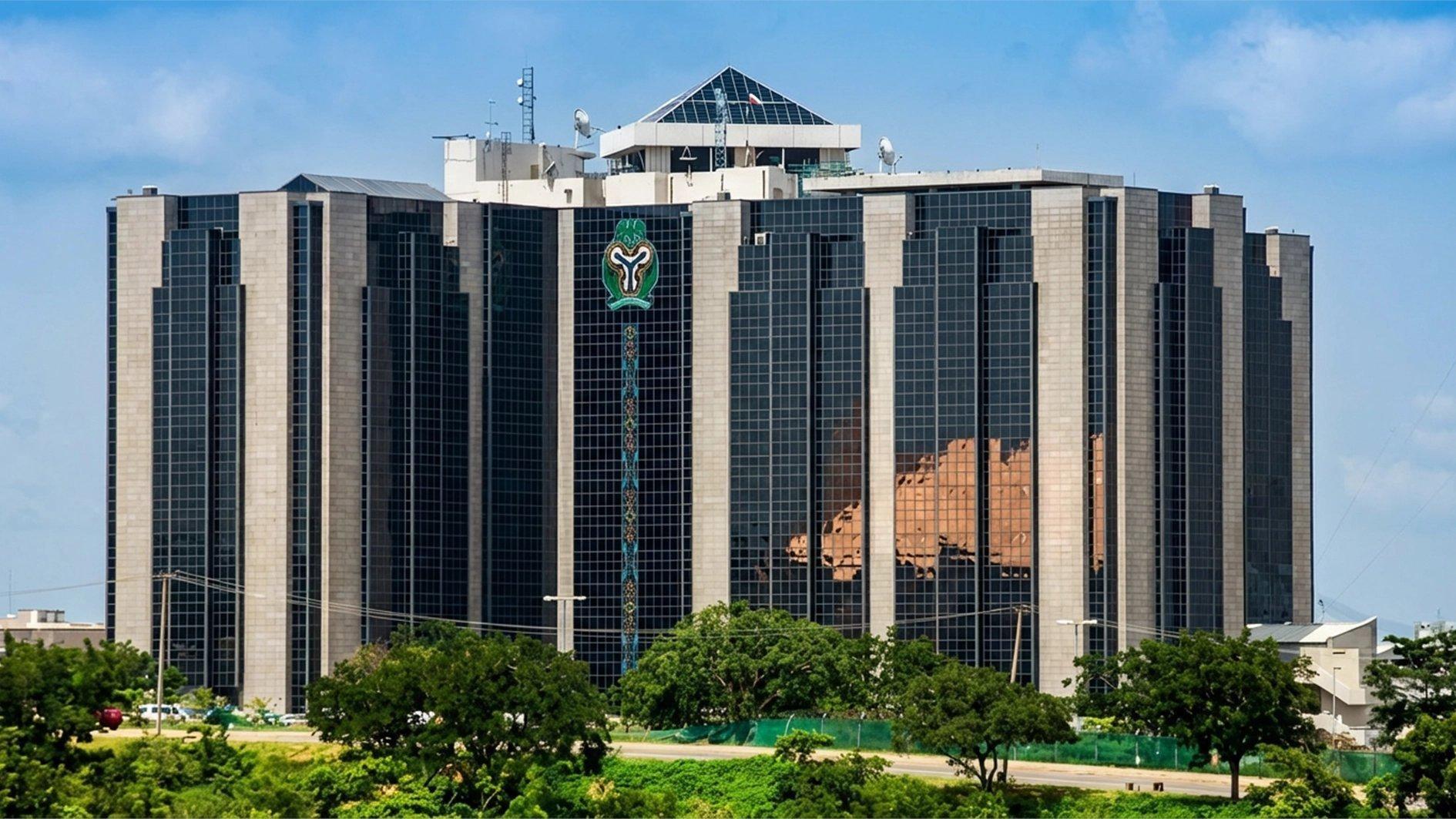
The Central Bank of Nigeria (CBN) has allotted approximately N3.46 trillion through its Open Market Operations (OMO) and Nigerian Treasury Bills (NTB) auctions conducted on November 3 and 4, 2026, respectively, as it steps up efforts to manage excess liquidity in the banking system.
The two auctions attracted combined subscriptions of approximately N5.57 trillion against a total offer of N2.30 trillion, representing a subscription level of about 242 per cent of the amount put on offer.
The strong investor participation reflects sustained demand for short-term government securities and interest-bearing monetary instruments, particularly among banks and other institutional investors seeking attractive returns amid prevailing liquidity conditions and uncertainties over the direction of monetary policy.
However, while the CBN responded to the strong demand with substantial allotments at the OMO auction, it maintained the existing stop rates on Treasury Bills, signalling its preference to preserve the current pricing structure of government short-term debt instruments.
The outcome also highlights the growing importance of OMO securities in the apex bank's liquidity management strategy, particularly as significant maturities and other anticipated inflows threaten to increase the volume of idle funds in the financial system.
OMO Auction Accounts For 85% Of Total Allotments
A breakdown of the auction results showed that the CBN allotted approximately N2.95 trillion at its November 3 OMO auction, accounting for about 85.3 per cent of the combined N3.46 trillion raised from the two exercises.
The OMO auction attracted subscriptions of N3.52 trillion against an advertised offer of N1.50 trillion across the 119-day, 126-day and 133-day tenors.
This translated into a bid-to-cover ratio of approximately 2.35 times, indicating that investors submitted bids more than twice the amount the CBN intended to raise.
The 133-day instrument emerged as the most attractive of the three offerings, attracting subscriptions of N2.36 trillion, representing approximately 67 per cent of total demand at the auction.
The concentration of investor interest in the longer-dated OMO instrument suggests that market participants were willing to commit funds for a relatively extended period in exchange for the prevailing yields.
The CBN maintained stop rates of 17.77 per cent, 17.71 per cent and 17.67 per cent for the 119-day, 126-day and 133-day instruments, respectively.
The relatively narrow differences in the rates across the three maturities indicate that investors were prepared to accept broadly comparable returns across the available tenors.
The N2.95 trillion allotment represented a substantial increase from the N244.93 billion allocated at the October 29 OMO auction, when the apex bank had received subscriptions of N2.28 trillion but accepted only a relatively small portion of the bids.
The latest outcome therefore suggests a renewed willingness by the CBN to absorb substantial amounts of liquidity through OMO instruments, particularly against the background of rising banking system balances.
Treasury Bills Subscriptions Exceed Offer By 156%
At the November 4 Treasury Bills auction, investors also demonstrated significant appetite for government securities, submitting bids worth N2.045 trillion against the N800 billion advertised offer.
The subscriptions represented approximately 2.56 times the amount offered by the CBN.
Despite the strong demand, however, the apex bank allotted only N509.41 billion, equivalent to approximately 63.7 per cent of the advertised offer.
Consequently, about N1.54 trillion in bids was left unallotted, underscoring the CBN's selective approach to accepting subscriptions at the auction.
The allotment was nevertheless significantly higher than the N71.16 billion recorded at the October 28 Treasury Bills auction, when the apex bank rejected most of the subscriptions.
Demand at the latest auction was overwhelmingly concentrated in the 364-day instrument, which attracted subscriptions of N1.994 trillion.
Of this amount, the CBN allotted N461.84 billion, reflecting the dominant position of the one-year instrument in investors' preference for short-term government securities.
The 91-day Treasury Bill attracted N25.01 billion in subscriptions, out of which N22.40 billion was allotted.
Similarly, the 182-day instrument recorded subscriptions of N25.83 billion, with N25.17 billion accepted by the apex bank.
The overwhelming preference for the 364-day instrument suggests that investors remain interested in locking in prevailing returns for longer periods, particularly as expectations surrounding future interest rate movements continue to influence investment decisions.
The relatively small subscriptions for the 91-day and 182-day instruments also indicate that the current investment environment favours the longer end of the Treasury Bills maturity spectrum.
CBN Maintains Treasury Bills Stop Rates
One of the significant developments from the November 4 auction was the decision by the CBN to retain Treasury Bills stop rates at their previous levels, despite the substantial oversubscription recorded across the three maturities.
The 91-day Treasury Bill cleared at 15.40 per cent, while the 182-day instrument maintained a stop rate of 15.79 per cent.
The 364-day Treasury Bill also retained its previous rate of 15.80 per cent.
The unchanged rates suggest that the CBN was not prepared to accommodate demands for higher yields at the primary market auction, despite evidence of increased competition among investors seeking government securities.
This position is particularly noteworthy given that the 364-day instrument attracted bids at rates as high as 18.18 per cent, significantly above the 15.80 per cent stop rate accepted by the apex bank.
The difference suggests that some investors were seeking higher compensation for committing their funds for one year, possibly reflecting their assessment of inflation, prevailing market liquidity and the uncertainty surrounding future interest rate movements.
By maintaining the existing stop rates, the CBN effectively limited the cost of borrowing through Treasury Bills while retaining its ability to regulate the volume of funds accepted from the market.
Secondary Market Yields Show Upward Movement
Although primary-market Treasury Bills rates remained unchanged, yields in the secondary market recorded increases, reflecting a different pricing dynamic among investors trading existing securities.
Average secondary-market Treasury Bills yields rose by approximately 43 basis points to 17.70 per cent on November 3, compared with 17.28 per cent recorded on October 28.
The three-month benchmark yield increased by 130 basis points to 17.40 per cent, while the six-month benchmark yield advanced by 122 basis points to 17.85 per cent.
The divergence between primary and secondary market yields underscores the differences in pricing across the various segments of the fixed-income market.
For instance, the 126-day OMO stop rate of 17.71 per cent was 192 basis points above the 182-day Treasury Bills stop rate of 15.79 per cent.
Similarly, the 91-day Treasury Bills stop rate of 15.40 per cent was 200 basis points below the three-month secondary-market benchmark yield of 17.40 per cent.
These differences suggest that investors are attaching different risk and liquidity premiums to securities depending on their maturity, issuance structure and trading conditions.
OMO instruments, which the CBN uses primarily to manage liquidity, are consequently offering higher returns than the corresponding Treasury Bills instruments at the primary market.
The development also reinforces the importance of comparing yields across primary and secondary markets when assessing investment opportunities in Nigeria's fixed-income market.
Rising Banking System Liquidity Drives Omo Intervention
The substantial OMO allotment comes against the background of elevated liquidity in the Nigerian banking system, which has continued to challenge the CBN's efforts to maintain tight monetary conditions.
CBN financial data showed that balances in the Standing Deposit Facility (SDF) exceeded N7.72 trillion on November 3, indicating that banks were holding significant amounts of surplus funds with the apex bank.
The SDF provides a facility through which eligible financial institutions can deposit excess liquidity with the CBN and earn interest.
High balances in the facility generally indicate that substantial funds are available within the banking system but are not being deployed into lending or other investment activities.
The liquidity position was partly influenced by the settlement of approximately N2.016 trillion in matured OMO instruments.
The maturity payments released substantial funds into the financial system, increasing the pool of available liquidity.
However, the CBN subsequently absorbed part of the funds through its N2.95 trillion OMO allotment on November 3.
The latest intervention reflects the apex bank's continued reliance on OMO operations to regulate liquidity conditions outside the regular Treasury Bills issuance programme.
The strategy is particularly important as the CBN seeks to prevent excessive liquidity from undermining the effectiveness of its monetary policy measures.
September's Aggressive Mop-Up Provides Background
The November auctions also follow an aggressive liquidity absorption programme undertaken by the CBN in September.
During that month, the apex bank sold N17.51 trillion worth of OMO securities against maturities of N10.89 trillion, resulting in a net liquidity withdrawal of approximately N6.62 trillion.
The September 29 OMO auction was particularly significant, with the CBN allotting approximately N4.69 trillion against an advertised offer of N2.50 trillion.
Similarly, at the October 22 OMO auction, allotments reached N2.63 trillion against an offer of N2 trillion.
However, the volume of allotments declined sharply at the final October auction, when the CBN accepted only N244.93 billion despite subscriptions of N2.28 trillion.
The latest N2.95 trillion allotment therefore represents a notable reversal of the more restrained approach observed at the October 29 exercise.
The development is consistent with the need to mop up funds released through maturing securities and other liquidity injections into the banking system.
Data from the Financial Markets Dealers Association (FMDA) also highlighted the extent of the liquidity challenge.
According to the association, banking system liquidity increased by 56.75 per cent to N7.373 trillion in October as the CBN moderated its OMO absorption activities.
The FMDA has further projected liquidity inflows of approximately N13.79 trillion during November.
The anticipated inflows are expected to come largely from maturing OMO instruments, government allocations and Treasury Bills repayments.
Such a substantial volume of expected inflows could create additional liquidity management challenges for the CBN if the funds are not sufficiently absorbed through its monetary operations.
Government Borrowing Through Treasury Bills Remains Moderate
Beyond the CBN's liquidity management activities, the government's domestic borrowing programme through Treasury Bills has also attracted attention.
Available figures indicate that the Debt Management Office (DMO) has raised approximately N1.82 trillion against a cumulative offer of N2.95 trillion across four Treasury Bills auctions conducted so far in the fourth quarter of 2026.
The difference suggests that the government has not fully utilised the borrowing opportunities presented through the auctions.
This is important because Treasury Bills serve as one of the government's principal instruments for meeting short-term financing requirements and managing temporary cash flow mismatches.
However, the CBN's monetary management objectives and the government's borrowing requirements do not always produce identical outcomes in the fixed-income market.
While the government may seek to raise funds at competitive rates, the CBN must also consider the implications of accepting substantial bids on banking system liquidity and the overall cost of monetary policy implementation.
The November 4 auction illustrates this balancing act, as the apex bank accepted N509.41 billion against an N800 billion offer despite receiving more than N2 trillion in subscriptions.
Investors Await November MPC Decision
Attention is now shifting towards the next meeting of the CBN's Monetary Policy Committee (MPC), scheduled for November, as investors seek clearer indications of the direction of interest rates and the broader monetary policy environment.
The committee's decisions will be particularly important in determining expectations around short-term yields, liquidity conditions and the attractiveness of fixed-income investments relative to equities and other asset classes.
The CBN will have to balance the need to contain inflationary pressures against the potential implications of maintaining tight monetary conditions for economic growth, credit availability and the cost of financing businesses.
For investors, the immediate consideration will be whether the apex bank intends to sustain aggressive liquidity absorption through OMO instruments or moderate its interventions as market conditions evolve.
The projected N13.79 trillion liquidity inflows in November could make further OMO interventions necessary, particularly if significant funds return to the banking system through maturing securities and government-related payments.
However, the extent of future interventions will depend on the actual liquidity position, the volume of maturities and the CBN's assessment of monetary conditions.
The November 3 and 4 auctions have already demonstrated that demand for government securities remains strong, even as the apex bank maintains a firm position on Treasury Bills stop rates.
The bigger question is whether the CBN can sustain its liquidity management strategy without creating excessive distortions in the fixed-income market or imposing additional costs on government borrowing.
For now, investors appear willing to commit substantial funds to government-backed instruments, but the divergence between OMO rates, Treasury Bills stop rates and secondary-market yields suggests that the market is still adjusting to competing liquidity and monetary policy signals.
The outcome of the November MPC meeting, alongside subsequent auction decisions, will therefore provide important clues about the direction of Nigeria's fixed-income market in the remaining weeks of 2026.