PublicSphere Live
International Finance
AfDB, Islamic Development Bank Advance $4bn Africa Co-Financing Target
African Development Bank Group and Islamic Development Bank Group have approved $2.65 billion in joint financing for projects across 27 African member countries, representing 66 per cent of their $4 billion co-financing target.
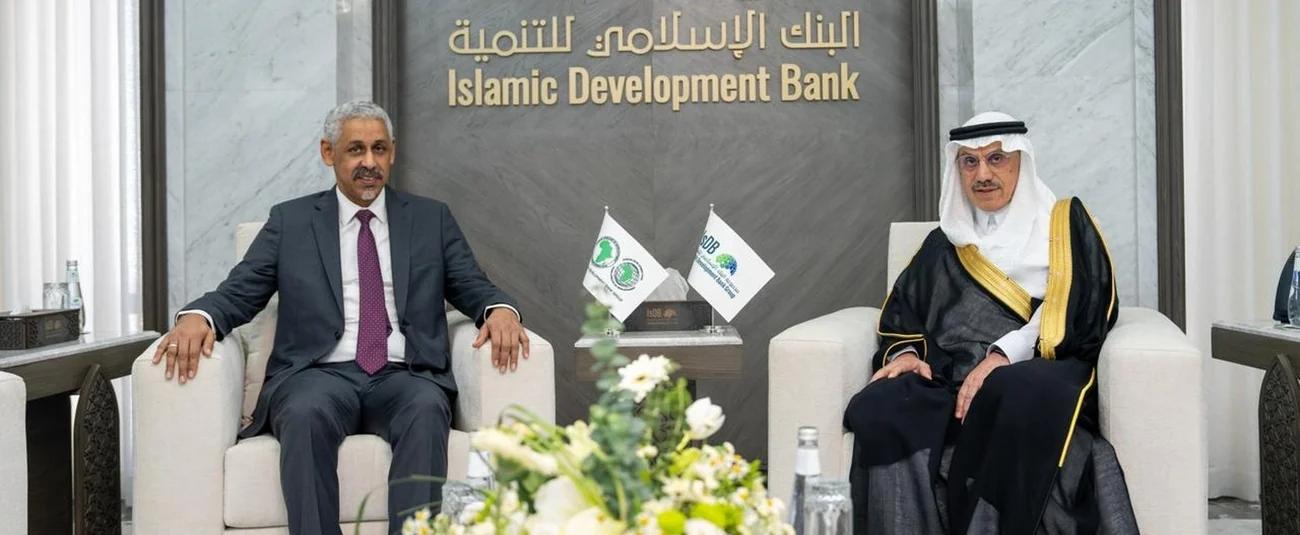
JEDDAH, November 2, 2026 — The African Development Bank Group (AfDB) and the Islamic Development Bank Group (IsDB) have reaffirmed their commitment to strengthening development financing across Africa, following discussions on progress towards a $4 billion joint co-financing target.
The Presidents of the two institutions, Dr Sidi Ould Tah of the AfDB and Dr Muhammad Al Jasser of the IsDB, met at the Islamic Development Bank’s headquarters in Jeddah, Saudi Arabia, to review their cooperation and assess the implementation of development projects across 27 African member countries.
The discussions focused on the implementation of the 2024–2029 Cooperation Framework, which established a $4 billion co-financing target for sovereign and non-sovereign operations.
According to the institutions, approved operations under the framework have reached $2.65 billion, representing approximately 66 per cent of the target.
The meeting underscored the importance of translating the growing partnership between African and Arab development institutions into tangible investments capable of accelerating economic growth, improving living standards and strengthening infrastructure across Africa.
The engagement also provided an opportunity for the two development finance leaders to examine ways of improving project preparation, implementation and resource mobilisation, particularly through greater collaboration between public and private sector financing institutions.
Partnership To Accelerate Africa’s Development
The meeting builds on the Joint Declaration signed in January 2026 between the African Development Bank Group and the Arab Coordination Group, of which the Islamic Development Bank is a member.
The declaration seeks to strengthen Arab-African development cooperation through increased financing, investment and coordinated support for development priorities.
The Islamic Development Bank emphasised the need to transform the partnership into practical initiatives capable of mobilising additional resources for development projects across the continent.
Speaking after the meeting, Dr Al Jasser described the African Development Bank as a strategic partner in advancing Africa’s development priorities.
“The African Development Bank is a strategic partner of the IsDB Group in advancing Africa’s development priorities,” he said.
He added that the two institutions intended to build on their existing relationship by increasing co-financing, strengthening project preparation and implementation, and mobilising more public and private capital.
According to him, the ultimate objective is to ensure that cooperation between the institutions produces tangible and sustainable development outcomes in their member countries.
The partnership is particularly significant at a time when African countries face mounting demands for infrastructure investment, social services, economic diversification and employment creation.
By combining financial resources, technical expertise and institutional capabilities, the two development banks hope to support projects that might otherwise struggle to secure sufficient financing.
$4bn Target Within Reach
During a fireside chat organised by the Islamic Development Bank, Dr Ould Tah expressed satisfaction with the progress achieved under the cooperation framework.
He said the partnership had demonstrated the capacity of the two institutions to mobilise substantial resources within a relatively short period.
“We are pleased with the progress made. A memorandum of understanding has been signed and the target of $4 billion has already been achieved, with 66 per cent of this reached in less than two years,” he said.
The statement reflects the momentum behind the partnership, although the reported approved operations of $2.65 billion represent 66 per cent of the overall $4 billion target.
Dr Ould Tah said the progress demonstrated that the two institutions could achieve even more ambitious financing objectives through stronger cooperation.
“This proves that we can do much better,” he added.
He expressed confidence that the institutions could raise their co-financing ambitions, improve coordination at the country level and attract additional development partners.
He particularly highlighted the potential role of the Arab Coordination Group, noting that the Islamic Development Bank occupies a leading position within the group.
The AfDB president also thanked Dr Al Jasser and the Islamic Development Bank for their support in advancing the partnership.
New African Financial Architecture
A major component of the discussions was the New African Financial Architecture for Development (NAFAD), an initiative designed to improve Africa’s capacity to mobilise and deploy financial resources for development.
Dr Ould Tah presented the framework, which was approved by the African Development Bank Group’s Board at its Annual Meetings in Brazzaville in May 2026.
The initiative had earlier received the endorsement of African Heads of State in February in Addis Ababa and was subsequently adopted as the Abidjan Consensus in April 2026 by leaders of Africa’s financial ecosystem.
The 11-point consensus seeks to mobilise domestic savings and strengthen the continent’s financial architecture to address its enormous development financing requirements.
Africa’s annual development financing gap is estimated at approximately $400 billion, reflecting the scale of investment required to meet infrastructure, industrialisation, social development and economic transformation needs.
The initiative aims to improve the mobilisation of African resources, strengthen coordination among financial institutions and create instruments capable of channeling domestic capital into productive investments.
Explaining the rationale behind the framework, Dr Ould Tah said: “Africa does not lack resources; it lacks instruments and coordination.”
The statement reflects a central argument underpinning NAFAD: that Africa’s development challenge is not solely a question of insufficient money, but also the ability to effectively mobilise, structure and deploy available resources.
The framework is expected to encourage stronger collaboration among African governments, development banks, financial institutions, pension funds and other domestic investors.
By improving the mechanisms through which savings are converted into investments, African countries could potentially reduce their dependence on external financing and strengthen their financial sovereignty.
Focus On Basic Needs And Infrastructure
Dr Ould Tah also commended the Arab Coordination Group for supporting projects that address the basic needs of African populations.
He highlighted investments in water supply, healthcare, education, sanitation, agriculture and infrastructure as areas where development financing could deliver significant social and economic benefits.
These sectors remain critical to Africa’s development, particularly as governments seek to expand access to essential services, improve productivity and tackle poverty.
Water and sanitation projects, for instance, can improve public health and support agricultural production, while investments in education and healthcare strengthen human capital.
Similarly, infrastructure financing is essential for improving connectivity, reducing the cost of doing business and facilitating trade within Africa and with international markets.
Agricultural investment is also central to the continent’s food security ambitions, particularly as African countries seek to reduce dependence on imported food and strengthen domestic production.
The AfDB president called for regular meetings among development partners to review progress, improve coordination and strengthen mutual trust.
He stressed that cooperation should be based on complementary roles rather than duplication of administrative and operational processes.
“We must not duplicate evaluation, procurement or due diligence processes,” he emphasised.
“We must complement one another.”
His remarks point to the need for development institutions to streamline their procedures, reduce bureaucratic delays and improve the speed at which approved projects are implemented.
Such coordination could help reduce transaction costs and ensure that development financing reaches intended beneficiaries more efficiently.
Mobilising Capital For Africa’s Future
The renewed cooperation between the African Development Bank and the Islamic Development Bank comes against the backdrop of Africa’s growing demand for financing to support economic transformation.
The continent requires substantial investments in transport networks, energy, industrial development, agriculture, healthcare, education and digital infrastructure.
However, limited fiscal space, high borrowing costs and competing government expenditure priorities have made it increasingly difficult for many African countries to finance development projects solely through public budgets.
Development finance institutions are therefore expected to play a greater role in mobilising capital, supporting project preparation and attracting private sector investments.
The AfDB-IsDB partnership offers an opportunity to combine institutional expertise and financial capacity while strengthening cooperation between African and Arab development stakeholders.
The focus on sovereign and non-sovereign operations also creates room for financing both government-led development programmes and private sector projects capable of generating employment and economic growth.
The institutions’ emphasis on project preparation and implementation is equally important, as securing financing does not automatically translate into completed infrastructure or improved services.
Effective implementation, transparency, accountability and coordination remain essential to ensuring that development investments produce meaningful results.
With $2.65 billion in approved operations already recorded under the cooperation framework, the two institutions are seeking to consolidate their achievements and expand the scale of their joint interventions.
The discussions in Jeddah reinforced their shared commitment to mobilising additional resources, improving operational efficiency and strengthening Arab-African development cooperation.
For Africa, the broader challenge will be to translate these financing commitments into projects that improve livelihoods, expand economic opportunities and support sustainable development across the continent.
As Dr Ould Tah’s remarks on NAFAD suggest, the continent’s future may depend as much on how effectively it coordinates and deploys its financial resources as on the volume of capital it attracts.