 PublicSphere Live
International Finance
African Development Bank Tops Global Aid Transparency Ranking for Third Consecutive Time
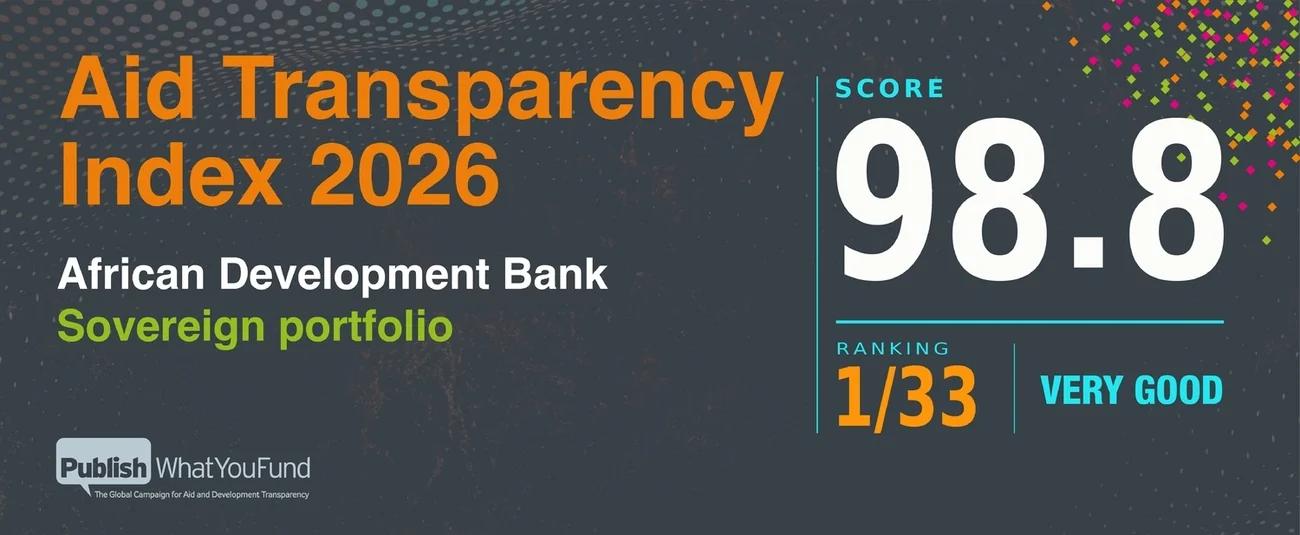
Bank scores 98.8 out of 100, emerging first among 33 development institutions
The African Development Bank (AfDB) has retained its position as the world’s most transparent major development institution for the third consecutive time, reinforcing its commitment to accountability, openness and effective management of development resources.
The Bank’s sovereign portfolio scored 98.8 out of 100 in the 2026 Aid Transparency Index, released in London on Wednesday, November 4, by Publish What You Fund, an international organisation that advocates greater transparency in development finance.
The ranking placed the African Development Bank first among 33 development institutions assessed in the biennial index, ahead of the Inter-American Development Bank and the World Bank’s International Development Association, which jointly occupied second position with scores of 97.1 each.
The latest recognition builds on the Bank’s first-place rankings in the 2022 and 2024 editions of the index, demonstrating its sustained commitment to publishing comprehensive, high-quality and timely information about its public sector operations and financial flows.
According to the Bank, its performance reflects transparency embedded in its institutional systems and operational processes rather than a temporary campaign or isolated initiative.
Despite significant changes in leadership, management and strategic direction, the institution maintained its 2024 score of 98.8, highlighting the consistency of its disclosure practices.
Gary Forster, Chief Executive Officer of Publish What You Fund, commended the Bank’s sustained leadership in aid transparency, describing its performance as an important example for other development institutions.
“The African Development Bank’s continued leadership in aid transparency demonstrates its strong commitment to openness and accountability,” Forster said at the launch of the index.
He particularly praised the institution’s continuous improvements to its website and data dashboards, which have made information more accessible, useful and actionable for different stakeholders.
Forster said the Bank’s consistent investment in transparency demonstrated how development institutions could improve accountability and public access to information.
The index’s findings also indicate a contrasting trend among development institutions, with the average score of organisations assessed in both the 2024 and 2026 editions declining slightly from 62.7 to 62.1 out of 100.
Transparency As A Foundation For Development
African Development Bank Group President, Dr Sidi Ould Tah, described transparency as a fundamental instrument for delivering Africa’s economic transformation, strengthening trust and ensuring that development resources are deployed more effectively.
“Transparency is currency. It enables us to deliver the transformation that Africa needs. It builds trust and improves information,” Ould Tah said ahead of the index’s release.
According to him, better information strengthens accountability, enables countries to make informed decisions and increases investor confidence.
He added that transparency also allows scarce development resources to be deployed more efficiently.
The Bank’s transparency framework has become increasingly important as the global development financing environment undergoes significant changes.
Bilateral aid to African countries is contracting, debt-servicing obligations are rising, and multilateral development banks are increasingly being encouraged to mobilise funding from capital markets rather than relying predominantly on donor contributions.
In such an environment, transparency is becoming a critical factor in determining the cost and availability of development finance.
Investors and lenders increasingly depend on verifiable information to assess risks, evaluate projects and determine financing conditions.
The Bank has argued that African borrowers have historically paid higher financing premiums partly because of insufficient information and limited evidence, in addition to conventional assessments of economic and financial risks.
This argument forms a central pillar of the New African Financial Architecture for Development (NAFAD), which was approved by the Bank Group’s Board of Governors at its 2026 Annual Meetings in Brazzaville, Republic of Congo, in May.
The initiative seeks to strengthen Africa’s financial architecture and improve the continent’s capacity to mobilise development resources.
Mapafrica Provides Access To Project Information
A major component of the African Development Bank’s transparency strategy is MapAfrica, its online platform for tracking development projects and their results across the continent.
The platform currently maps approximately 6,000 projects across more than 18,500 locations, allowing users to explore project objectives, implementation progress and outcomes.
It also provides access to appraisal and supervision documents, offering stakeholders detailed information about project design, implementation and performance.
The Bank said the platform demonstrates its commitment to comprehensive and accessible disclosure.
One example is the Institutional Support for the Sustainability of Urban Water Supply and Sanitation Service Delivery Project in Angola, for which approximately 60 documents have been made publicly available.
The project illustrates how detailed documentation can provide stakeholders with insight into development interventions, their objectives and implementation processes.
The Bank has also introduced a traffic-light reporting system aligned with its Results Management Framework.
The new feature allows users to determine at a glance whether individual operations are progressing according to the targets established at the time of approval.
The system is designed to improve monitoring, accountability and understanding of project performance.
Mission 300 Embraces Transparency
The African Development Bank said its transparency principles also apply to Mission 300, its joint initiative with the World Bank to connect 300 million Africans to electricity by 2030.
The programme represents one of the most ambitious undertakings in the institution’s history and is aimed at addressing Africa’s persistent electricity access challenges.
Its results are published and updated quarterly through the Mission 300 dashboard, providing stakeholders with regular information on progress while implementation is ongoing.
The initiative demonstrates how transparency can be integrated into large-scale development programmes from the outset, allowing governments, investors, development partners and citizens to monitor progress against established targets.
Monthly Disclosure Of Financial Data
The African Development Bank joined the International Aid Transparency Initiative (IATI) in 2011 and has published data compliant with its standards since June 2013.
The institution publishes its entire portfolio monthly, with a maximum reporting gap of one month between a financial transaction and its disclosure.
Its publication record extends back to the Bank’s operations in 1967, providing a long-term account of its development activities.
The Bank also holds the vice-chairmanship of the IATI Governing Board for the 2026–2028 term.
The Aid Transparency Index has assessed major aid and development organisations for more than a decade, using 35 indicators to evaluate the quality and accessibility of information actually published in open, machine-readable formats.
Rather than relying on institutional promises or commitments, the index measures the information available to the public.
The African Development Bank said it remained committed to continuous improvement in transparency while balancing disclosure requirements with its obligations to clients.
Its latest performance, the institution noted, underscores the importance of reliable information in strengthening development outcomes, improving accountability and building confidence in Africa’s financial and economic institutions.
The 2026 Aid Transparency Index is available through Publish What You Fund, while the Bank’s project information can be accessed through its MapAfrica platform.