PublicSphere Live
Politics
Tinubu’s 30-Day Petrol Relief: NDC’s Tokenism Charge and the Test of Economic Credibility
The controversy has emerged at a particularly sensitive moment, with the 2027 presidential election approaching and economic hardship remaining one of the most consequential issues confronting the electorate
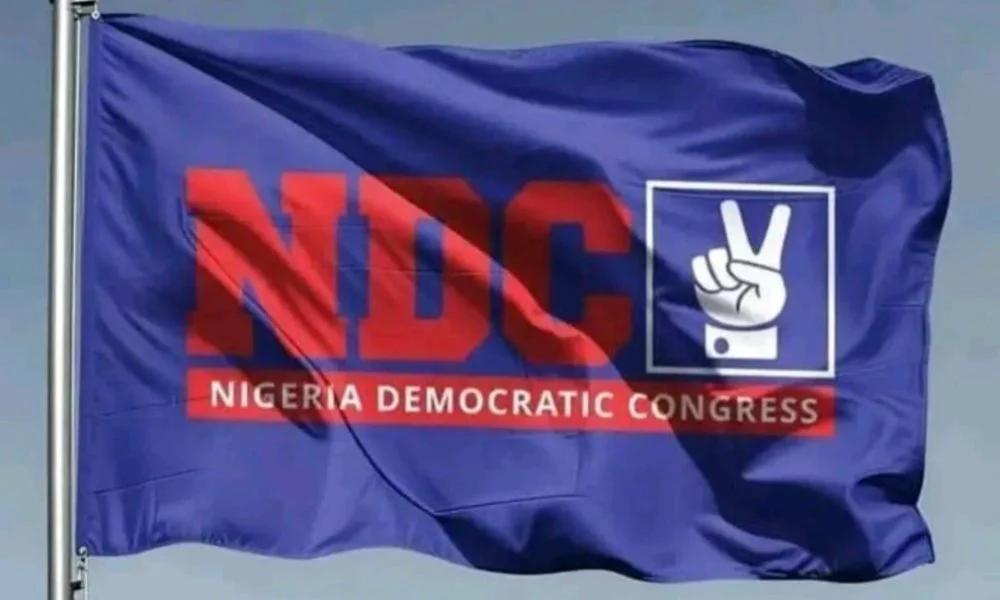
The Nigeria Democratic Congress (NDC) has raised a legitimate question about the Federal Government’s decision to offer a 30-day petrol discount through the Nigerian National Petroleum Company Limited (NNPC), describing the initiative as “tokenism and deceit” rather than a meaningful response to the hardship Nigerians have endured since the removal of petrol subsidy in May 2023. Yet, while the opposition party’s criticism exposes the inadequacy of temporary relief in the face of a prolonged cost-of-living crisis, the government’s argument that Nigeria cannot afford a return to an expensive, poorly targeted and fiscally damaging subsidy system also deserves serious consideration.
The central question, therefore, is not whether Nigerians need relief from high petrol prices. They plainly do. It is whether the Tinubu administration’s intervention offers a credible bridge between the immediate suffering of households and the longer-term economic reforms it says will deliver prosperity, or whether it is a limited concession whose political significance exceeds its practical value.
The controversy has emerged at a particularly sensitive moment, with the 2027 presidential election approaching and economic hardship remaining one of the most consequential issues confronting the electorate. In such circumstances, every government intervention involving the price of petrol inevitably attracts two forms of scrutiny: an economic assessment of its likely impact and a political assessment of its timing, motivation and sustainability.
Neither should automatically displace the other.
The Opposition’s Strongest Argument: What Happens on Day 31?
The NDC’s most compelling argument is not necessarily its accusation that the government is attempting to deceive Nigerians, but its insistence that a temporary reduction in the cost of petrol cannot be mistaken for a solution to the economic difficulties that have accumulated over more than three years. In a statement issued by its National Publicity Secretary, Osa Director, the party questioned the adequacy of the intervention, arguing that it offered little more than a short-lived concession to citizens whose purchasing power, businesses and livelihoods had suffered from the consequences of subsidy removal.
That argument deserves attention because petrol is not an isolated household expense in Nigeria; it is an input into the cost of transporting food, distributing manufactured goods, operating generators, providing commercial services and moving workers between their homes and workplaces, meaning that a significant and sustained increase in its price can transmit inflationary pressure throughout the economy.
For a trader transporting agricultural produce from a rural market to an urban centre, the cost of petrol influences the price at which the goods must be sold to preserve a reasonable margin. For a manufacturer whose electricity supply depends partly on diesel-powered generation, higher energy costs can affect production expenses, competitiveness and employment. For a household that depends on public transport, rising petrol prices may translate into higher fares, leaving less money available for food, education, healthcare and other necessities.
A 30-day intervention cannot, by itself, reverse these accumulated effects. Even if the discount provides immediate savings, it does not automatically restore lost purchasing power, reopen businesses that have closed or return workers to employment.
The NDC is therefore justified in demanding a broader explanation of how the government intends to translate temporary relief into a durable improvement in living standards. Its criticism also raises an important question about the relationship between economic reform and public welfare: if the removal of subsidy was intended to create fiscal space for development, how much of the resulting benefit has reached ordinary Nigerians in a form they can readily identify in their daily lives?
The government has previously argued that subsidy removal has generated substantial savings for the three tiers of government. An analysis published by TheCable in September 2026, citing figures presented by Finance Minister Taiwo Oyedele, put estimated subsidy savings or resources mobilised between June 2023 and December 2025 at ₦15.8 trillion. The report also noted that these figures were based on a counterfactual calculation rather than representing money simply deposited into government accounts.
That distinction matters, but it does not eliminate the accountability question. Nigerians are entitled to know how the additional resources have been allocated, what measurable improvements they have produced and whether the benefits have been distributed in ways that address the extraordinary pressures on vulnerable households.
The NDC’s argument becomes weaker, however, when it moves from criticising the inadequacy of the discount to treating the initiative as proof that the entire economic reform programme has failed. A temporary intervention may be insufficient without being entirely useless, just as a policy that offers immediate relief may still form part of a broader programme whose long-term results depend on implementation.
The more persuasive criticism is that the government has not yet demonstrated that its latest measure can deliver relief on a scale proportionate to the hardship it is supposed to address.
Is The Government Really Restoring Subsidy Through The Back Door?
The NDC has also accused the Tinubu administration of attempting to reintroduce petrol subsidy through the back door, a charge that requires a distinction between the government’s stated policy and the economic consequences of its proposed arrangements.
The government says the NNPC will forgo its retail profit margin and sell petrol at cost for an initial period of 30 days, with priority given to public transport operators. It has also proposed negotiations with domestic refiners and importers to establish a ceiling of ₦1,350 per litre at the ex-gantry or landing-cost level, with the arrangement subject to monthly review.
According to the Finance Minister, the intention is to smooth out price volatility rather than reinstate the former blanket subsidy. Under the proposed price-ceiling arrangement, refiners and importers would absorb costs above the agreed ceiling during periods of rising prices and recover the shortfall when market conditions improve.
There is an economic rationale behind such a mechanism. Petroleum prices are affected by international crude oil prices, exchange rates, refining costs and distribution expenses, and sudden increases can impose substantial pressure on households and businesses that have limited capacity to absorb them. A credible arrangement that smooths temporary shocks could make transport and production costs more predictable without necessarily requiring the government to pay the difference between the market price and a permanently subsidised pump price.
Nevertheless, the distinction between a direct subsidy and a price-stabilisation mechanism must not become an exercise in terminology. If a refiner is compelled to sell below its actual cost without a transparent and commercially credible means of recovering the difference, somebody ultimately bears the burden. It could be the refiner, the importer, another part of the supply chain or, depending on the terms, the government and taxpayers.
The policy’s true character will therefore be determined by its financing, contractual arrangements, duration and transparency, not merely by the label attached to it.
The government's position is strongest where it insists that the old subsidy regime imposed substantial fiscal costs and created opportunities for smuggling, leakage and abuse. The World Bank, in its 2023 assessment of Nigeria’s reform programme, estimated that petrol subsidy costs rose to 32.4 per cent of total government revenue in 2022 and amounted to approximately 2.2 per cent of gross domestic product. It also argued that the arrangement was socially regressive because better-off consumers captured a disproportionate share of the benefits.
Those are serious considerations in a country that needs more resources for roads, schools, hospitals, electricity, security and other public services.
Yet the government's defence cannot rest entirely on the historical failures of the old subsidy system. It must demonstrate that the alternative is working better for the wider population, especially those who spend a substantial proportion of their income on transport, food and energy.
The Government’s Case: Reform Cannot Be Abandoned At Every Shock
There is a danger in reducing the entire debate to the argument that the government should either keep petrol cheap or admit that subsidy removal was a mistake. Such a binary choice ignores the structural weaknesses that made Nigeria's former petroleum pricing arrangements increasingly difficult to sustain.
For decades, the country struggled with the contradiction of being a major crude oil producer while depending heavily on imported refined petroleum products. The subsidy system attempted to shield consumers from the full cost of petrol, but the resulting financial burden, combined with weaknesses in administration and the incentives for cross-border smuggling, placed considerable pressure on public finances.
Removing the subsidy was therefore not an irrational policy choice. The more difficult question was how to manage its consequences.
The Tinubu administration deserves to be heard when it argues that restoring a blanket subsidy could recreate fiscal pressures that the country has spent years trying to escape. The NDC and other opposition parties must also recognise that a promise to make petrol cheaper does not become economically sustainable simply because it is politically attractive.
Indeed, if the government were to restore a broad subsidy without explaining its annual cost, funding sources, eligibility rules and safeguards against abuse, it would be reasonable to demand answers about the consequences for public spending and the country's fiscal position.
But the government's position also contains a weakness. It is not enough to argue that the previous arrangement was expensive; the administration must show that the resources released by its removal are producing tangible improvements in the lives of citizens.
Fiscal savings are an instrument of public policy, not an end in themselves. They acquire social and economic value when they are translated into better infrastructure, improved public services, more productive enterprises, employment opportunities and effective protection for vulnerable citizens.
The government’s announcement of additional measures, including expanded cash transfers, subsidised credit, faster deployment of compressed natural gas, tax relief proposals and a National Strategic Fuel Reserve, suggests that it recognises the need for a broader response.
The question is whether these measures will be implemented effectively, adequately funded and subjected to public scrutiny. Announcements alone cannot compensate for the absence of measurable results.
The Political Timing Cannot Be Ignored
The NDC's accusation of tokenism also draws strength from the political context in which the discount has been announced. With the 2027 presidential election approaching, a government that introduces temporary petrol relief after years of painful price adjustments should expect its motives to be questioned.
The timing has attracted criticism from opposition politicians, including former Vice-President Atiku Abubakar, who has asked what will happen when the 30-day period expires. Reports have also highlighted concerns that the intervention could be interpreted as a pre-election concession rather than a durable economic policy.
However, political timing is not conclusive proof of improper motive. Governments routinely introduce relief measures in response to economic shocks, and the proximity of an election does not automatically invalidate a policy that could benefit citizens.
The appropriate test is whether the intervention is transparent, economically defensible, fairly administered and capable of producing verifiable benefits.
If petrol prices have risen sharply because of international market conditions, exchange-rate pressures or supply disruptions, it is reasonable for the government to consider temporary measures to protect households from sudden shocks. What would be objectionable is using public resources or state-owned commercial institutions to create the appearance of relief without explaining who pays for it, who qualifies and what happens when the intervention ends.
The government's own insistence that the discount is temporary makes the question of continuity unavoidable. If the measure ends after 30 days, Nigerians need to understand the exit strategy. If it is extended, they need to know the fiscal and commercial implications. If the proposed price ceiling becomes a more permanent arrangement, the government must publish the rules governing its operation.
Without such clarity, uncertainty could undermine confidence among consumers, refiners, importers and investors.
Why The NNPC Restriction Matters
Another weakness identified by the NDC concerns the restriction of the offer to NNPC retail outlets. The party has questioned whether the participating stations can serve a population as large as Nigeria's without creating congestion, unequal access or confusion over eligibility.
This is a practical issue rather than merely a political talking point.
A discount available only at designated outlets may offer meaningful savings to motorists who can conveniently reach those stations, while providing little or no immediate benefit to consumers who live far from them or depend on independent retailers. In areas where participating outlets are limited, motorists may incur additional transport costs or spend considerable time seeking cheaper fuel.
There is also the question of whether transport operators will pass the savings to passengers. A reduction in the cost of fuel does not automatically translate into lower fares, particularly where operators face other expenses, including vehicle maintenance, spare parts, levies and financing costs.
The government should therefore publish the number and locations of participating outlets, the precise discount per litre, the mechanism for prioritising public transporters and the arrangements for monitoring retail prices and transport fares.
If the intention is to protect the most vulnerable, a transparent and verifiable delivery system is essential. Otherwise, the intervention risks benefiting consumers who are already better positioned to access it while excluding those for whom even a modest saving could make a significant difference.
Beyond Tokenism: The Need for A Social Contract
Ultimately, the argument between the NDC and the Tinubu administration exposes a deeper problem in Nigeria's management of economic reform: the gap between macroeconomic policy and the everyday experience of citizens.
The government can point to fiscal savings and the need for market-based pricing, while the opposition can point to higher transport costs, pressure on household budgets and the inadequacy of temporary relief. Both arguments contain elements of truth, but neither is sufficient on its own.
The NDC must go beyond describing the discount as tokenism and explain how an alternative policy would be funded, how it would prevent the abuses associated with the former subsidy regime and how it would protect public finances while delivering relief. If the party supports restoring subsidy, it should specify whether the proposal would be temporary or permanent, targeted or universal, and how the government would prevent the arrangement from becoming another opaque financial burden.
Equally, the Tinubu administration must move beyond defending the theoretical merits of subsidy removal and demonstrate how the reform is improving economic conditions for ordinary Nigerians. It must show that additional revenues are being used productively, that social protection is reaching intended beneficiaries and that the economy is becoming more capable of generating employment and affordable goods and services.
A successful reform cannot be measured solely by how much government saves; it must also be assessed by what the country gains and what citizens can reasonably expect in return.
The immediate petrol discount could provide some relief, but its value will depend on the scale of the savings, the number of people who benefit, the effect on transport and distribution costs, and the arrangements that follow its expiration. Thirty days is long enough to test the administration's ability to deliver a practical intervention, but far too short to resolve the deeper economic problems confronting the country.
The NDC is therefore right to insist that Nigerians deserve more than a temporary gesture. It would be premature, however, to conclude that the intervention is worthless simply because it is limited in duration. The more appropriate judgment must await evidence of its implementation and impact.
For the Tinubu administration, the challenge is to demonstrate that temporary relief is part of a coherent economic strategy rather than a substitute for one. For the opposition, the responsibility is to offer a credible alternative rather than rely exclusively on the public anger that high petrol prices have generated.
And for Nigerians, the essential question is neither which political party wins the argument nor which politician delivers the most appealing promise. It is whether the country can establish a petroleum pricing and social protection framework that combines economic sustainability with a demonstrable commitment to human welfare.
If the government cannot explain what happens after the 30 days, the NDC's charge of tokenism will become more difficult to dismiss. If, on the other hand, the discount is transparently administered and followed by effective measures that protect consumers without recreating the structural weaknesses of the former subsidy regime, the administration will have a stronger case that it is responding to hardship without abandoning reform.
The final verdict must rest on results, not rhetoric.