 PublicSphere Live
Health
Ebola Death Toll Surpasses 5,000 in DR Congo as Outbreak Spreads Across Africa
More than 10,000 infected as conflict, weak healthcare infrastructure hamper containment; Nigeria, Kenya report cases, Saudi Arabia imposes travel restriction
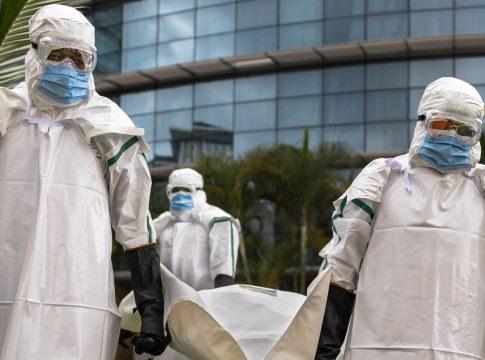
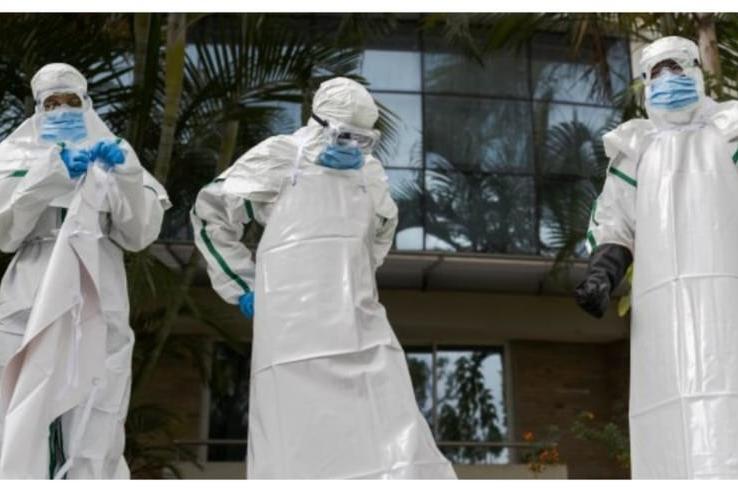
The death toll from the Ebola outbreak in the Democratic Republic of the Congo (DR Congo) has surpassed 5,000, raising fresh concerns about the growing public health emergency in Africa as health authorities struggle to contain the rapidly spreading disease.
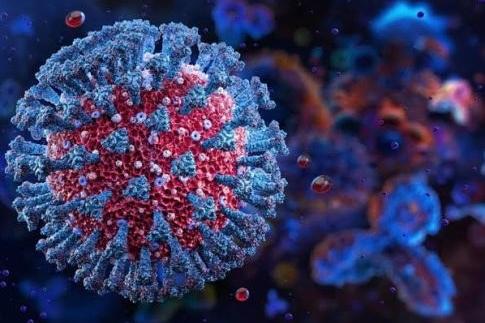
The outbreak, which began in May 2026 and is caused by the rare Bundibugyo strain of the Ebola virus, has infected more than 10,000 people, making it the deadliest Ebola epidemic ever recorded in DR Congo and the second-largest outbreak in the history of the disease globally.
Government figures released on Friday indicated that fatalities had crossed the 5,000 mark, while infections had exceeded 10,000. The scale of the epidemic has intensified international concern, particularly as the virus has spread beyond the borders of DR Congo to other African countries, including Kenya and Nigeria.
The World Health Organisation (WHO) has identified sustained transmission in DR Congo as a major concern, with the disease spreading across eight of the country's 26 provinces.
The outbreak has been particularly difficult to contain because of delayed detection, insecurity, armed conflict, overstretched healthcare facilities and difficulties in reaching communities affected by the epidemic.
The latest developments have prompted renewed calls for coordinated regional and international intervention to prevent further transmission and avert a wider continental health emergency.
Bundibugyo Strain Poses Fresh Challenge
Unlike some previous Ebola outbreaks, the current epidemic is caused by the Bundibugyo virus, a relatively rare species of the Ebola virus responsible for previous outbreaks in Central Africa.
The strain presents a significant challenge to health authorities because there is currently no approved vaccine or specific antiviral treatment for Bundibugyo virus disease.
Patients are therefore managed primarily through supportive medical care, including the treatment of dehydration, fever, electrolyte imbalance and other complications associated with the infection.
Early diagnosis and prompt medical attention remain critical to improving survival chances and preventing further transmission.
The outbreak has also demonstrated how quickly infectious diseases can overwhelm fragile healthcare systems when detection and containment measures are delayed.
According to figures reported by international health monitoring agencies, DR Congo had recorded 10,274 confirmed cases and 4,992 deaths as of October 28. The figures subsequently reported by the Congolese authorities indicate that fatalities have crossed 5,000.
The reported mortality rate, approaching 50 per cent, underscores the severity of the epidemic and the challenges confronting medical personnel.
One particularly troubling feature is that a substantial proportion of infected people are dying in their communities without receiving appropriate medical attention.
This situation makes it difficult for health workers to identify cases promptly, trace contacts and prevent further transmission.
Conflict And Weak Healthcare System Complicate Response
The humanitarian and security situation in eastern DR Congo has significantly complicated efforts to contain the epidemic.
Several of the affected areas are experiencing persistent armed conflict, population displacement and insecurity, making it difficult for medical teams to reach vulnerable communities.
The movement of displaced persons, combined with inadequate healthcare facilities and poor access to essential medical supplies, has created conditions in which the virus can continue spreading.
Health workers also face difficulties conducting surveillance, contact tracing, testing and community sensitisation in areas where insecurity restricts movement.
In some communities, distrust of government institutions and health authorities has further complicated the response.
The challenges are compounded by shortages of medical personnel and the pressure placed on already overstretched hospitals and treatment centres.
There have also been reports of industrial action by healthcare workers over unpaid wages and poor working conditions, further weakening the capacity of the public health system to respond effectively.
The consequences extend beyond Ebola treatment. Other essential health services, including routine immunisation, maternal healthcare and the management of other infectious diseases, are also affected when hospitals and medical personnel are diverted towards emergency response.
The epidemic therefore represents not only a public health emergency but also a serious humanitarian challenge for a country already struggling with insecurity and widespread displacement.
Ebola Crosses Borders, Nigeria Confirms Imported Case
The spread of the virus beyond DR Congo has heightened anxiety across Africa, particularly as international travel and population movement increase the possibility of further cross-border transmission.
Kenya and Nigeria have reported imported cases linked to the outbreak, while Uganda also recorded infections before bringing its outbreak under control.
Nigeria's confirmation of an imported case on October 20 brought the epidemic closer to West Africa and raised concerns about the country's preparedness to prevent local transmission.
According to the WHO, the infected individual was a woman who had travelled from Uganda to Nigeria. She developed symptoms on October 7, four days after arriving in the country, and sought medical attention at a private health facility in Abuja on October 11.
Laboratory tests subsequently confirmed infection with the Bundibugyo strain on October 20.
The Nigerian authorities immediately initiated isolation and other emergency public health measures, while investigations were launched to establish the source of infection and reconstruct the patient's travel and exposure history.
The European Centre for Disease Prevention and Control reported that the patient was subsequently medically evacuated to Switzerland.
As of October 27, Nigerian authorities had identified 62 contacts who were being monitored for possible exposure to the virus.
The development has placed Nigeria's disease surveillance and emergency response institutions under renewed scrutiny, particularly given the country's population size, international travel connections and previous experience with Ebola.
Although the confirmation of an imported case does not automatically indicate community transmission, health authorities must ensure that every person who may have been exposed is identified, monitored and tested where necessary.
Nigeria's experience during the 2014 West African Ebola crisis demonstrated the importance of rapid identification, isolation, contact tracing and effective coordination between government institutions and healthcare providers.
The country successfully contained the virus following the introduction of emergency measures after an infected Liberian-American, Patrick Sawyer, arrived in Lagos.
That experience remains an important reference point for the present challenge.
Kenya Records Cases As Saudi Arabia Imposes Travel Restrictions
Kenya has also been affected by the outbreak, recording nine confirmed infections and two deaths as of October 26.
The country's first identified patient was a Kenyan national who travelled from DR Congo through Uganda before arriving in Nairobi on October 3.
He subsequently tested positive for the Bundibugyo strain and died shortly afterwards.
Further infections were identified among people who had contact with the initial patient, including close relatives and healthcare workers.
The development prompted Kenyan authorities to introduce emergency surveillance, quarantine and contact-tracing measures to prevent further transmission.
Against this background, Saudi Arabia announced additional restrictions on Friday, suspending travel by its citizens to Kenya and halting the issuance of all categories of visas to travellers from the East African country.
The restrictions also prohibit entry into Saudi Arabia by travellers arriving from Kenya, including those transiting through third countries, if they had stayed in Kenya or other countries experiencing Ebola outbreaks within the preceding 21 days.
According to the Saudi Press Agency, the measures followed an assessment of the epidemiological situation by the relevant health authorities.
The restrictions are intended to reduce the possibility of infected travellers introducing the virus into the Kingdom.
Saudi Arabia had earlier introduced similar restrictions in June against travel to and entry from DR Congo, Uganda and South Sudan.
The latest decision reflects growing international concern about the geographical expansion of the outbreak and the need for countries to strengthen border health surveillance.
The Saudi Public Health Authority, however, reassured residents and visitors that the health situation within the Kingdom remained stable and under continuous monitoring.
It also indicated that additional preventive measures could be introduced depending on developments in the international epidemiological situation.
Second-Largest Ebola Outbreak In History
The current epidemic is now regarded as the second-largest Ebola outbreak ever recorded globally, surpassed only by the devastating West African epidemic of 2014–2016.
That outbreak affected Guinea, Liberia and Sierra Leone, infecting more than 28,600 people and causing over 11,000 deaths.
It became one of the most devastating infectious disease emergencies in modern African history, exposing serious weaknesses in healthcare infrastructure and international epidemic preparedness.
The present outbreak in DR Congo has already surpassed previous Ebola epidemics in the country in terms of recorded fatalities.
Its geographical spread across eight provinces and the emergence of imported cases in other countries have further complicated efforts to bring it under control.
The outbreak also highlights the difficulty of containing infectious diseases in regions where insecurity, population displacement, inadequate healthcare infrastructure and weak disease surveillance systems intersect.
International Cooperation Becomes More Urgent
The growing number of infections and deaths has reinforced the need for stronger international cooperation, particularly in the areas of disease surveillance, laboratory testing, emergency medical response and public health education.
Health authorities must also address the circumstances that allow the virus to spread undetected within communities.
Early reporting of symptoms, immediate isolation of suspected cases, effective contact tracing and safe handling of deceased persons remain essential components of Ebola prevention.
Public health experts have repeatedly stressed that communities must be actively involved in containment efforts. Without public confidence and cooperation, even well-funded emergency interventions may struggle to achieve their objectives.
The WHO and other international health organisations are expected to continue supporting affected countries through technical assistance, surveillance and coordination of emergency response activities.
For African governments, the epidemic is another reminder that infectious diseases do not respect national boundaries.
Countries must therefore strengthen their health systems beyond emergency responses, invest in disease surveillance and ensure that hospitals are adequately equipped to detect and manage emerging infections.
The Nigerian government, in particular, will need to sustain vigilance following the confirmation of an imported case, ensuring that surveillance activities remain effective across airports, healthcare facilities and communities.
The immediate priority is to prevent further transmission while supporting countries already struggling to contain the disease.
With more than 5,000 lives reportedly lost in DR Congo and infections continuing to emerge across national borders, the Ebola epidemic has become one of Africa's most pressing public health challenges.
The tragedy is a stark demonstration of how quickly an infectious disease can become a continental emergency when early detection, healthcare capacity and coordinated intervention fall behind the pace of transmission.
Editorial accuracy note: The story distinguishes the Congolese government's latest reported death toll of more than 5,000 from international surveillance figures that were still slightly below that threshold in their October 28 reporting. Nigeria has reported one confirmed imported case, not multiple cases. The patient was medically evacuated to Switzerland.