PublicSphere Live
Business
Dangote Launches $2.5bn Fuel Storage, Pipeline Project in Namibia to Boost Southern Africa’s Energy Security
Nigerian billionaire industrialist Aliko Dangote has launched a $2.5 billion fuel storage and regional pipeline project in Namibia, a major investment expected to transform Walvis Bay into a strategic energy distribution hub serving six African countries.
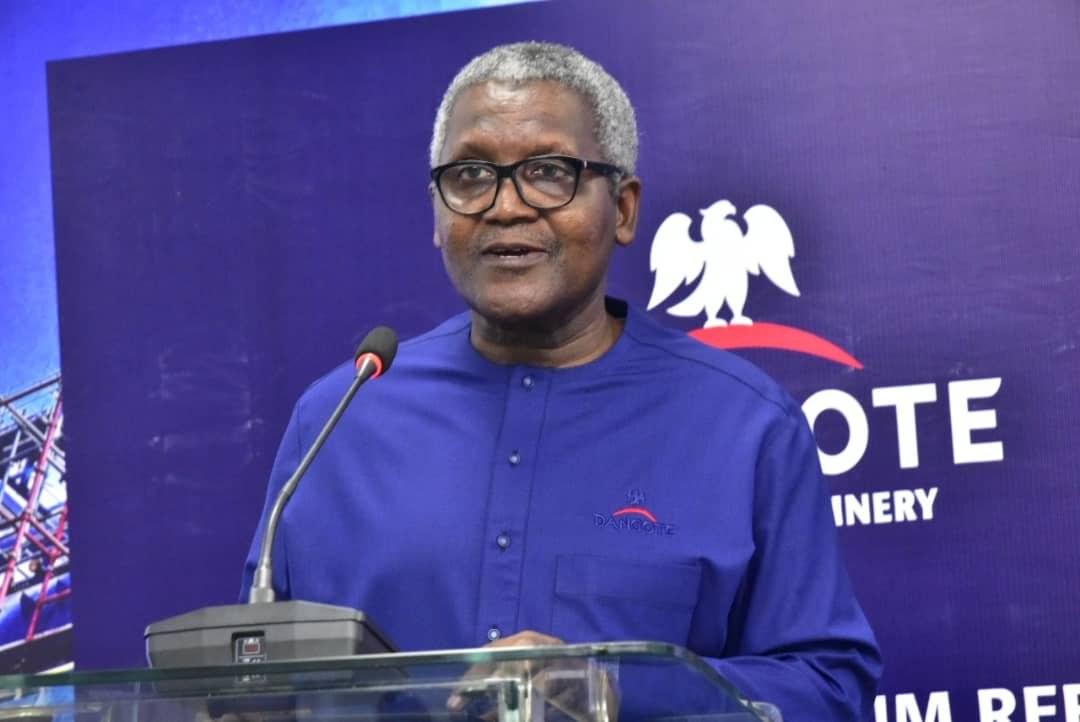
Nigerian industrialist and President of the Dangote Group, Aliko Dangote, has taken another major step towards expanding his influence in Africa's energy industry with the launch of a $2.5 billion fuel storage and regional pipeline project in Namibia.
The ambitious project, launched on Wednesday in Walvis Bay in the presence of Namibian President Netumbo Nandi-Ndaitwah, is designed to strengthen petroleum products distribution, improve energy security and establish Namibia as a major regional hub for refined petroleum products in Southern Africa.
The investment represents a significant expansion of Dangote's continental energy ambitions, extending his business interests beyond Nigeria and positioning his conglomerate as an increasingly influential player in Africa's petroleum supply chain.
With a proposed storage capacity of approximately 600 million litres, equivalent to about four million barrels of petroleum products, the facility is expected to serve Namibia and neighbouring countries, particularly those without direct access to seaports.
The project also incorporates plans for an extensive 1,700-kilometre pipeline network that could connect Walvis Bay to landlocked countries, including Botswana, Zimbabwe and Zambia, with the possibility of extending the infrastructure to the Democratic Republic of Congo.
When completed, the development is expected to significantly improve the movement of petroleum products across Southern Africa, reduce dependence on longer and more expensive supply routes and strengthen the region's capacity to respond to disruptions in international energy markets.
Speaking at the launch, Dangote said the investment was conceived to address some of the structural challenges confronting petroleum products distribution across the region.
According to him, the project would reduce logistical vulnerabilities, lower shipping costs and address energy insecurity in Namibia while creating an efficient distribution network for neighbouring economies.
He projected that construction of the storage facility would be completed within 18 to 20 months.
A Major Energy Infrastructure Investment
The scale of the proposed facility underscores the ambition behind the project.
With a storage capacity of 600 million litres, the terminal will be approximately eight times larger than Namibia's existing 75 million-litre National Oil Storage Facility, operated by the state-owned oil company, Namcor.
The planned facility will comprise 360 million litres of diesel storage capacity, while the remaining capacity will be allocated to petrol.
The distinction is significant given the importance of diesel to Southern Africa's mining, transportation, manufacturing, agricultural and power-generation sectors.
Many economies in the region depend heavily on diesel-powered transportation systems and industrial equipment. Consequently, the availability of adequate petroleum reserves is central to maintaining economic activities and protecting businesses against sudden supply disruptions.
By providing substantial storage capacity, the Walvis Bay facility is expected to strengthen the region's ability to maintain stable supplies during periods of international market volatility, shipping disruptions and unexpected changes in demand.
The proposed pipeline network is equally important.
Landlocked countries such as Botswana, Zimbabwe and Zambia often face additional transportation costs in securing petroleum products because they depend on supply routes passing through neighbouring countries and regional ports.
A pipeline connecting these markets to Walvis Bay could provide an alternative and potentially more efficient distribution channel.
For Namibia, the investment offers an opportunity to leverage its geographical position and port infrastructure to become a strategic energy gateway for a wider African market.
Walvis Bay, located along Namibia's Atlantic coastline, already serves as an important commercial and maritime gateway. The proposed development could considerably expand its economic importance by adding large-scale petroleum storage and distribution capabilities.
Dangote's Expanding African Energy Ambitions
The Namibian investment is part of Dangote's broader strategy to establish an integrated energy distribution network across Africa.
For years, the Nigerian billionaire has championed the need for African countries to develop the capacity to process, store and distribute petroleum products within the continent rather than depend excessively on imported refined products from distant markets.
His strategy is increasingly moving beyond refinery ownership to encompass the infrastructure required to transport, store and distribute refined petroleum products across national borders.
At the centre of this ambition is the Dangote Petroleum Refinery in Lagos, Nigeria, which has a nameplate capacity of 700,000 barrels per day.
The refinery, one of the largest single-train petroleum refineries in the world, represents a major transformation of Nigeria's downstream petroleum industry.
Its operations have the potential to reduce Nigeria's historical dependence on imported refined petroleum products while creating opportunities for exports to other African countries and international markets.
The facility is also undergoing expansion, while Dangote is planning another refinery of comparable capacity in Lamu, Kenya.
The proposed Kenyan refinery would extend his industrial footprint into East Africa, complementing the Nigerian refinery and the planned Namibian storage and pipeline infrastructure.
Taken together, these investments point towards an ambitious continental strategy in which refining, storage, transportation and distribution are developed as interconnected components of a wider energy business.
Rather than operating only as a manufacturer of refined petroleum products, the Dangote Group is positioning itself to participate in several stages of the petroleum value chain.
This approach could give the conglomerate greater control over the movement of its products, improve supply-chain efficiency and open additional markets for its expanding refining operations.
Walvis Bay As A Regional Energy Gateway
One of the most important implications of the Namibian project is the possibility of transforming Walvis Bay into a major petroleum distribution centre for Southern Africa.
The region's energy markets are interconnected, but their supply infrastructure remains unevenly developed.
While coastal countries have direct access to international shipping routes, landlocked economies frequently encounter higher transportation expenses and logistical complications when importing petroleum products.
The proposed pipeline would help address this structural disadvantage by creating a more direct channel for moving refined products from the Atlantic coast into the regional hinterland.
For Namibia, the benefits could extend beyond petroleum storage and distribution.
The development could stimulate investment in port services, transportation, engineering, construction, equipment maintenance and other supporting industries.
It could also create employment opportunities during construction and subsequent operations, while increasing the country's importance in regional trade.
The presence of a large-scale energy storage facility could attract other investors interested in developing complementary infrastructure and services around Walvis Bay.
However, the ultimate economic impact will depend on the successful execution of the project, the development of the proposed pipeline network and the establishment of commercially viable arrangements with participating countries.
The involvement of neighbouring governments and the harmonisation of cross-border petroleum transportation regulations will also be important to the project's long-term success.
Energy Security And Africa's Industrial Future
Beyond its commercial significance, the investment raises an important question about Africa's capacity to develop the infrastructure required to support its industrialisation.
Energy insecurity remains a major obstacle to economic growth across the continent.
Manufacturers, mining companies, transport operators and agricultural businesses require reliable and affordable energy supplies to operate efficiently.
Where petroleum distribution systems are inadequate, businesses face higher operating costs, production uncertainties and disruptions that ultimately affect competitiveness.
The proposed Namibian facility could therefore contribute to broader economic development by improving the reliability of petroleum supplies across several countries.
It also reflects a growing recognition that Africa's energy challenge cannot be addressed solely through the production of crude oil or the construction of refineries.
Storage facilities, pipelines, ports and distribution networks are equally essential.
A refinery may produce millions of litres of petroleum products, but without adequate infrastructure to store and transport those products, its contribution to regional energy security will remain limited.
This is particularly relevant to Dangote's strategy, which increasingly places emphasis on building the distribution architecture necessary to support large-scale refining.
The project could also strengthen trade relations between Nigeria and Southern African countries, creating new opportunities for Nigerian businesses and industrial operators to participate in regional economic development.
Diversification And The Global Energy Market
Another consideration behind Dangote's continental expansion is the changing structure of the global energy market.
The gradual transition towards renewable energy, electric mobility and cleaner industrial technologies is expected to influence long-term demand for conventional petroleum products, although the pace of transition differs considerably across regions.
For Africa, petroleum products are likely to remain important to transportation, industrial production, mining and other economic activities for years to come.
Nevertheless, developing markets and diversifying distribution channels could become increasingly important for major petroleum producers and refiners.
The Namibian project offers Dangote an opportunity to expand the geographical reach of his refined petroleum products, particularly into markets where demand is supported by growing populations, infrastructure development and industrial activities.
It also provides an opportunity to develop a more extensive commercial presence in Southern Africa.
The proposed investment aligns with his broader ambition to build the Dangote conglomerate into a business valued at $100 billion before 2030.
Achieving that objective would require sustained expansion, operational efficiency, strategic partnerships and the development of businesses capable of generating value across multiple African markets.
The Namibian project is therefore significant not merely because of its financial size but also because of the strategic position it could give the Dangote Group in the continent's energy distribution system.
The Challenges Ahead
Despite its enormous potential, the successful implementation of the project will depend on several factors.
The construction of a 1,700-kilometre pipeline across multiple jurisdictions will require substantial engineering expertise, regulatory coordination, financing and agreements with the countries expected to benefit from the infrastructure.
Land acquisition, environmental considerations, security and the technical requirements of cross-border petroleum transportation will also need careful attention.
Furthermore, the commercial viability of the project will depend on sufficient demand from regional markets and the ability to move petroleum products at competitive costs.
The 18-to-20-month construction timeline announced by Dangote will consequently be an important test of the project's execution capacity.
Nevertheless, the scale of the proposed investment demonstrates the growing role of African private-sector capital in addressing infrastructure gaps that have constrained the continent's economic development.
For Namibia, it offers an opportunity to strengthen its position as a regional logistics and energy centre.
For neighbouring countries, it promises an additional channel for securing petroleum products.
For Nigeria, it represents another example of how the country's private-sector industrial capacity can extend beyond its borders and contribute to continental development.
Ultimately, Dangote's $2.5 billion investment in Walvis Bay is more than a fuel storage project. It is an attempt to build a strategic energy corridor that could reshape petroleum distribution across Southern Africa.
If successfully executed, the development could become an important component of Africa's emerging energy infrastructure, demonstrating that the continent's industrial future will depend not only on what it produces but also on its ability to move, store and distribute those products efficiently.