PublicSphere Live
Capital Market
Dangote Refinery IPO: Group In Talks To Extend Share Offering To West African Markets
Cross-border listing discussions follow N6.4 trillion subscription in Nigeria
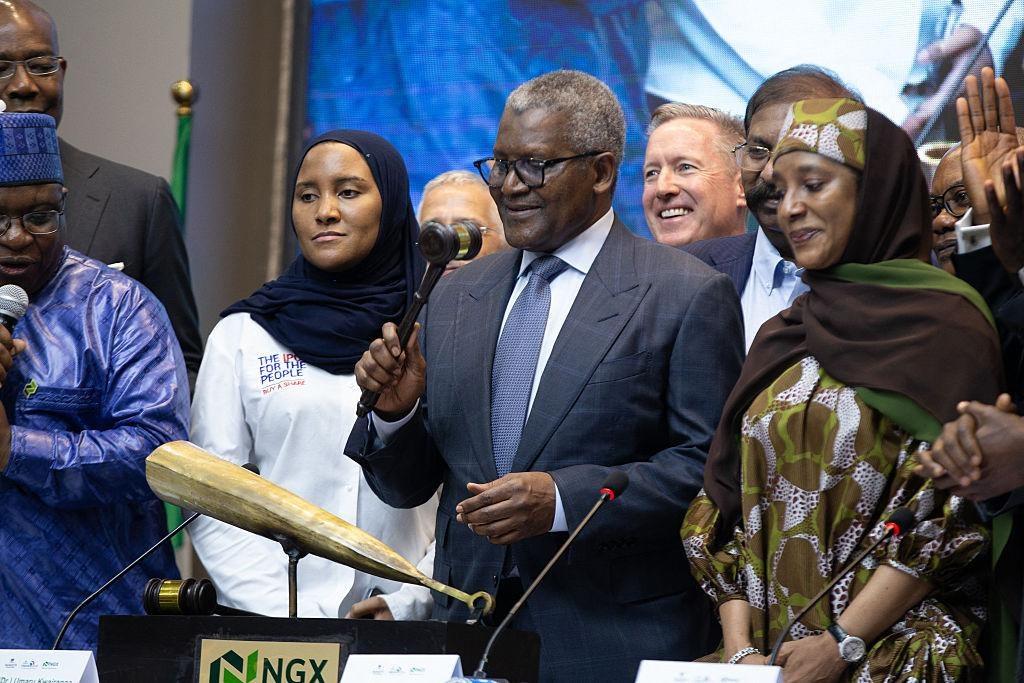
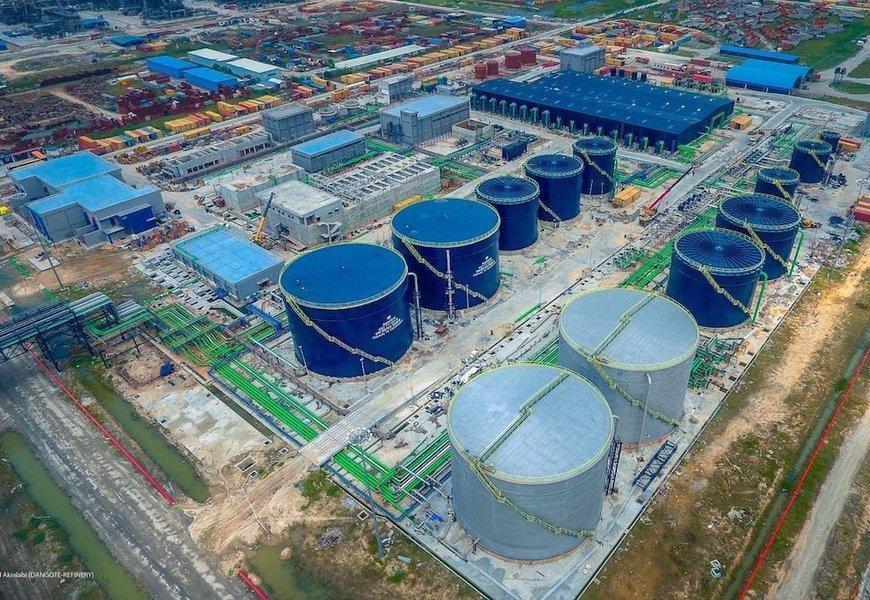
Dangote Group is exploring the expansion of its $1.6 billion refinery IPO to other African markets through regional stock exchanges, including BRVM, as regulatory differences complicate plans to broaden investor participation beyond Nigeria.
Dangote Group has commenced discussions with stock exchanges across West Africa on plans to extend access to the initial public offering (IPO) of its $1.6 billion Dangote Refinery beyond Nigeria, in a move that could significantly broaden African participation in one of the continent’s most ambitious industrial investment projects.
The proposed expansion would provide investors in other African countries with an opportunity to acquire exposure to the refinery, while potentially strengthening regional capital market integration and creating a new pathway for cross-border investment in large-scale African infrastructure.
However, differences in regulatory frameworks, listing requirements and operational procedures across African stock exchanges have complicated efforts to establish a common structure for the proposed offering.
The discussions were disclosed by the Chief Executive Officer of the Bourse Régionale des Valeurs Mobilières (BRVM), Mr Edoh Kossi Amenounve, in an interview with Reuters on the sidelines of the Africa Financial Summit in Luanda.
BRVM is the regional stock exchange serving the eight member countries of the West African Economic and Monetary Union (WAEMU), comprising Benin, Burkina Faso, Côte d’Ivoire, Guinea-Bissau, Mali, Niger, Senegal and Togo.
Nigeria, where the refinery is based and where the IPO was initially offered, is not a member of WAEMU.
Amenounve disclosed that discussions with Dangote Group began in April following an invitation from the Nigerian industrialist, Aliko Dangote, to explore how other African stock exchanges could participate in the share offering.
According to him, the objective was to develop a framework that would allow investors outside Nigeria to participate in the IPO without requiring the refinery to undertake separate and potentially complicated listing processes in every participating country.
The discussions, however, have encountered difficulties in reconciling the different regulatory requirements governing securities markets across the region.
Regulatory Differences Pose Challenge
The proposed expansion of the IPO highlights the complexities of cross-border capital market transactions in Africa, where individual countries operate under different legal, regulatory and institutional arrangements.
Although African countries have repeatedly expressed commitment to integrating their financial markets and facilitating regional investment, practical challenges remain in harmonising listing rules, investor protection standards, settlement procedures and disclosure requirements.
These differences could make it difficult for a company seeking to raise capital across multiple African jurisdictions to comply simultaneously with the rules of each market.
Amenounve acknowledged that reaching agreement on a common mechanism for conducting the Dangote Refinery IPO across different markets had proved challenging.
The discussions are therefore focused on identifying an arrangement that would enable investors in participating countries to access the offering without creating an unnecessarily complicated regulatory structure.
One option being considered is the use of Global Depositary Receipts (GDRs), which could provide a mechanism for investors outside Nigeria to gain exposure to the refinery’s shares through instruments listed on their local exchanges.
GDRs are financial instruments issued by a depositary institution and backed by shares in a company. They enable investors in foreign markets to trade securities representing ownership interests in companies without necessarily purchasing the underlying shares directly through the company’s domestic exchange.
Under such an arrangement, Dangote Refinery shares could potentially remain listed on the Nigerian Exchange (NGX), while corresponding depositary instruments could be made available to investors through other African stock exchanges.
The structure could help reduce some of the complications associated with multiple direct listings, although the precise arrangement would depend on regulatory approvals and agreements among the relevant market authorities.
Amenounve cited similar arrangements previously implemented in Kenya and Botswana as possible models for the proposed cross-border offering.
The examples suggest that African capital markets may be able to develop practical mechanisms for facilitating investment across jurisdictions, even where regulatory systems are not fully harmonised.
N6.4 Trillion Subscription Demonstrates Investor Appetite
The discussions with West African exchanges come against the backdrop of an overwhelmingly successful subscription exercise in Nigeria.
Dangote Refinery’s IPO attracted approximately N6.4 trillion in subscriptions from retail and institutional investors before the offer closed on October 28, according to reports.
The subscription figure, equivalent to approximately $4.77 billion, was nearly three times the amount of shares available in the offering.
The response underscores the strong appetite among Nigerian investors for exposure to the refinery, which has become one of the most significant industrial investments in the country’s history.
The overwhelming subscription also demonstrates the potential capacity of the domestic capital market to mobilise substantial financial resources for large-scale industrial development.
The refinery’s proposed listing on the Nigerian Exchange later this month is expected to introduce a major industrial asset into the equities market, potentially expanding its investment opportunities and strengthening its appeal to both institutional and retail investors.
The anticipated listing is also expected to attract attention from investors seeking exposure to Nigeria’s energy sector and the broader industrialisation drive.
Extending the offering to other African markets could further increase the pool of investors interested in the refinery, although the Nigerian subscription figures suggest that demand within the domestic market has already been substantial.
Dangote Refinery And Africa’s Capital Market Integration
The proposed cross-border IPO carries implications beyond the immediate objective of raising capital for the refinery.
It could become a test case for the ability of African stock exchanges to collaborate in facilitating large-scale investment transactions across national boundaries.
Africa’s capital markets remain fragmented, with many exchanges operating relatively small markets and limited cross-border investment activity.
This fragmentation has often restricted the ability of African companies to mobilise capital from investors across the continent, while investors have faced difficulties accessing investment opportunities in neighbouring countries.
The proposed participation of BRVM and other exchanges in the Dangote Refinery IPO could help demonstrate how regional capital markets can cooperate to improve investment access.
Such cooperation would be particularly significant for West Africa, where economic integration has remained a major policy objective among regional governments.
A successful arrangement could encourage other African companies seeking capital to consider cross-border offerings, potentially increasing the depth and liquidity of participating markets.
It could also create opportunities for investors in smaller economies to participate in major industrial projects beyond their domestic markets.
For BRVM, which serves several countries through a single regional exchange, the proposed transaction could provide an opportunity to strengthen its position as a platform for mobilising investment across West Africa.
However, the ultimate success of the initiative would depend on whether the participating exchanges and regulatory authorities can agree on a structure that protects investors while maintaining operational efficiency.
Refinery’s Industrial Significance
The Dangote Refinery, located in the Lekki Free Zone in Lagos, is one of the largest industrial projects undertaken in Africa.
Its development has been closely linked to Nigeria’s ambition to reduce dependence on imported petroleum products, strengthen domestic refining capacity and improve energy security.
The refinery’s operations and investment prospects have attracted significant attention from investors, policymakers and businesses across the continent.
The proposed IPO is therefore not simply a corporate fundraising exercise but also an opportunity to connect African capital with an industrial asset that has implications for energy supply, manufacturing, transportation and trade.
A wider African shareholder base could potentially deepen investor interest in the refinery and strengthen its financial profile, while providing investors with access to a major industrial enterprise.
It could also reinforce the broader argument that African savings should increasingly be mobilised to finance productive investments within the continent.
For Dangote Group, extending the offering beyond Nigeria would represent an opportunity to expand the refinery’s investor base and strengthen its visibility across African financial markets.
What Lies Ahead
Despite the enthusiasm surrounding the proposal, the discussions remain at the stage of exploring the practical arrangements required to facilitate participation by other exchanges.
The regulatory differences identified by BRVM’s chief executive indicate that a cross-border offering would require careful coordination among securities regulators, stock exchanges, depositary institutions and other market participants.
The use of GDRs could provide a workable pathway, but the details of the proposed structure, participating exchanges and regulatory approvals have yet to be fully established.
The refinery’s expected listing on the Nigerian Exchange later this month remains the immediate milestone following the successful completion of its domestic IPO.
If the discussions with BRVM and other West African exchanges eventually produce an agreement, the Dangote Refinery offering could become a significant example of cross-border capital market cooperation in Africa.
Beyond its implications for the refinery, the initiative could help demonstrate how African financial markets can work together to mobilise capital for industrial development, improve investment opportunities and strengthen economic integration.
For a continent seeking to finance its infrastructure and industrial transformation largely through domestic and regional resources, the outcome of the discussions could carry considerable significance.